
Advancing Market Intelligence: Hyperparameter-Tuned Face Analysis for the Myanmar Demographic
Effective Marketing Analysis on Gender and Age Classification with Hyperparameter Tuning
The paper proposes a hybrid approach for gender and age classification by integrating the Fast R-CNN architecture with Nelder-Mead hyperparameter optimization. The method specifically targets demographic analysis for Myanmar's market intelligence, achieving state-of-the-art accuracy on localized Myanmar video streaming data.
TL;DR
This study introduces a localized approach to gender classification and age estimation by combining Fast R-CNN with Nelder-Mead hyperparameter optimization. By curating a specific Myanmar Image Dataset, the researchers bridged the gap between global AI models and regional ethnic characteristics, delivering a high-accuracy solution for real-time marketing analytics.
Background & Motivation: Why Global Models Fail Locally
In the world of market intelligence, understanding who is attending an event is the "Holy Grail" of advertising. While facial recognition has advanced rapidly, most models are trained on Western-centric datasets like IMDB. For a specific demographic like Myanmar, these models often falter due to unique ethnic facial features.
The authors identified two major roadblocks:
- Data Bias: Existing datasets do not represent the Myanmar population accurately.
- Parameter Sensitivity: Deep Learning models like Fast R-CNN are highly sensitive to hyperparameters (e.g., learning rate), and manual tuning is often inefficient for real-world deployments.
Methodology: The Hybrid Fast R-CNN Approach
The core of this research is the integration of the Fast R-CNN architecture with a robust optimization strategy.
1. Architecture Choice
Fast R-CNN was selected over standard CNNs because it processes the entire image once to generate a feature map, then uses RoI (Region of Interest) Pooling to extract fixed-size features for classification. This significantly reduces computation time compared to the original R-CNN.
2. Nelder-Mead Optimization
To avoid the "black box" struggle of tuning deep networks, the authors implemented the Nelder-Mead algorithm. Unlike gradient-based methods, Nelder-Mead is a simplex-based search that doesn't requires derivatives. It treats the training process as a function to be minimized, iteratively adjusting parameters to find the optimal "vertex" for model performance.
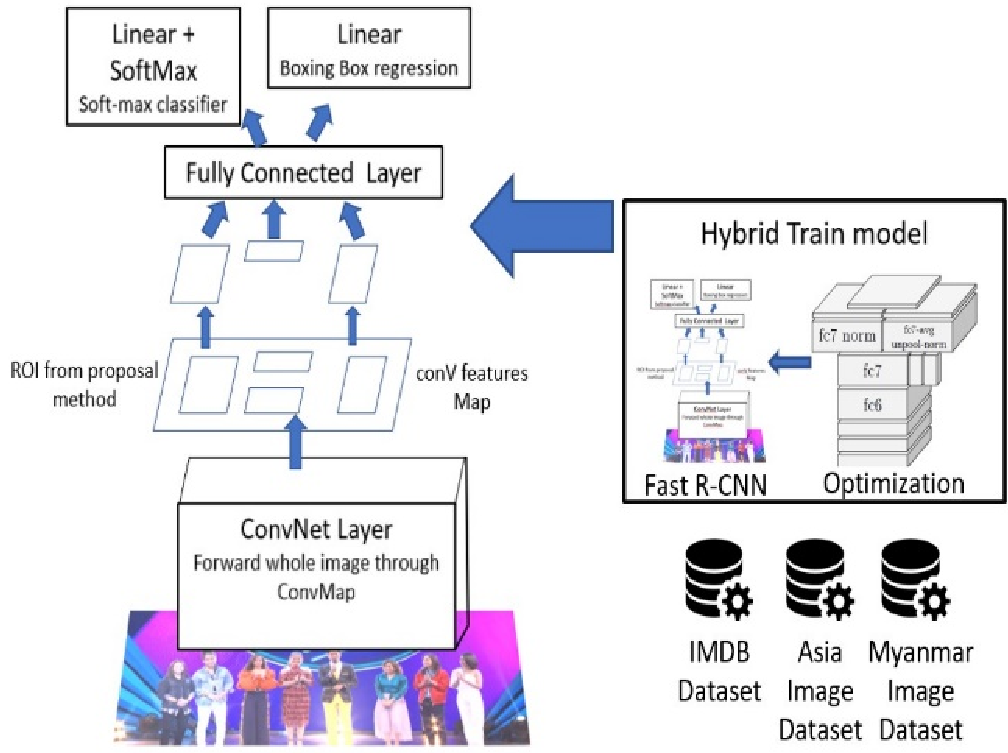 Fig 1. The proposed Hybrid Model: Fast R-CNN integrated with Hyperparameter Optimization.
Experiments and Insights
The system was trained across three distinct datasets to ensure robustness:
- IMDB Dataset: For general facial feature baseline.
- Asia Image Dataset: 13,322 images for regional context.
- Myanmar Image Dataset: A custom-curated set of 3,023 images collected from social media to capture local nuances.
Age & Gender Granularity
The system doesn't just predict "Old" or "Young." It divides age into 10 specific classes (from 0-2 up to 54-70), allowing for precise market segmentation.
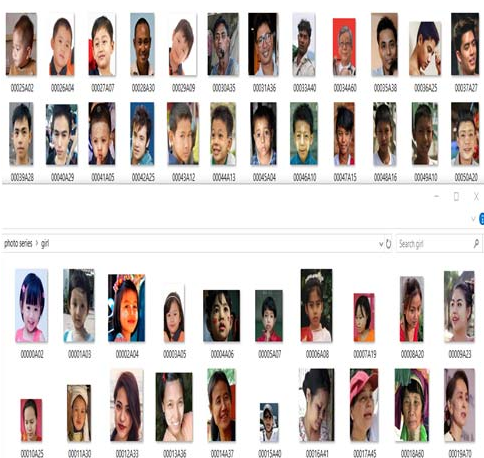 Fig 2. Visual comparison of samples from the Myanmar Image Dataset and Asia Image Dataset.
Results: Performance on Real-world Streams
The real test of the model was conducted using video streams from "Myanmar Idol." The inclusion of hyperparameter optimization led to a higher detection and classification accuracy compared to non-optimized models.
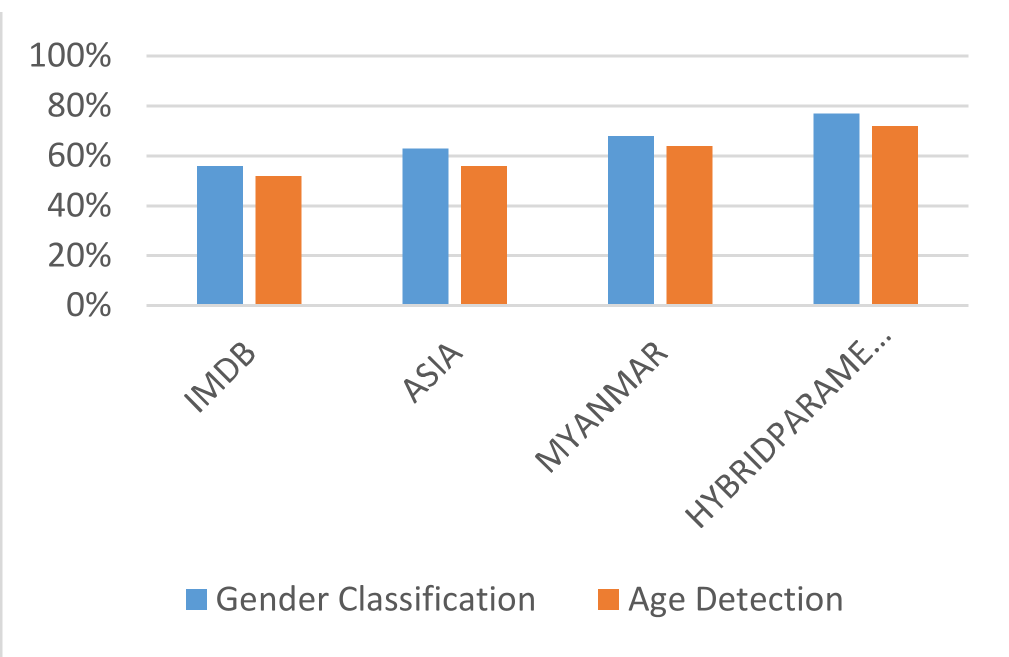 Fig 3. Accuracy comparison across different datasets and configurations.
Critical Analysis & Conclusion
Key Takeaways
- Localization Matters: The creation of a dedicated Myanmar dataset was the primary driver for the model’s success in local applications.
- Optimization Efficiency: Using Nelder-Mead proved that one does not always need massive computational clusters to fine-tune deep learning models for specific tasks.
Limitations & Future Work
The current system does not account for head orientation or facial expressions, which can significantly affect detection in crowded environments. Future iterations aim to expand the Myanmar Image Dataset size and incorporate more complex geometric transformations to improve robustness in unconstrained "in-the-wild" video captures.
This work serves as a blueprint for developers aiming to deploy AI in specific regional markets where "one-size-fits-all" global models are insufficient.