
Beyond Keywords: A Holistic Model for Aspect-Based Opinion Mining in Social Reviews
An effective model for aspect based opinion mining for social reviews
This paper presents a conceptual model for Aspect-Based Opinion Mining (ABOM) specifically designed for social reviews. It introduces a comprehensive framework that integrates the detection of implicit aspects, multi-aspect sentences, and question-based reviews, aiming to surpass existing models in holistic coverage.
TL;DR
Social media has transformed "freedom of speech" into a mountain of data. Simply knowing if a review is "positive" or "negative" isn't enough anymore; businesses and researchers need to know what specific feature (aspect) the sentiment is directed at. This paper by Jibran Mir and Muhammad Usman critiques the current fragmented state of Aspect-Based Opinion Mining (ABOM) and proposes a unified conceptual model designed to handle the messy reality of social reviews—including implicit meanings and complex question-based input.
The "Blind Spots" of Current Sentiment Analysis
Most existing sentiment analysis models are built for a perfect world: structured product reviews where a user explicitly says, "The battery is bad." However, real-world social data is messy. The authors identify five critical gaps in current SOTA (State-of-the-Art) approaches:
- Implicit Aspects: When a user says "The restaurant was expensive," the aspect price is never mentioned but is clearly the target.
- Multi-Aspect Sentences: "The food was great, but the service was slow." Current models often average these out to "neutral," losing the vital nuance.
- Question-Based Reviews: Users often post queries like "Is the Nikon D850 better than the Canon 5D?" which contain sentiment intent but are ignored by standard classifiers.
- Domain Adaptability: Most models are "one-hit wonders" specialized for a single industry (e.g., hotels) and fail when moved to social issues or electronics.
Methodology: The Four-Phase Strategic Framework
The authors propose a robust pipeline designed to move from raw text to structured intelligence. Unlike previous models that focus solely on accuracy at the cost of scope, this model prioritizes the nature of the review.
1. The Pre-processing Gateway
Using word segmentation and Part-of-Speech (POS) tagging, the model identifies the linguistic "skeleton" of the review. Identifying Nouns and Adjectives is the first step in linking a feature to an opinion.
2. Nature Identification & Feature Extraction
This is the "brain" of the model. It uses a rule-based engine to categorize the review. If a sentence ends in a question mark, it triggers a specific Question-Based Aspect extraction logic. If a sentence contains contrastive conjunctions (like "but"), it triggers Multi-Aspect segmentation.
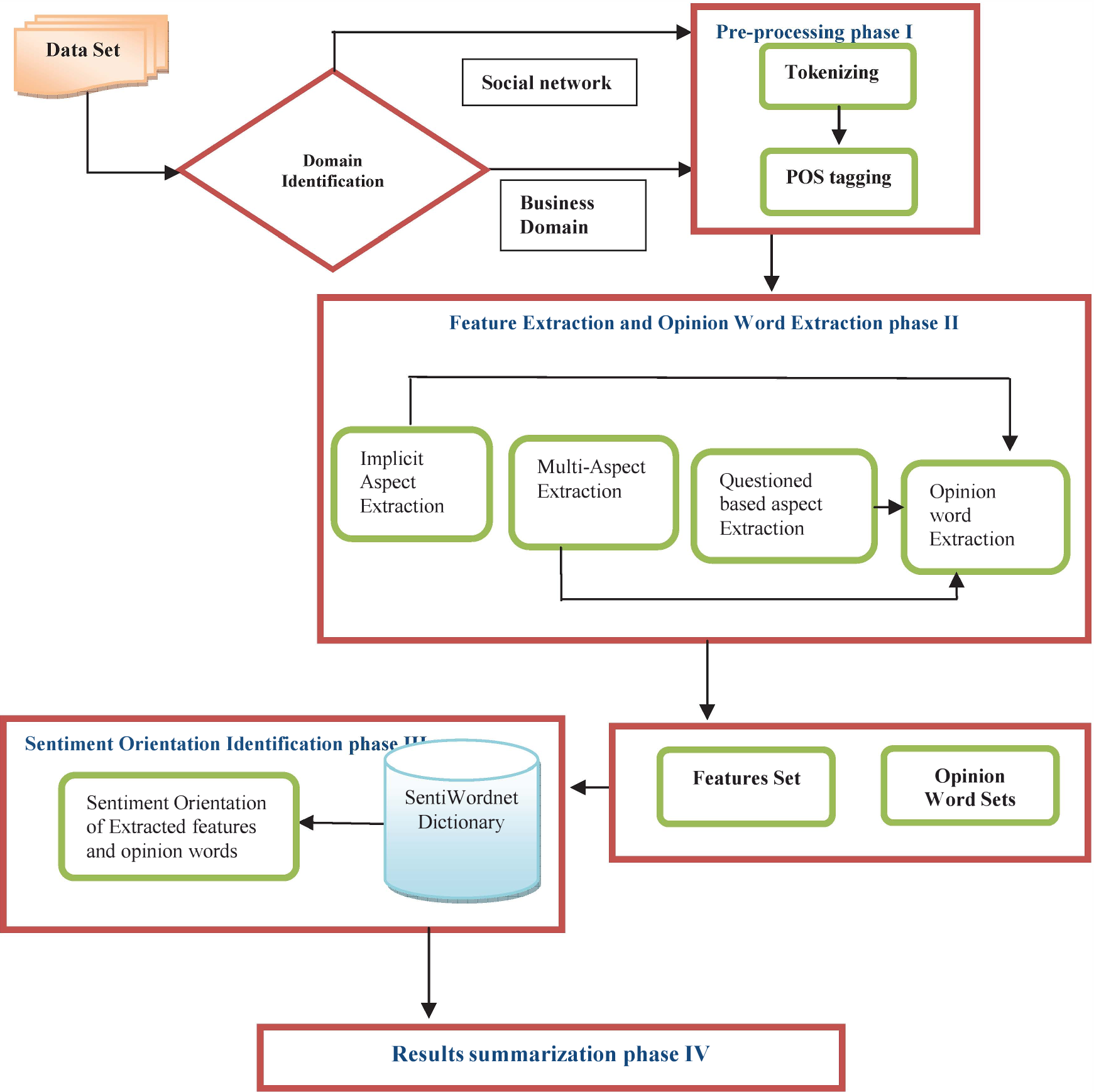 Figure 1: The proposed four-phase conceptual model emphasizes the classification of review nature before sentiment scoring.
3. Sentiment Orientation via SentiWordNet
Instead of simple "Good/Bad" dictionaries, the model proposes using SentiWordNet, assigning numerical weights to features based on the intensity of the opinion words used.
Critical Evaluation: Where Others Fall Short
The authors provide a masterclass in academic benchmarking by comparing 12 prominent models across seven dimensions.
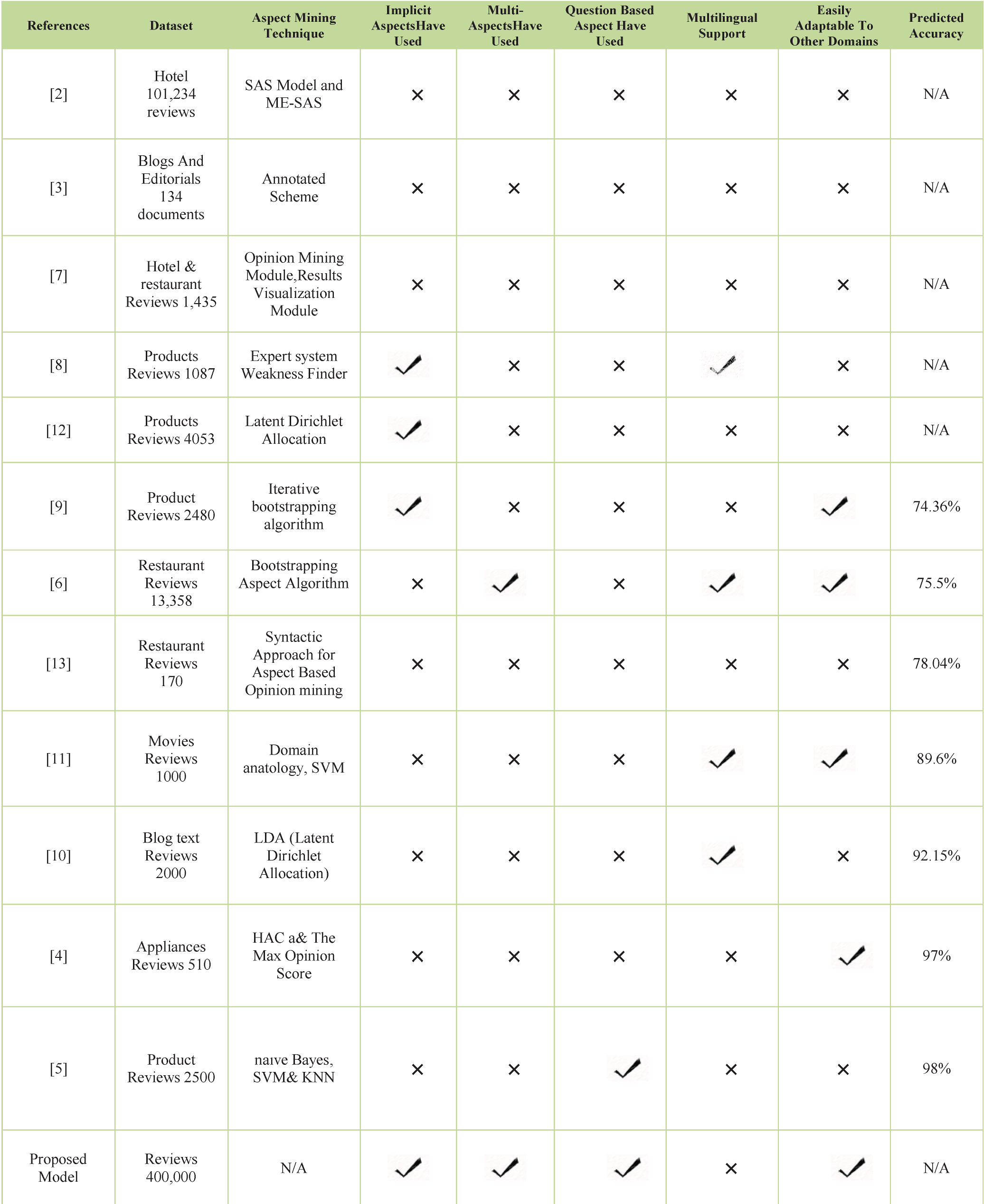 Table 1: Competitive Landscape. Note that the most "accurate" models (97-98%) usually have the narrowest scope, failing to address implicit or multi-aspect factors.
The analysis reveals a "Precision-Scope Trade-off":
- Moghaddam et al. [5] achieved 98% accuracy but only handled questions and failed at domain adaptability.
- Xianghua et al. [10] utilized Topic Modeling (LDA) for social reviews but ignored implicit aspects and was limited by a small dataset.
- The Proposed Model aims to be the first to bridge these gaps, specifically targeting a massive dataset of 400,000 reviews for Nikon and Canon products to ensure statistical significance.
Critical Analysis & Conclusion
Takeaway
The core contribution of this work is the recognition of complexity. By categorizing reviews into "types" (Implicit, Multi, Question) before analyzing them, it provides a blueprint for an "intelligent" system that mimics human understanding of context.
Limitations
As a conceptual paper, the main drawback is the lack of implementation data. While the logic is sound, the real-world performance of the rule-based engine in Phase II against the inherent noise of social media (slang, emojis, sarcasm) remains to be proven. Additionally, the model currently lacks Multilingual Support, a significant barrier for global social media platforms.
Future Outlook
The next logical step for this research—and for the field—is the integration of LLMs (Large Language Models) into this four-phase framework. While the authors use traditional POS tagging and SentiWordNet, their logic for "nature identification" provides a perfect prompt-engineering structure for modern AI transformers to achieve even higher accuracy across broad domains.