
Beyond the Portal: The Institutional DNA of Effective Open Government Data
What Matters in Maintaining Effective Open Government Data Systems?: The Role of Government Managerial Capacity, and Political and Legal Environment
This research investigates the institutional determinants of effective Open Government Data (OGD) systems across 115 countries. By applying Rosenbloom’s three-pronged framework (managerial, political, and legal), the study identifies that national competitive advantage in the AI era is heavily dependent on the quality and accessibility of public data.
TL;DR
Is your country's open data system actually functional, or is it just a "zombie" portal? This study analyzes 115 nations to reveal that the secret sauce for high-quality open data isn't just money or laws—it's the combination of full democracy, a "push" from civil society, and a pre-existing e-government infrastructure. Without these elements, even the most expensive AI initiatives will starve for high-quality training data.
Background: Data as National Competitiveness
In the age of Large Language Models (LLMs) and predictive algorithms, data is the new oil. However, public data—often the most reliable source for training national-level AI—is frequently locked behind bureaucratic hurdles. This paper shifts the focus from what is being opened to why certain institutional environments are better at maintaining data systems than others.
The "Why": Rosenbloom’s Three Pillars
The authors use a classic public administration framework to dissect OGD:
- Managerial Approach: Focuses on efficiency, hierarchy, and technical capacity (e.g., E-government scores).
- Political Approach: Focuses on pluralism, accountability, and responsiveness to civil demands (e.g., Democracy and Civic engagement).
- Legal Approach: Focuses on procedures, individual rights, and constitutional compliance (e.g., Data protection laws).
Methodology: Mapping the Ecosystem
The study evaluated 15 distinct datasets—ranging from basic Maps (D1) to complex transactional Spending (D5)—across 115 countries. It quantified quality based on machine-readability, timeliness, and licensing status.
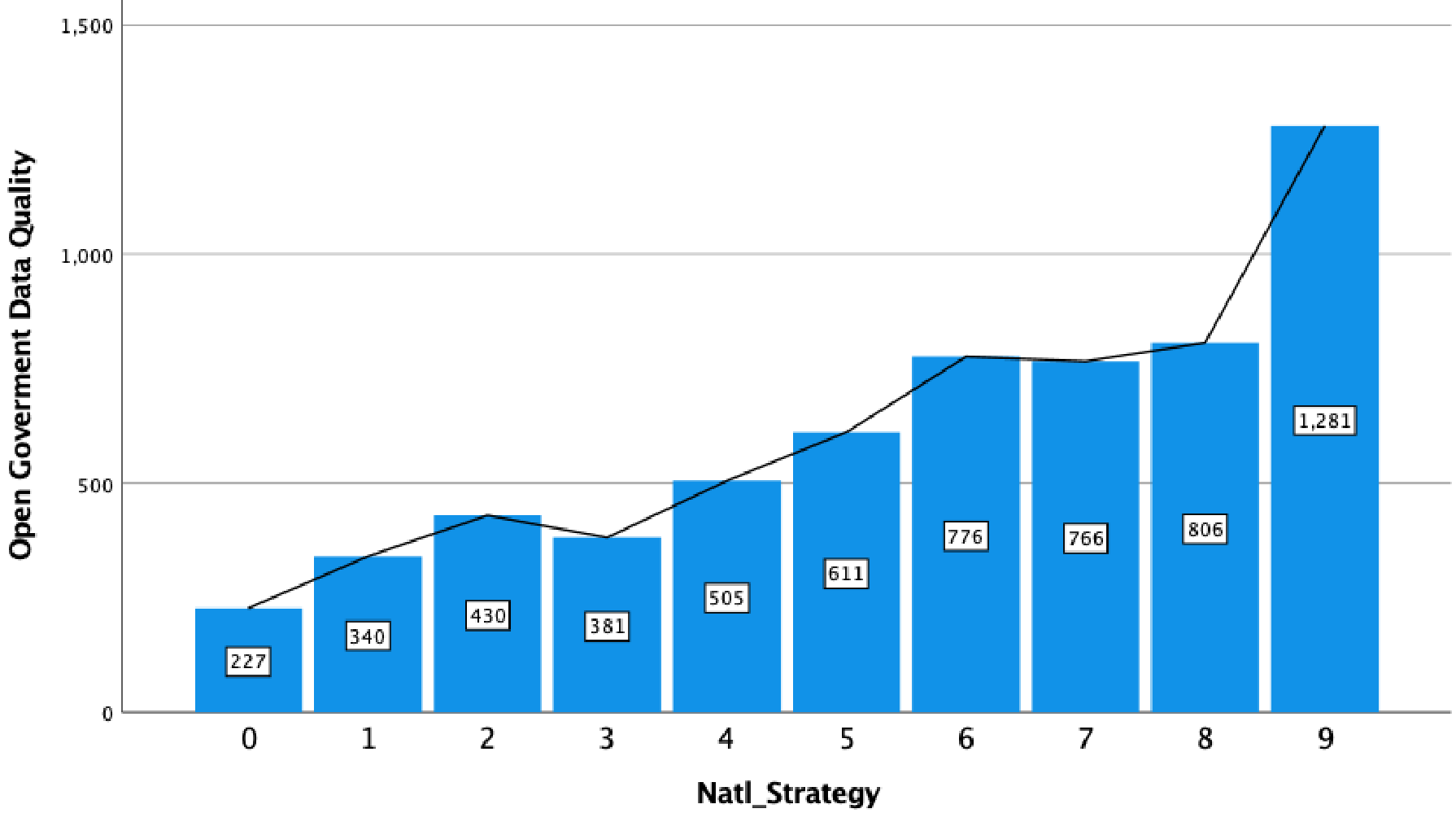 Figure 1: The direct correlation between a defined national strategy and the resulting OGD quality.
Key Findings: The Democracy Dividend
The analysis yielded several "non-obvious" insights:
1. The Democracy Factor
Political regime type is the strongest predictor of success. Countries under Full Democracy scored significantly higher across almost all metrics. The rationale? Open data is inherently an exercise in transparency, which aligns with democratic values of accountability.
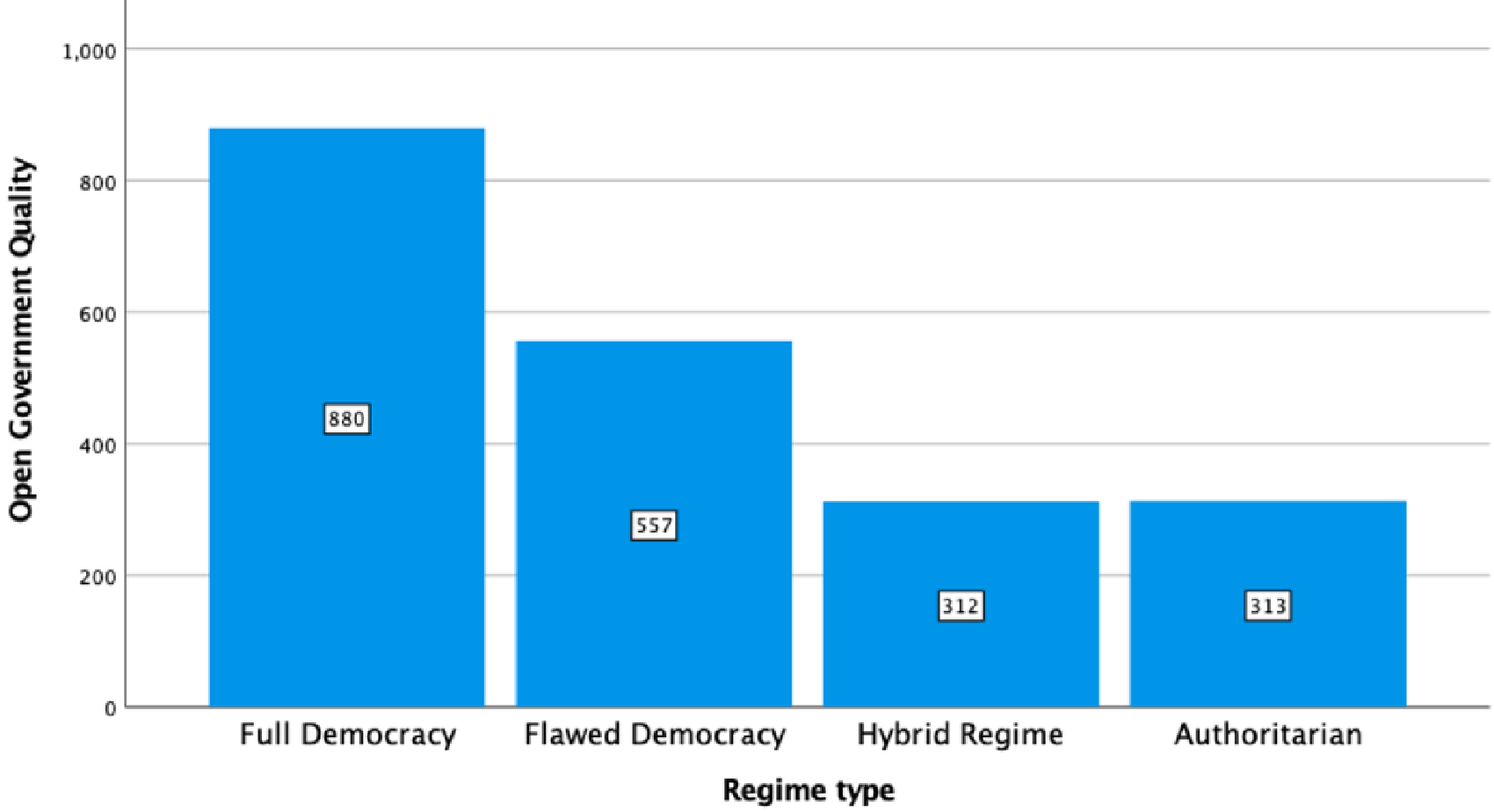 Figure 2: The stark contrast in data quality between democratic and authoritarian regimes.
2. Path Dependency in E-Government
Building an open data system is not a standalone task. Success is heavily predicated on pre-existing IT managerial capacity. Countries that already had robust e-government services found it much easier to transition to "open by default" architectures.
3. The Budget vs. Spending Gap
Interestingly, while many countries provide high-quality Budget data (D4, the plan), most fail at providing Spending data (D5, the reality). This suggests that while planning is easy, the technical and political overhead of real-time transactional transparency remains a massive barrier.
Results Overview
The OLS regression confirmed that government capacity and political attributes are the twin engines of OGD. Interestingly, the presence of specific Data Protection Laws did not show a statistically significant impact on the quality of open data, suggesting that legislation without execution capacity is ineffective.
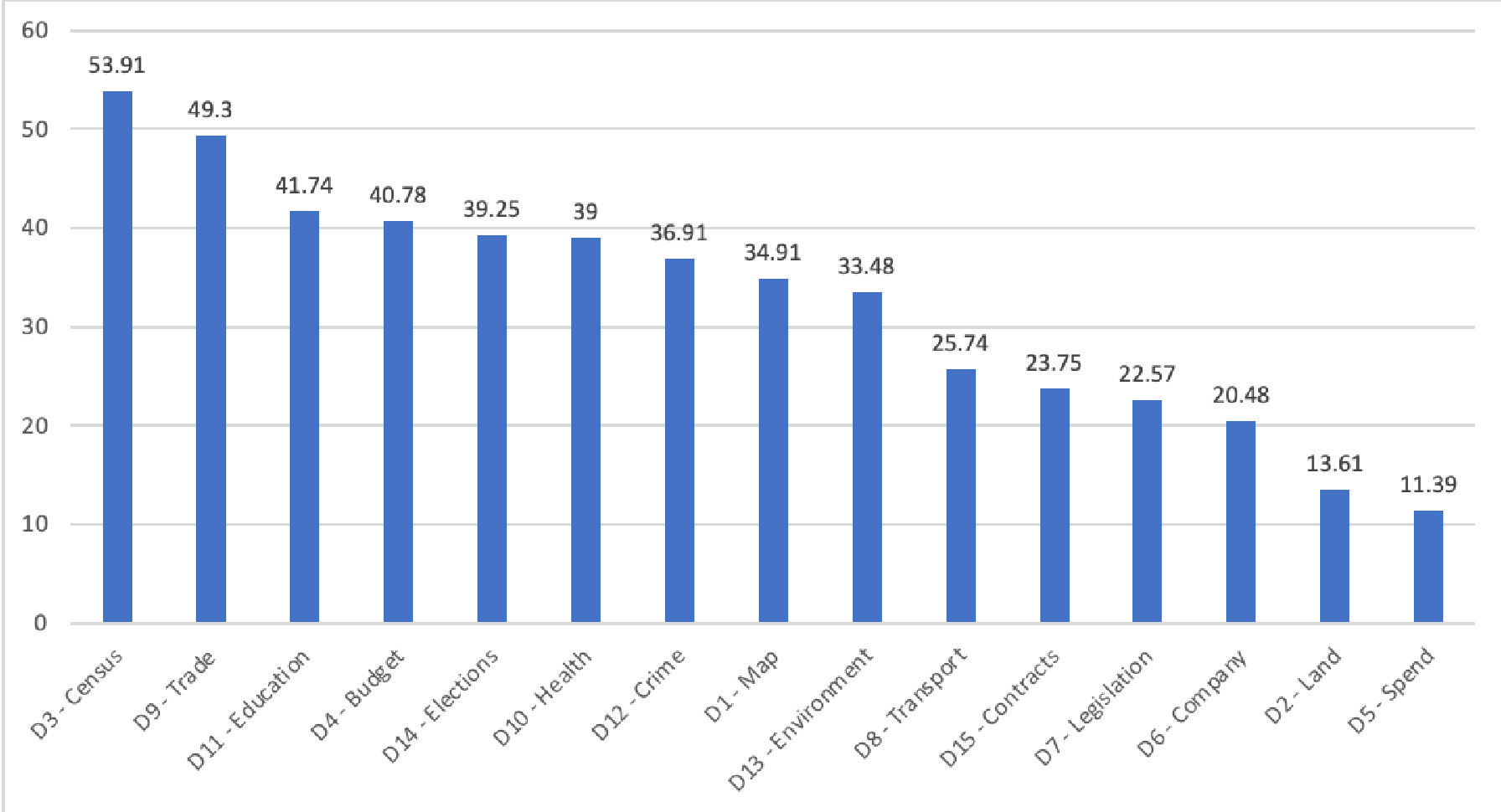 Figure 3: Census and Budget data lead the way, while Land and Spending data lag behind globally.
Critical Insight & Conclusion
The study concludes that an effective OGD system requires both a top-down mandate (National Strategy) and a bottom-up push (Civic Engagement). For policymakers, the takeaway is clear: don't just pass a law—invest in the underlying digital infrastructure and foster a political culture that values transparency. As AI continues to reshape national competitiveness, those who can maintain these complex "data pipes" will lead the next industrial revolution.
Limitations
While the study provides a global bird's-eye view, it relies on the Open Data Barometer scores which may have inherent collection biases. Furthermore, the cross-sectional nature of the data (2015-2016) means it does not account for the rapid shifts in data governance seen during the COVID-19 pandemic.