
Causal Strategy Selection: Beyond Correlation in Social Media Promotion
Effective Promotional Strategies Selection in Social Media: A Data-Driven Approach
2017-07-31
Summary
Problem
Method
Results
Takeaways
Abstract
This paper investigates effective promotional strategy selection in social media using a data-driven causal analysis approach. It proposes a Propensity Score Matching (PSM) based method to identify and quantify 17 context and content-level strategies, achieving superior performance in predicting promotional effectiveness on a massive real-world dataset.
## TL;DR
Why do some social media promotions go viral while others flop? This paper shifts the focus from identifying **who** the promoters are to **what** they are doing. By applying a **Propensity Score Matching (PSM)** framework to a dataset of 194 million users, the authors uncover the true causal impact of 17 promotional strategies, providing a data-driven handbook for maximizing promotional effectiveness.
## The Selection Bias Trap
In academic and industrial social media research, we often observe that "popular users have successful promotions." But is the success due to their **popularity** (a static feature) or their **strategy** (the content/timing)?
In observational data, these factors are entangled—this is **Selection Bias**. Standard correlation-based models (like MRel) fail here because they might credit a strategy for success when it was actually the promoter’s prior follower count doing the heavy lifting.
## Methodology: The Causal Microscope
The authors treat each strategy as a "Treatment" and the promotional effectiveness (number of adoptions) as the "Outcome." To isolate the treatment effect, they employ **Propensity Score Matching (PSM)**.
### The Workflow
1. **Feature Extraction**: They identify 17 strategies across **Context** (depth-in-path, repeat count, timing) and **Content** (topic interest, hashtags, length).
2. **Propensity Score Estimation**: Using logistic regression, they calculate the probability of a promotion adopting a strategy given its static features.
3. **Matching**: They match "Treated" promotions with "Untreated" ones that have nearly identical propensity scores.
4. **Effect Estimation**: By comparing these balanced groups, they calculate the **Average Treatment Effect (ATE)**.
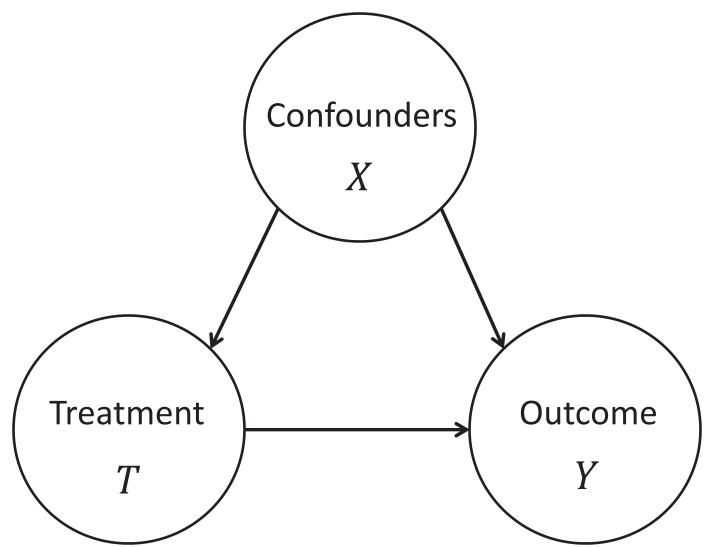
*Fig 1: The framework for reducing selection bias induced by confounders (X) to see the true link between Treatment (T) and Outcome (Y).*
## Key Insights: What Actually Works?
### 1. The Strategy-Promoter Fit
One of the most profound findings is that "one size does not fit all":
* **Popular Promoters**: Should focus on **Context**. Timing (user-active-time) and the interval between posts are critical.
* **Ordinary Promoters**: Should focus on **Content**. For those with fewer followers, high-quality "Personalized Decoration" (topic-interest), hashtags, and emoticons are the only way to break through the noise.
### 2. The Multi-Posting Trade-off
While "Strategy 1" (repeat promotion) is common, the data shows a clear trade-off. While more posts generally lead to more total adoptions, every subsequent repeat of the same message harvests fewer *new* users. Efficiency drops as the promoter "exhausts" their audience.
### 3. Visualizing Bias Reduction
The effectiveness of the PSM approach is best seen in the Q-Q plots below. Before matching (green), the data distributions are highly skewed; after PSM (blue), the groups are perfectly balanced, allowing for a "fair" comparison.
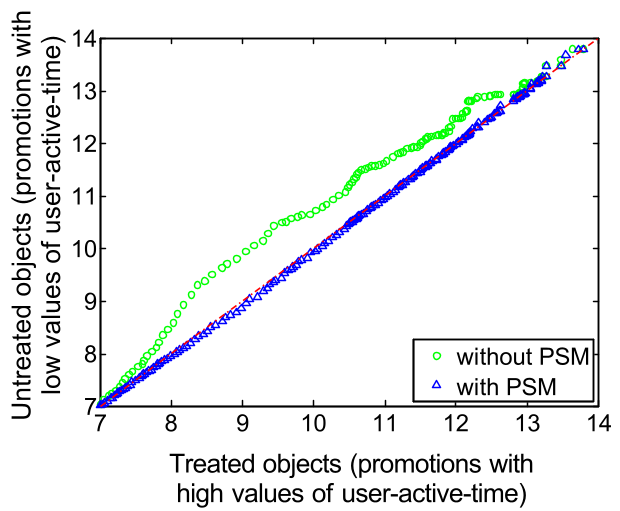
*Fig 2: Q-Q Plots demonstrating how PSM aligns the distributions of confounders between treated and untreated groups.*
## Performance Benchmarks
When using the selected strategies to predict future promotional effectiveness, the PSM-ranked features outperformed traditional methods like **mRMR**. Specifically, correlation-based methods often selected redundant features that were already captured by the promoter's static influence, whereas PSM successfully isolated features with **independent causal power**.
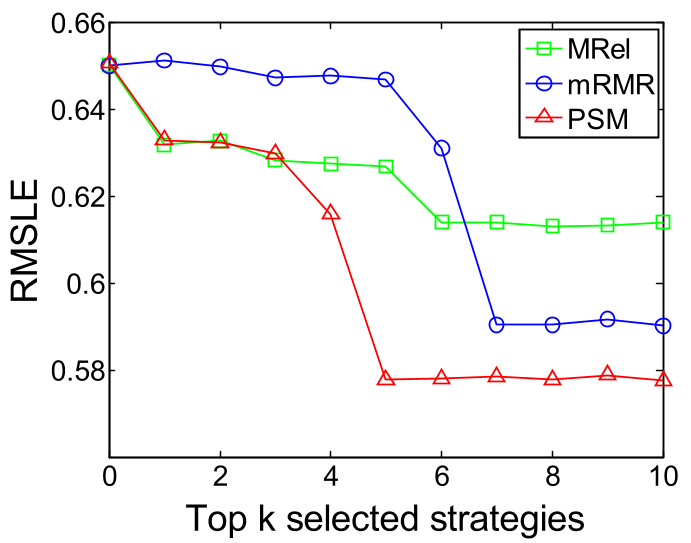
*Fig 3: Efficiency and error reduction comparison—PSM converges to lower error rates much faster than baselines.*
## Critical Analysis & Conclusion
This work is a significant leap toward **Prescriptive Analytics** in social media. It doesn't just predict what happens; it tells you what to *do*.
**Limitations**: The study relies on binary treatments (strategy used or not), whereas in reality, many strategies (like "length of comment") are continuous. Additionally, the data is from Tencent Weibo (2011), so while the **causal logic** holds, the specific "best hours" or "effective hashtags" may have shifted in the era of algorithmic feeds like those of X (Twitter) or TikTok.
In conclusion, if you're managing social media promotions, stop chasing correlations. Use a causal lens to determine if your success is due to who you are, or how you promote.