
SAM: Orchestrating Worker Intelligence for Context-Sensitive Crowdsourcing
Effective Result Inference for Context-Sensitive Tasks in Crowdsourcing
The paper introduces a Smart Assembly Model (SAM) and a POMDP-based iterative decision framework for result inference in Context-Sensitive Tasks (CSTs) like handwriting and speech recognition. By aggregating worker contributions at the subtask granularity while preserving task-level context, the method achieves SOTA accuracy in complex crowdsourcing scenarios.
TL;DR
Inferring the "ground truth" from noisy crowd workers is a classic problem, but Context-Sensitive Tasks (CSTs)—where the meaning of one part depends on another—break traditional models. This paper introduces the Smart Assembly Model (SAM), a framework that keeps tasks whole for workers but "assembles" the final answer from the best sub-fragments of multiple workers using partially ordered sets and POMDP-based iterative stopping rules.
The "Context" Dilemma: Why Simple Aggregation Fails
In crowdsourcing, we usually face a trade-off:
- Task-Level (Task-Inf): Ask a worker to transcribe a whole page. It's often too hard; no single worker gets it 100% right.
- Subtask-Level (Subtask-Inf): Chop the page into single words. This destroys the context. A worker might not recognize a smudged word in isolation, but can easily "read" it if they see the whole sentence.
The authors identify that for tasks like handwriting or speech recognition, context is the catalyst for accuracy. If you split the task, you lose the catalyst. If you don't split it, you are stuck with mediocre results from workers who are "mostly right but partially wrong."
Methodology: The Smart Assembly Model (SAM)
The core innovation is treating worker outputs not as a single vote, but as a matrix that can be surgically reassembled.
1. The Output Matrix and COVs
The system defines a Candidate Output Vector (COV), which is a possible final answer constructed by picking subtask results (e.g., words) from different workers. If you have workers and words, the search space is potentially .
2. Partial Order Theory
To find the best COV without exhaustive searching, SAM uses Partially Ordered Sets. It creates a hierarchy of answers where one version is "greater than" another if its components have higher worker consensus (Majority Voting logic).
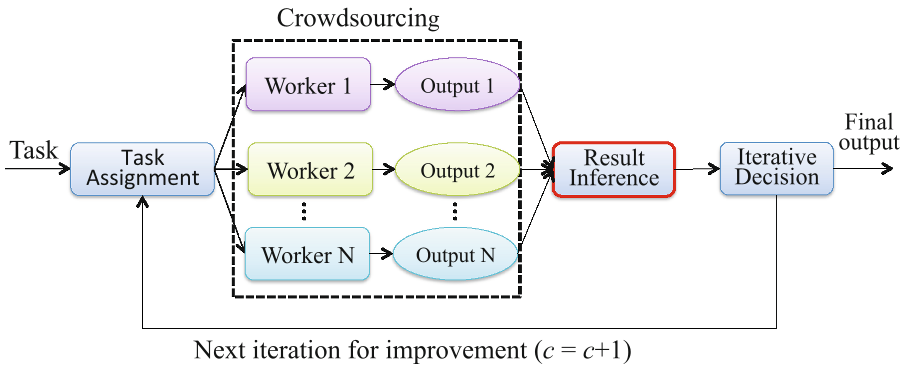 Figure 1: The Iterative Framework of SAM.
3. Ability Estimation via "Subtask Training Sets"
When multiple "greatest" candidates exist, SAM breaks the tie by estimating worker ability. It identifies subtasks where the crowd strongly agrees and uses these as a "silver standard" to score each worker's reliability.
POMDP: Knowing When to Quit
A major cost in crowdsourcing is over-sampling. The authors use a Partially Observable Markov Decision Process (POMDP) to model the state of "Result Quality."
- The Action: Should we hire more workers or submit the current best result?
- The Optimization: Unlike standard POMDPs that suffer from the curse of dimensionality, this paper simplifies the state space to pairs of quality , making it computationally efficient for real-time crowdsourcing.
Experimental Proof: Cursive and Speech
The authors tested SAM against Task-Inf and Subtask-Inf on real Chinese cursive calligraphy (118 words) and noisy speech (130 words).
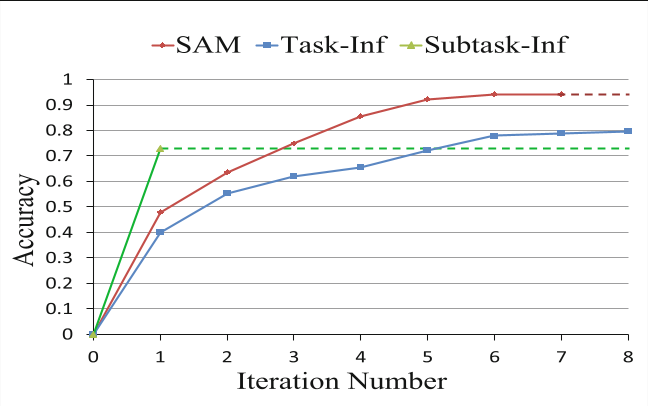 Figure 2: Performance comparison specifically for Chinese Cursive Calligraphy.
Key Findings:
- Accuracy: SAM reached 94% accuracy in calligraphy recognition, while Subtask-Inf lagged at 73% (due to lost context) and Task-Inf at 79% (due to task difficulty).
- Efficiency: SAM reached peak performance with fewer workers, significantly lowering the total cost compared to blindly splitting tasks into hundreds of micro-assignments.
Critical Analysis & Conclusion
The beauty of SAM lies in its realization that human workers and aggregation algorithms have different optimal grains. Humans need the "Big Picture" (Context) to perform, while algorithms are better at "Cherry-picking" (Assembly) the best parts of those performances.
Limitations: The model assumes subtasks can be clearly demarcated (e.g., words in a sentence). For tasks like image segmentations where boundaries are fluid, the "Output Matrix" approach might require more complex alignment (like Dynamic Time Warping).
Future Outlook: As we move toward Hybrid-AI systems, using SAM-like logic to aggregate outputs from multiple "noisy" LLMs could be a vital path for high-stakes reasoning tasks where context is king.