Multiphase Diffusion: Why Adaptive Seeding is the Key to Social Influence
Effectiveness of Diffusing Information through a Social Network in Multiple Phases
This paper investigates the effectiveness of multiphase information diffusion in social networks using the Independent Cascade (IC) model. It introduces an adaptive seeding strategy where seed nodes are selected phase-by-phase based on observed results, achieving significant performance gains over single-phase approaches, particularly when moving to two or three phases.
TL;DR
Adaptive seeding—selecting "influencers" in multiple stages rather than all at once—is a powerful but under-researched tool. This paper demonstrates that while having "more phases" doesn't strictly guarantee success, a 2 or 3-phase strategy significantly outperforms single-shot campaigns. The magic formula? Split your budget so that every phase influences a roughly equal number of new people.
Context & Positioning
Influence Maximization (IM) has long been a "one-and-done" problem: you pick a set of seed nodes (influencers), give them the product, and hope for the best. However, human behavior is stochastic. This paper sits at the frontier of Adaptive Influence Maximization, moving from static optimization to a dynamic, feedback-loop-driven process.
The "Negative Result": More is Not Always Better
In a surprising theoretical twist, the author proves that a myopic multi-phase approach can actually perform worse than a single phase if the budget isn't split judiciously.
Proposition 1: Even with an optimal policy, subdividing a budget into more phases can lead to a lower total spread in specific network topologies.
This highlights the critical importance of the Budget Split—the decision of how many "free samples" or "invites" to keep in reserve for subsequent stages.
Methodology: Balancing Observation and Exploitation
The author uses the IRIE algorithm for seed selection due to its speed on large graphs. To simulate the "real world," the study pre-samples "Live Graphs."
The Influenceability Curve
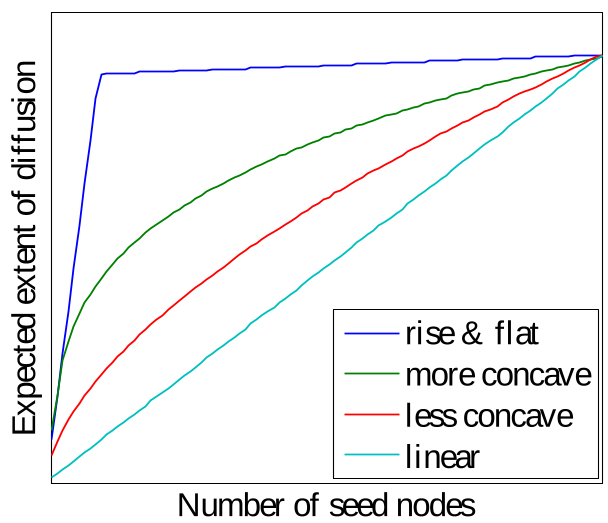
One of the most profound insights is that networks have different "Influenceability Curves" (concave, linear, or "rise & flat").
- Concave Networks: Most real-world social networks. Selecting the first few nodes provides a massive observation of the network, which can then be exploited.
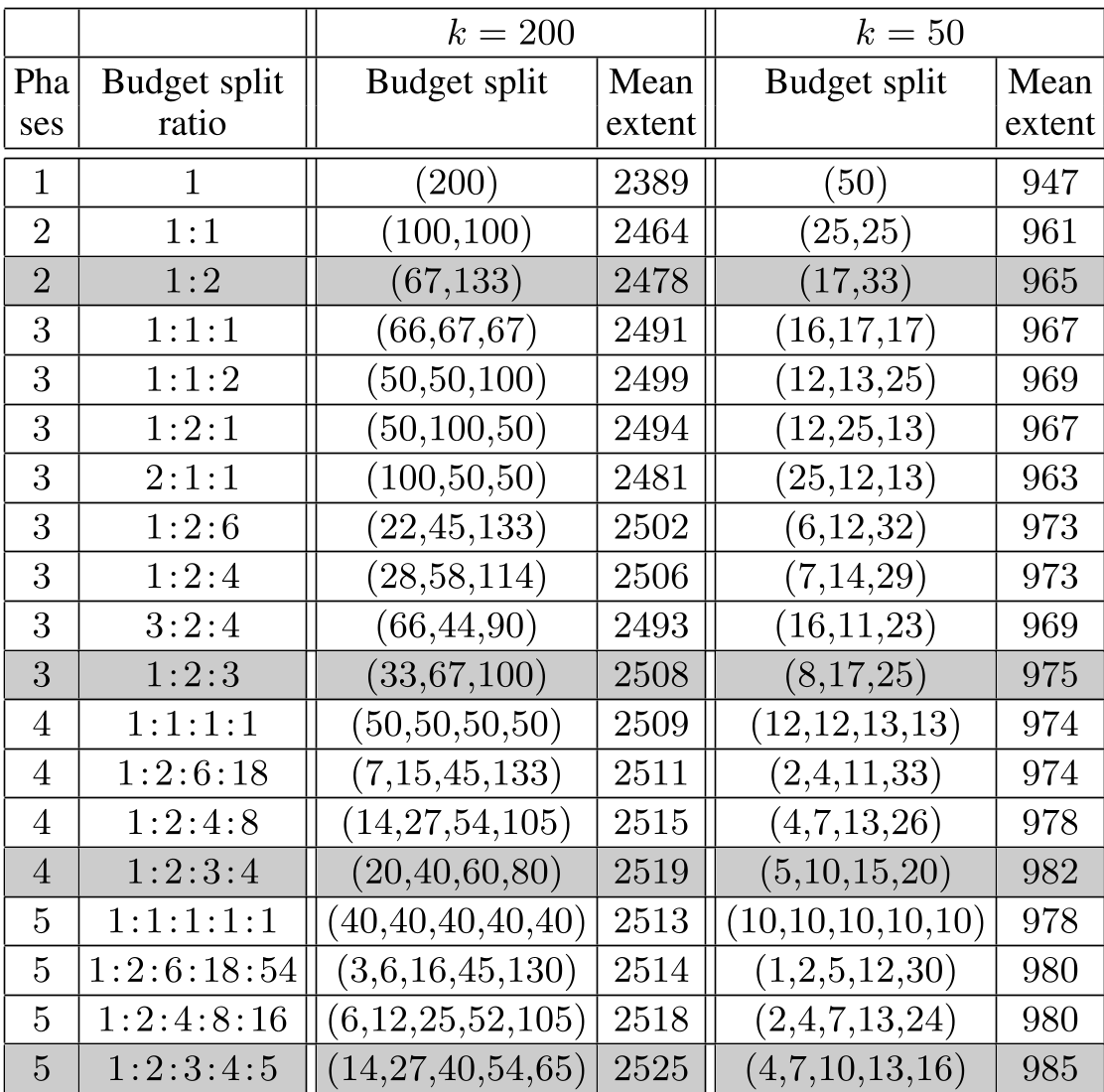
- The Equal Influence Rule: For these networks, the optimal strategy isn't an equal budget split (e.g., 50/50), but an equal result split. You want the number of people reached in each phase to be similar. This often results in a budget split that looks like an arithmetic progression (e.g., 1:2:3).
Experimental Insights: Diminishing Returns
The research utilized the NetHEPT and Facebook datasets. The results provide a clear roadmap for campaigners:
- Phase 1 to 2: Significant jump in reach (approx. +4-5%).
- Phase 2 to 3: Appreciable gain (approx. +1%).
- Beyond Phase 3: The marginal utility drops sharply. The overhead of waiting for the previous phase to finish usually outweighs the tiny gain in reach.
Uncertainty and Standard Deviation
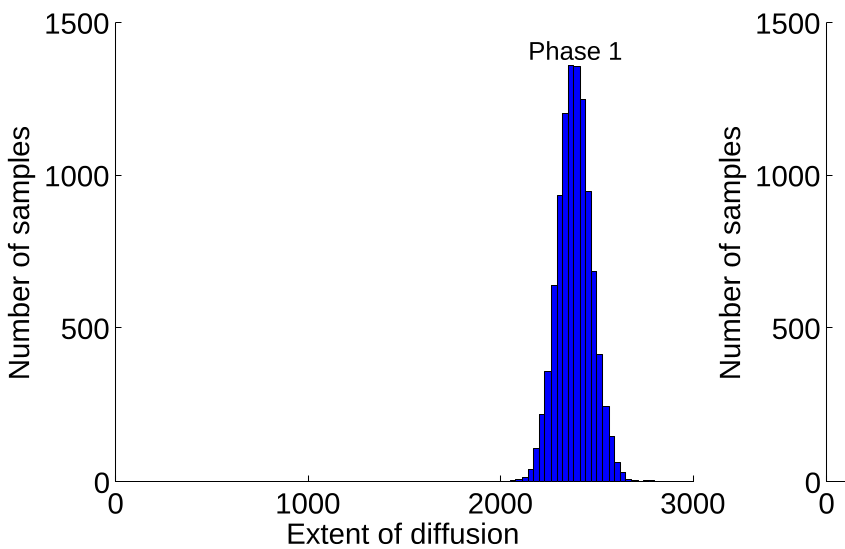
Does adaptive seeding reduce uncertainty? The paper finds a nuanced answer. While it increases the mean spread, it might actually increase the standard deviation because the algorithm reaches deeper, unexplored parts of the network, which brings new stochastic variables into play. However, in any specific stage, later phases are "safer" and more predictable than the initial "blind" seeding.
Deep Insight: Decaying Value
Real-world information loses value over time. If a node influenced in Phase 2 is worth only 80% of one influenced in Phase 1 (decay factor ), is multi-phase still worth it? The author provides a mathematical bound (see Table 5 in the paper) to determine the "cutoff" for . For a 2-phase strategy to remain viable, the information generally needs to retain at least 81% of its value between phases.
Conclusion: Practical Takeaways
- Don't blow your budget early: If you are running a marketing campaign, keep 60-70% of your resources for a second or third wave.
- Target the "Equal Result": Adjust your subsequent waves based on how many people you see getting reached now.
- Stop at Phase 3: The complexity of managing 4+ phases rarely justifies the minimal extra reach.