
Beyond the Screen: How Collective MMORPG Play Rebuilds Social Capital
The effects of collective MMORPG (Massively Multiplayer Online Role-Playing Games) play on gamers’ online and offline social capital
This study investigates the impact of collective MMORPG play on gamers' social capital using a two-wave online survey of 232 Chinese players. It distinguishes between "collective play" (guild/group actions) and simple "gaming time," finding that the former enhances online social networks and offline civic engagement.
TL;DR
Is gaming a social vacuum or a digital town square? This longitudinal study of Chinese MMORPG players reveals that how you play matters more than how long you play. While sheer gaming volume can erode social ties, collective play—the act of collaborating in guilds and groups—significantly bolsters online social networks and, surprisingly, translates into increased civic engagement in the real world.
The "Time" Paradox: Motivation & Friction
For years, both parents and policymakers have viewed MMORPGs through the lens of "Time Displacement"—the idea that every hour spent in World of Warcraft is an hour stolen from real-world relationships. However, this study suggests that "Gaming Time" and "Collective Play" are two different beasts.
The author argues that existing research failed because it ignored the social quality of the gaming experience. In the virtual lands of MMORPGs, players aren't just pushing buttons; they are managing organizations, negotiating with strangers, and building shared identities.
Methodology: The Longitudinal Lens
To move beyond mere correlation, the study employed a two-wave online survey with a four-month gap. This allowed the use of Cross-Lagged Structural Equation Modeling (SEM) to see if gaming behavior at Time 1 could predict social capital at Time 2.
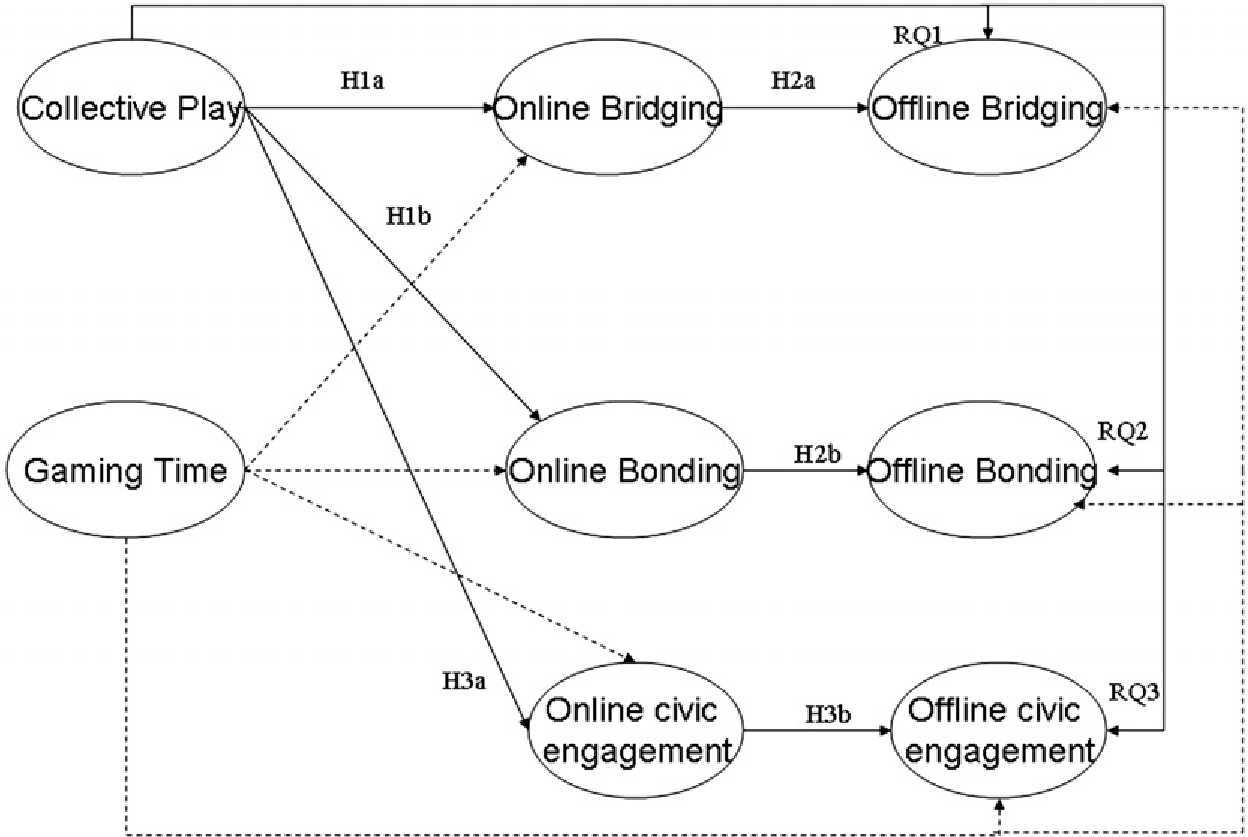
The research focused on three types of social capital:
- Bonding: Emotional support from close, homogeneous ties.
- Bridging: Information and new perspectives from "weak ties" (strangers/acquaintances).
- Civic Engagement: Participation in community and voluntary organizations.
Key Insights: Why "Guilds" Matter
The results confirm that MMORPGs act as "Third Places"—informal social environments where people can interact outside of home and work.
1. The Virtual Boost
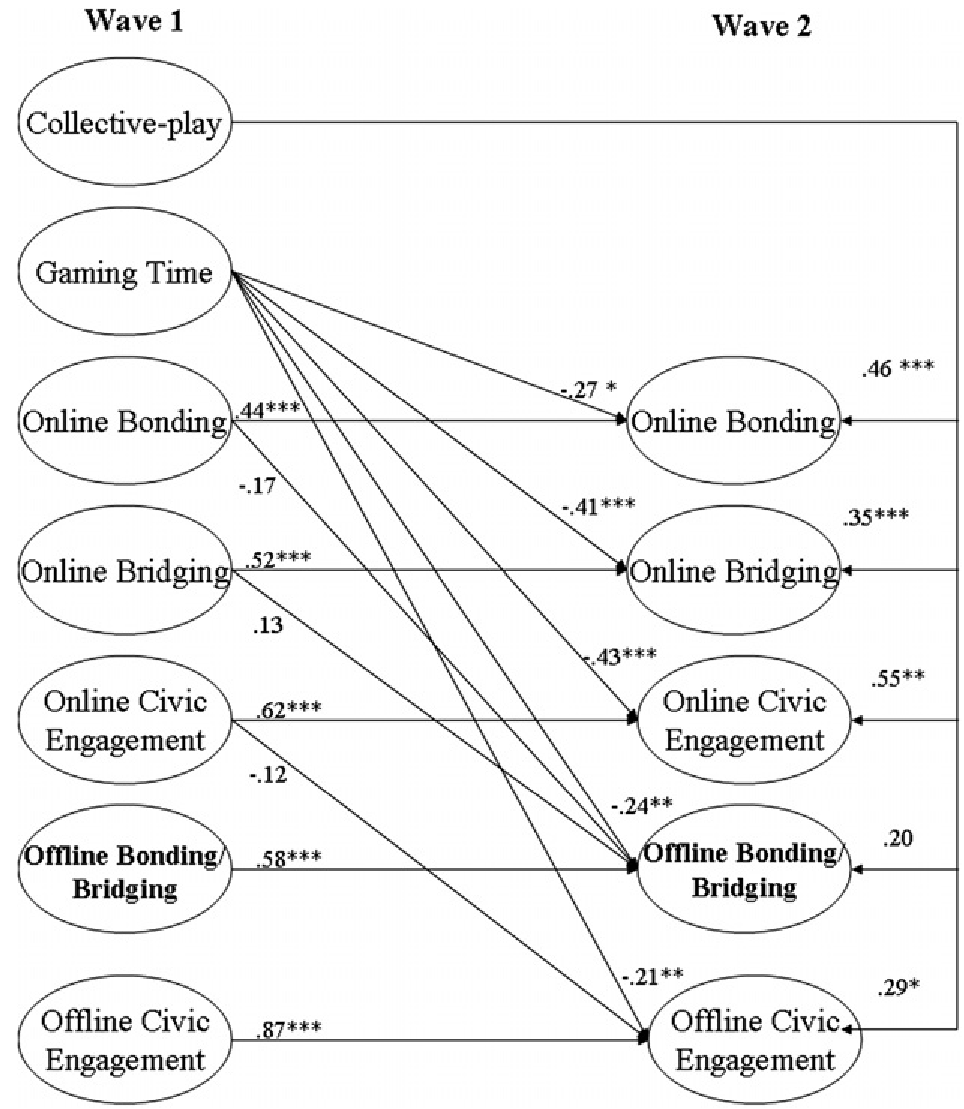
Collective play showed a strong positive impact on all forms of online social capital. The shared identity of a "Guild Tag" and the necessity of avatar-based collaboration reduce the uncertainty of computer-mediated communication (CMC).
- Insight: Collaboration breeds trust. If you successfully slay a dragon with a stranger, you are more likely to view the broader online community as trustworthy.
2. The Offline Bridge
Interestingly, while collective play didn't directly make gamers more likely to borrow money from their offline friends, it did increase their offline civic engagement.
- The "Civic Training" Hypothesis: Managing a 40-man raid or a guild's internal politics teaches leadership, negotiation, and responsibility—skills that transfer directly to real-world community activism.
3. The Downside of Solo Play
The study found a sharp contrast: Gaming Time (the total duration) negatively predicted social capital across the board.
- Takeaway: If you play alone to "grind" levels, you are displacing your social life. If you play to collaborate, you are expanding it.
Analysis: A Double-Edged Sword
The study highlights that MMORPGs are inherently neutral tools. The "Anti-social" vs. "Pro-social" effect is a choice made by the player and the game designer.
- For Designers: Game mechanics should favor interdependence. Hard quests that require grouping are not just gameplay challenges; they are social capital incubators.
- For Society: We should stop viewing virtual civic participation as "fake." For many, these digital guilds are the primary training ground for modern organizational skills.
Conclusion
Zhi-Jin Zhong's work serves as a critical reminder that in the digital age, social capital is being redefined. While we might not be "Bowling Alone" in the traditional sense, we are certainly "Raiding Together." The challenge for the future is ensuring that the bonds formed in the virtual world are leveraged to solve the very real problems of the offline one.
Limitations: The study relied on self-selected samples and a two-wave design; future research with three waves could more clearly define the "mediation" path from online to offline worlds.