
The GSS Paradox: How Technology Reshapes Social Influence in Group Decisions
6112_Effects of group support system and task type on social influences in small groups.
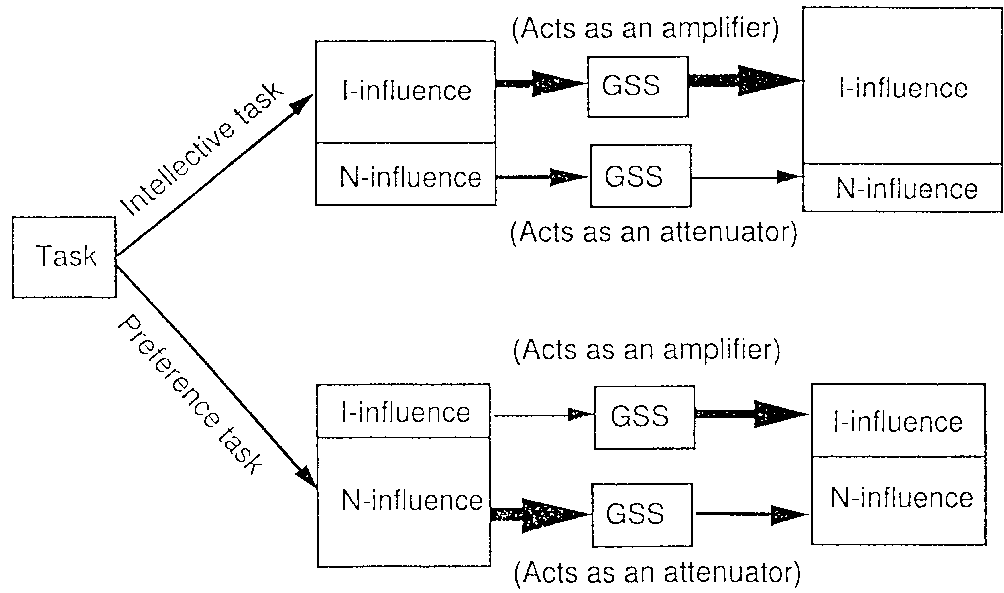
This empirical study explores how Group Support Systems (GSS) and task types influence social dynamics in small groups. Using an experimental 2x2 factorial design, the authors demonstrate that GSS acts as an "amplifier" of informational influence in intellective tasks and an "attenuator" of normative influence in preference-based tasks.
TL;DR
Can technology change the way we persuade one another? This study reveals that Group Support Systems (GSS) do not just facilitate communication; they actively re-engineer social dynamics. By stripping away non-verbal cues and enforcing structured agendas, GSS amplifies logic in factual tasks and mutes peer pressure in value-based discussions, proving that the medium is indeed part of the message.
Background: Beyond the Black Box
In the world of organizational behavior, group work is often a "black box." We see the input (a problem) and the output (a decision), but the messy process of social influence remains hidden. This paper dives into that box, using two primary psychological lenses:
- Informational Influence: Acceptance of information as evidence of reality (The "Power of Facts").
- Normative Influence: Conformity to meet others' expectations (The "Power of Peers").
The Problem: One Size Does Not Fit All
Most GSS platforms were designed with a "rationality bias," assuming that every group task needs more logic and less emotion. However, the authors argue that the effectiveness of technology depends entirely on the Task Type:
- Intellective Tasks: Have a demonstrably "correct" answer (e.g., a logic puzzle).
- Preference Tasks: Depend on personal values and ethics (e.g., budget allocation for charities).
Methodology: The "Amplifier and Attenuator" Framework
The researchers used the SAMM (Software Aided Meeting Management) system to intervene in group processes. They hypothesized that GSS acts as a filter through three dimensions:
- Communication Networks: Moving from a "Comcon" (decentralized) to a "Wheel" (centralized via a public screen) pattern.
- Modality: Shifting from "rich" face-to-face cues to "lean" electronic text.
- Strategies: Enforcing a strict, rational agenda that favors task-focus over socializing.
Key Findings: The Results of Digital Mediation
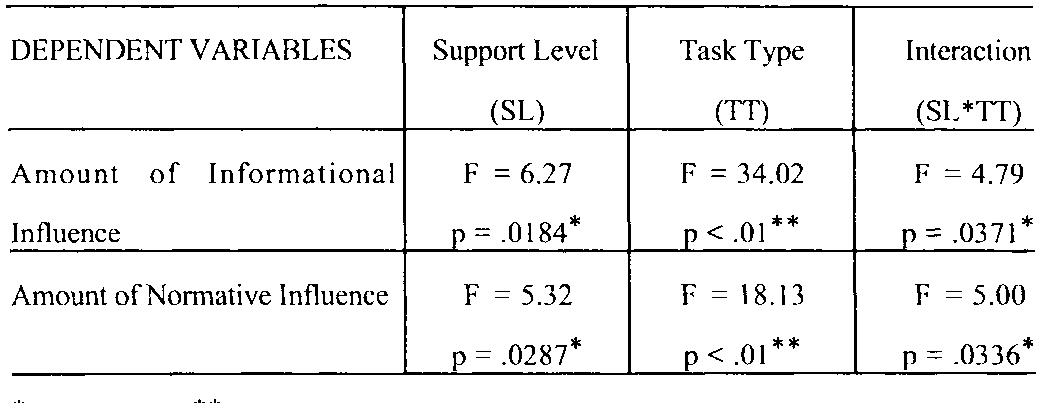
The study confirms a striking "Amplifier-Attenuator" effect:
- For Intellective Tasks: GSS significantly boosted the exchange of facts and logical inferences. Because the tool focused users on the screen and the data, the "rational" side of the group was empowered.
- For Preference Tasks: GSS acted as a shield against normative pressure. By making communication more impersonal and structured, the software attenuated the "desire to conform," allowing for more independent (though sometimes less cohesive) input.
The "Threshold" Discovery
Intriguingly, GSS did not significantly reduce normative influence in intellective tasks. The authors suggest a "Threshold Level": every group needs a baseline of social cohesion and factual exchange to function at all. Below this threshold, technology cannot further suppress or enhance influence.
Critical Analysis & Conclusion
The value of this research lies in its warning to managers: Technology is not neutral.
- Takeaway: If your goal is a high-stakes logical analysis (Intellective), GSS is your best friend. It filters out the noise of "office politics."
- Limitation: If your goal is to build consensus or resolve deep-seated value conflicts (Preference), a lean, structured GSS might actually be a "poor fit," as it suppresses the very social cues needed for empathy and negotiation.
Future Outlook
As we move into an era of AI-mediated collaboration (Slack, Teams, Zoom), understanding these invisible shifts in influence is critical. Future research must ask: how do AI "nudges" in these platforms act as the new amplifiers and attenuators of our daily professional lives?
Summary of "Effects of Group Support System and Task Type on Social Influences in Small Groups" by Huang, Raman, and Wei.