
The Architect Within: How Your Personality Shapes Your Social Network
Review of the effects of Five Factor Model personality traits on network structures and perceptions of structure
This paper provides a comprehensive review of research linking the Five Factor Model (FFM) of personality to social network analysis (SNA). It synthesizes how Extraversion, Agreeableness, Openness, Conscientiousness, and Neuroticism influence network size, composition, and structural positions across personal and workplace contexts.
TL;DR
Is your position in a social network a result of your environment, or is it hard-coded in your personality? This review reveals that our "Big Five" traits are surprisingly accurate predictors of our social architecture. While Extraverts build massive, friend-heavy empires, it is the Conscientious individuals who dominate the strategic hubs of the workplace. Meanwhile, Neuroticism doesn't shrink your network—it just changes how "broken" you perceive it to be.
Perspective: Structuralism vs. Agency
For decades, social network researchers were divided. "Anti-categorical" structuralists argued that where you sit in a network determines your behavior. This paper argues the opposite: humans are active agents. Our motivations and traits are the "invisible hands" that weave the social web. By reviewing 30 key studies, Selden and Goodie map out how the Five Factor Model (FFM) acts as a blueprint for our social lives.
Methodology: Mapping the Human Element
The authors categorized findings based on two distinct "flavors" of networks:
- Personal (Expressive): Networks built on emotion, kinship, and friendship.
- Workplace (Instrumental): Networks defined by collective goals, advice-seeking, and professional survival.
1. Extraversion: The Engine of Growth
Unsurprisingly, Extraverts have larger networks. However, the nuance lies in composition.
- The Growth Factor: Extraversion is most powerful during "transitional periods" (e.g., starting university). It drives the inclusion of non-kin (friends and acquaintances).
- Homophily: Extraverts gravitate toward other Extraverts, creating high-energy clusters.
- In-Degree vs. Out-Degree: In friendship, they send and receive many ties. In leadership, however, they are often nominated by others but are less likely to nominate others back.
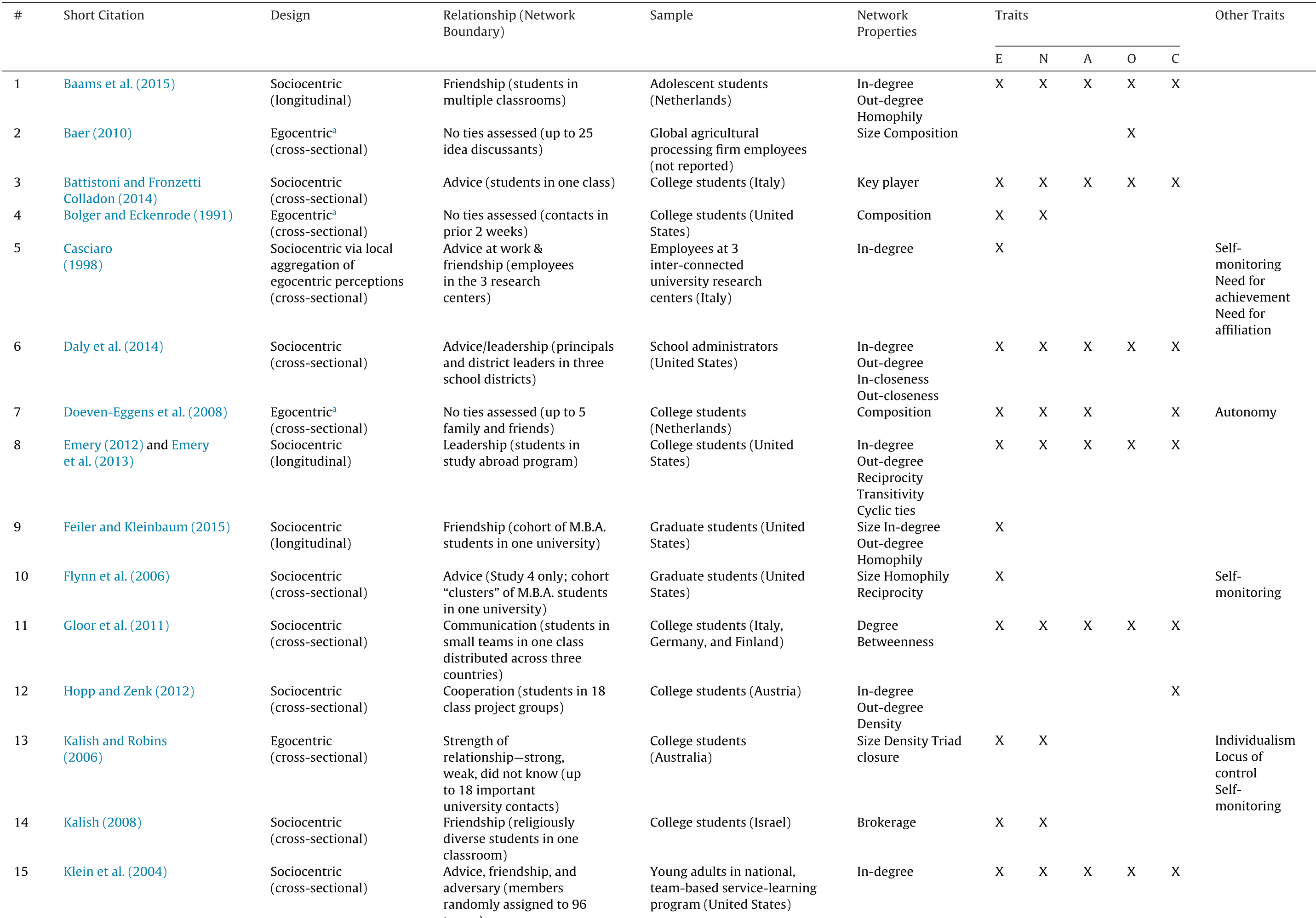 Table 1: Summary of studies showing the prevalence of Extraversion and Neuroticism in SNA research.
2. Conscientiousness: The Workplace Power Player
While Conscientiousness does little for your friendship "cool factor," it is the "SOTA" trait for workplace influence.
- Key Players: Conscientious individuals often occupy "Periphery Specialist" or "Central Connector" roles. They are sought out for expertise and reliability.
- Stability: They are the guardians of the network, maintaining stable ties with family and long-term professional contacts.
3. Neuroticism: The Perception Gap
This is perhaps the most fascinating finding. Neuroticism does not lead to smaller networks. Instead, it creates a "Perception Gap":
- Structural Holes: High-neuroticism individuals perceive their networks as being full of "holes"—seeing their friends as disconnected even when they are actually connected.
- Social Anxiety: Despite feeling less socially skilled, they maintain the same number of ties as others, though they struggle more with "adversarial" (negative) relationships.
4. Agreeableness & Openness: The Bridges
- Agreeableness: Acts as the "glue" that maintains ties after the initial excitement of meeting wear off. It is particularly associated with stable family relationships and deflecting conflict.
- Openness: The primary driver of Network Diversity. Open individuals are more likely to have "idea networks" that span across different social circles and departments.
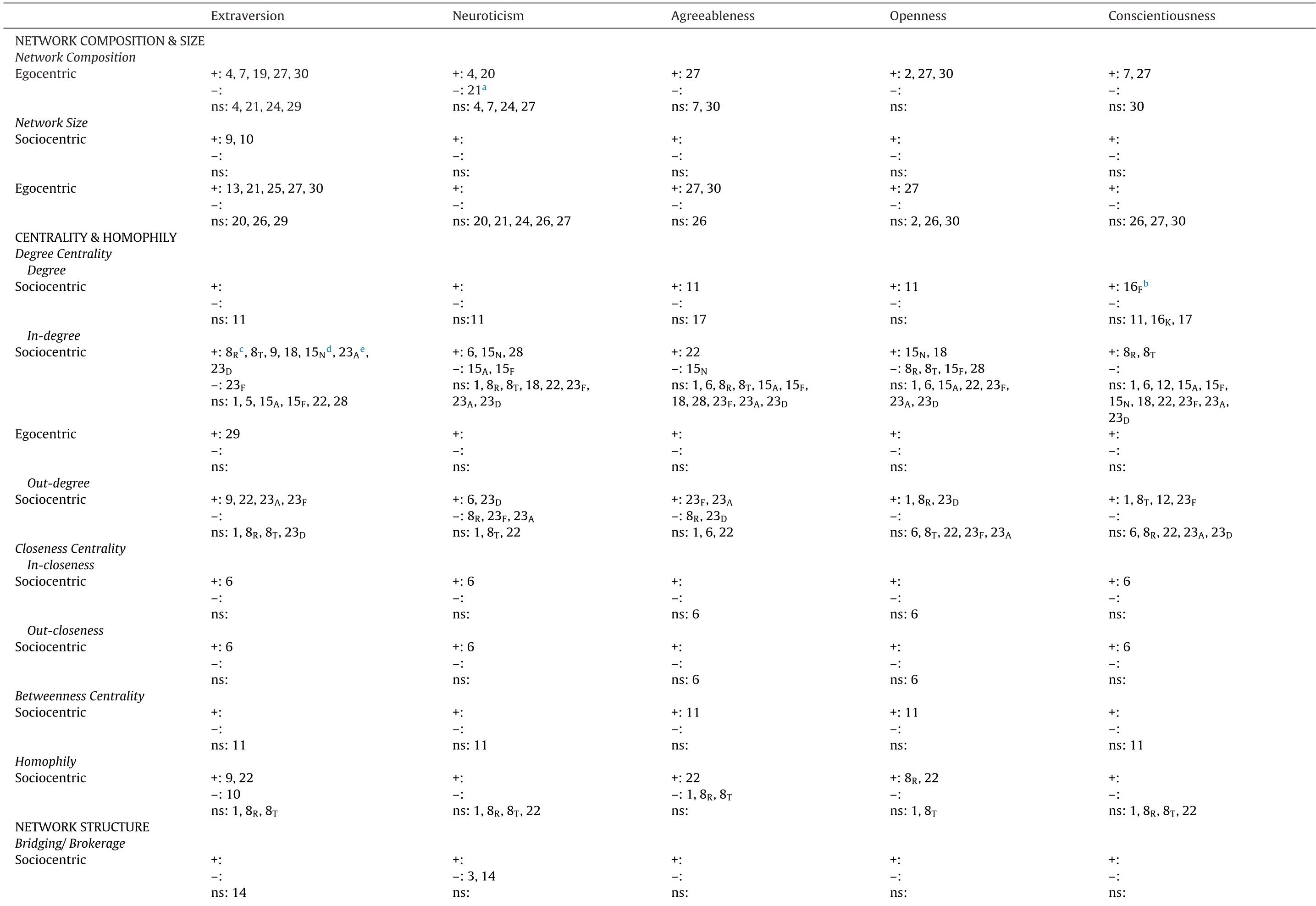 Table 2: A meta-look at how traits correlate with Centrality, Size, and Homophily.
Critical Insight: Context is King
The review highlights a critical "Inductive Bias" in current research: Context Moderation. A trait that is beneficial in a "Personal" network (like Extraversion) might be neutral or even detrimental in a "Workplace" network if it leads to excessive "chatting" instead of goal-oriented advice.
Deep Dive: The Future of Organizational Design
The takeaway for management is clear: you cannot design a perfect organizational chart without considering the personality profiles of the "nodes."
- For Recruitment: If you need a "Bridge" between departments, look for high Openness and Agreeableness.
- For Stability: Rely on the Conscientious.
- For Growth: Unleash the Extraverts.
Conclusion & Limitations
The study concludes that personality is a "distal predictor" of your social capital. However, it notes that most current studies rely on student samples (university cohorts). Future research must explore "Adversarial Networks"—the study of "who hates whom"—to fully understand how personality manages toxic social environments.
Takeaway: Your social network is not just something you are in; it is a structure you are constantly building based on who you are.