
Efficient Monitoring: How Simpler Pipelines Revolutionize Drug Side-Effect Discovery on Twitter
Efficient adverse drug event extraction using Twitter sentiment analysis
This paper proposes an efficient 5-step computational pipeline designed to extract Adverse Drug Events (ADEs) from Twitter streams using drug-related classification and sentiment analysis. By streamlining the classification process and enhancing data preprocessing, the method successfully identified 1,239 valid ADEs, outperforming a previous benchmark by 5x in total ADE count and significantly increasing the discovery of new side effects.
TL;DR
Researchers have developed a streamlined pipeline to mine Twitter for Adverse Drug Events (ADEs), achieving a 5x increase in discovery yield compared to previous state-of-the-art methods. By stripping away over-aggressive data filters and focusing on robust sentiment analysis, the system identified 1,239 side effects, 22% of which were "new" events not found in standard medical databases.
Positioning: This work is a "efficiency-focused optimization" of social media pharmacovigilance, proving that reducing pipeline complexity can solve the data-loss problem in NLP-driven health monitoring.
The Bottleneck: Why We Miss Side Effects
Before a drug hits the market, clinical trials are the gold standard. However, these trials are often too small or too short to catch rare or long-term side effects. While the FDA’s FAERS database exists, it is plagued by "reporting bias"—patients and doctors usually only report life-threatening issues.
Social media is the "missing link" where patients candidly discuss minor but significant life-altering side effects. The problem? Previous academic pipelines were too strict. By layering multiple classifiers (Is it a drug? Is it a personal experience? Is it subjective?), they filtered out the very data they were trying to find.
Methodology: The "Less is More" Architecture
The authors propose a 5-step pipeline that prioritizes data retention.
1. Robust Data Cleaning
Using Levenshtein distance, the system identifies near-duplicate tweets (retweets and bot-spam) with a 90% similarity threshold. This ensures the model isn't biased by viral content or pharmaceutical advertisements.
2. Simplified Classification
Unlike previous benchmarks that used complex rule-based NLP combined with user-experience filters, this method uses a single, high-performing SVM (Support Vector Machine) classifier to isolate drug-related content.
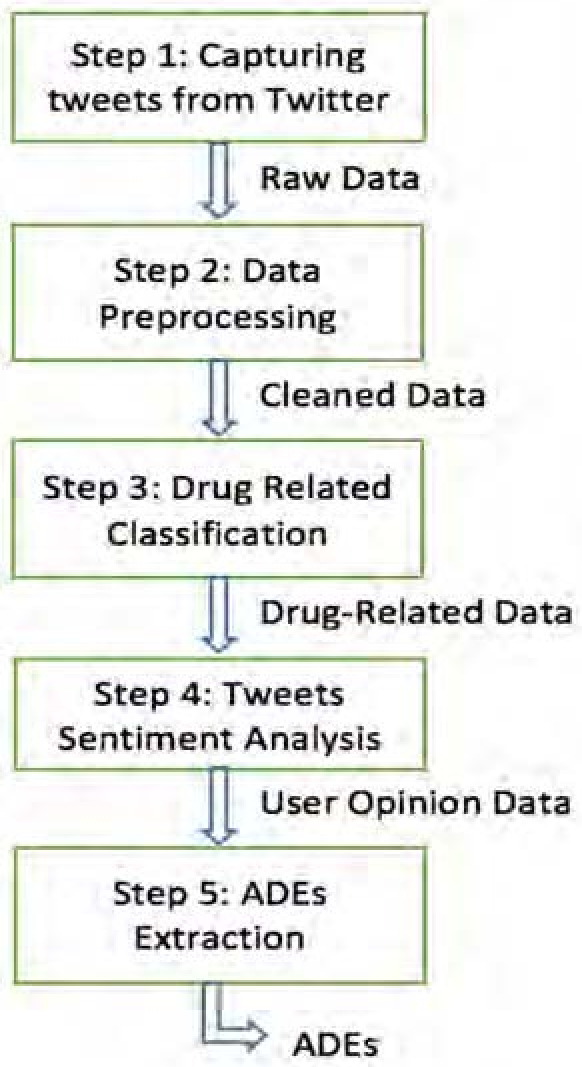 Figure 1: The Proposed 5-Step ADE Extraction Pipeline
3. Sentiment & Negation Detection
The "secret sauce" is how the model handles English nuances. It doesn't just look for "bad" words; it detects:
- Negation: Distinguishing "This drug gave me a headache" from "This drug did not give me a headache."
- Conjunctions: Identifying shifts in sentiment ("The drug helped my back, but it made me nauseous").
- Questions: Capturing users asking, "Does anyone else feel dizzy on Gabapentin?"
Results: A Massive Leap in Recall
The experimental results compared the new pipeline against a established benchmark on five major drugs (including Lyrica and Cymbalta).
- Discovery Rate: The pipeline extracted 1,239 ADEs, compared to just 236 from the benchmark.
- New Insights: It found 12 times more "new" (previously uncatalogued) ADEs.
- Accuracy: Despite the simplified filters, the False Positive Rate remained low at 19.6%, proving that the aggressive filtering in previous works was unnecessary.
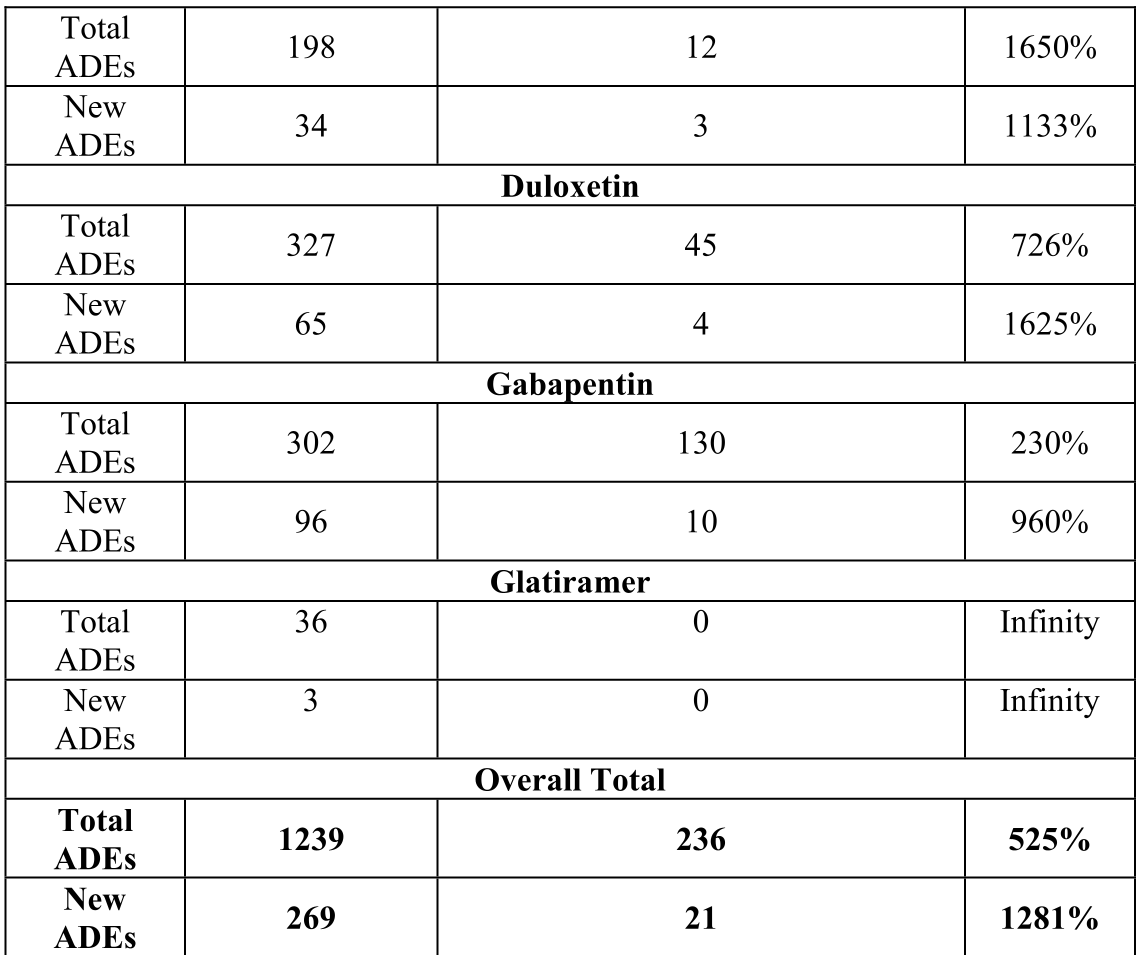 Table: The proposed pipeline vs. Benchmark—massive gains in total and new ADE detection.
Deep Insight & Conclusion
This paper challenges the academic trend of "model stacking." In the domain of social media mining, where data is already sparse and noisy, each additional "gatekeeper" (classifier) exponentially increases the risk of discarding valuable signals.
Key Takeaways:
- Recall is King: In safety monitoring, missing a signal (False Negative) is often more dangerous than a manageable amount of noise (False Positive).
- Beyond Medline: Twitter provides a real-time pulse of patient health that traditional clinical settings cannot match.
- Scalability: The use of Hive and Python-based NLTK makes this pipeline ready for "Big Data" scales, potentially monitoring thousands of drugs simultaneously.
Future Outlook: The authors suggest integrating Apache Spark for real-time processing and involving pharmaceutical experts to further refine the labeling of "New ADEs." This work paves the way for a more reactive and patient-centric approach to global drug safety.