
Heuristic-DP: Scaling Global Social Event Planning to Linear Complexity
Efficient Complex Social Event-Participant Planning Based on Heuristic Dynamic Programming
The paper introduces Heuristic-DP, an efficient algorithm for the Global Event Planning with Constraints (GEPC) problem in Event-Based Social Networks (EBSNs). It utilizes a two-dimensional dynamic programming approach to synchronously handle user interests, travel budgets, time conflicts, and event participation bounds, achieving a state-of-the-art complexity of O(|U||E|).
TL;DR
Researchers have developed Heuristic-DP, a novel algorithm designed to solve the Global Event Planning with Constraints (GEPC) problem in Event-Based Social Networks (EBSNs). By combining heuristic search with two-dimensional dynamic programming, the algorithm reduces computational complexity from a quadratic to a linear , making massive-scale event coordination (like that on Meetup) significantly faster and more accurate.
Background & Motivation: The Coordination Bottleneck
In the world of Event-Based Social Networks (EBSNs), the challenge isn't just recommending an event to a user—it's optimizing a global plan. The GEPC problem requires balancing:
- User Preferences: Maximizing the utility (interest) score.
- Resource Constraints: Events have strict lower and upper bounds for participants ( and ).
- Personal Constraints: Users have limited travel budgets and cannot attend overlapping events (time conflicts).
Previous SOTA methods followed a clumsy two-step framework. They would first try to satisfy basic participation counts and then "fix" the plan to maximize utility. This sequential logic is computationally expensive and often settles for sub-optimal results.
Methodology: The Heuristic-DP Architecture
The core innovation of this paper is the move from sequential constraint satisfaction to asynchronous parallel processing.
1. Two-State Execution
The algorithm iterates through users and maintains two states for the EBSN platform:
- Incomplete State: Used when some events haven't met their minimum participant threshold (). The system triggers the iTDP (Improved TDP) algorithm, which uses a heuristic to "force" users into these under-attended events to guarantee feasibility.
- Complete State: Once all events are "safe" (lower bounds met), the algorithm switches to standard TDP, focusing purely on maximizing user utility and adhering to travel budgets.
2. 2D Dynamic Programming (TDP)
The TDP algorithm is the "engine" of the system. It segments the day into time slices and solves for the optimal event path for by considering travel cost and time availability as two dimensions.
 Figure 1: Conceptual grid of the GEPC problem showing spatial distribution of users and events.
The transition function for the DP is defined as: Where represents the maximum utility score at time with budget . This allows the model to "decide" whether adding an event is worth the budget and time cost compared to previous options.
Experiments: Superior Efficiency
The authors tested their approach against "Greedy-based" and "GAP-based" algorithms using real-world data from Meetup and Plancast across cities like Singapore and Vancouver.
Performance Gains
The results were transformative. In the Vancouver dataset (2012 users, 225 events):
- Greedy-based: Time: 13,539s | Utility: 6821.83
- Heuristic-DP: Time: 10.17s | Utility: 6641.85
- Improved Heuristic-DP: Time: 11.28s | Utility: 6657.48
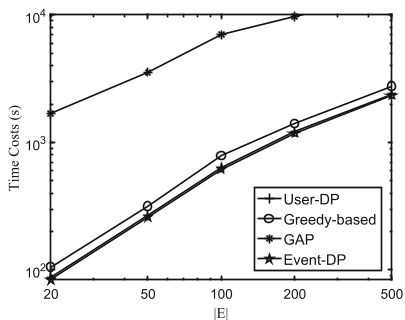 Figure 2: Total utility comparison across different datasets. Heuristic-DP consistently outperforms greedy approaches.
While the GAP-based algorithm (a complex optimization baseline) achieved slightly higher utility, its time and memory costs were orders of magnitude higher, making it impractical for production environments. Heuristic-DP provides the best balance of "near-optimal" utility with "lightning-fast" execution.
Critical Insight & Future Outlook
The beauty of this research lies in its Heuristic Strategy. In the improved version, the algorithm selects events based on the user's specific interest even when fulfilling lower-bound constraints. This "User-Oriented" heuristic ensures that even when the system is "forcing" a schedule to make an event viable, it chooses the most interested users possible.
Limitations: The current model assumes a fixed travel budget and static utility scores. In a real-world scenario, utility might change based on who else is attending (social influence), which suggests that Social-Aware DP could be the next frontier for this research.
Final Takeaway
Heuristic-DP proves that by cleverly structuring dynamic programming states and using asynchronized heuristics, we can solve complex combinatorial social planning problems in linear time. This is a vital step for the next generation of O2O service platforms.