
MASON: Optimizing Data Queries in the Chaos of Intermittent Mobile Social Networks
Efficient Data Query in Intermittently-Connected Mobile Ad Hoc Social Networks
This paper introduces an efficient data query framework for Mobile Ad-hoc SOcial Networks (MASON) using a centralized optimization model and a distributed protocol driven by "reachable expertise." By leveraging opportunistic link connectivity and social interests, the method achieves high query success rates with minimal communication overhead.
TL;DR
Mobile Ad-hoc SOcial Networks (MASONs) are decentralized communities where data lives on personal devices rather than the cloud. This paper tackles the "needle in a haystack" problem of querying this data amidst opportunistic connections. By introducing Reachable Expertise, the authors create a protocol that achieves a 96% query success rate while minimizing the energy wasted on redundant transmissions.
The Motivation: Why the Cloud Can't Help
In a world dominated by Facebook and Twitter, we assume a central server always has the answers. But what happens in a local community—like a hiking group in a remote area or a temporary archaeological site—where the Internet is non-existent?
The challenges of MASONs are unique:
- Opportunistic Connectivity: Links appear and disappear as people move.
- Autonomous Storage: Data is fragmented across individual tablets and phones.
- Information Asymmetry: You don't know who has the expertise to answer your query, and even the "experts" might not accurately know their own capabilities.
Standard protocols either flood the network (wasting battery) or guess blindly (losing data). The authors argue we need a strategy that balances cost and probability.
Methodology: The "Reachable Expertise" Insight
The core innovation lies in the transition from a centralized optimization model to a practical distributed protocol.
1. The Analytic Backbone
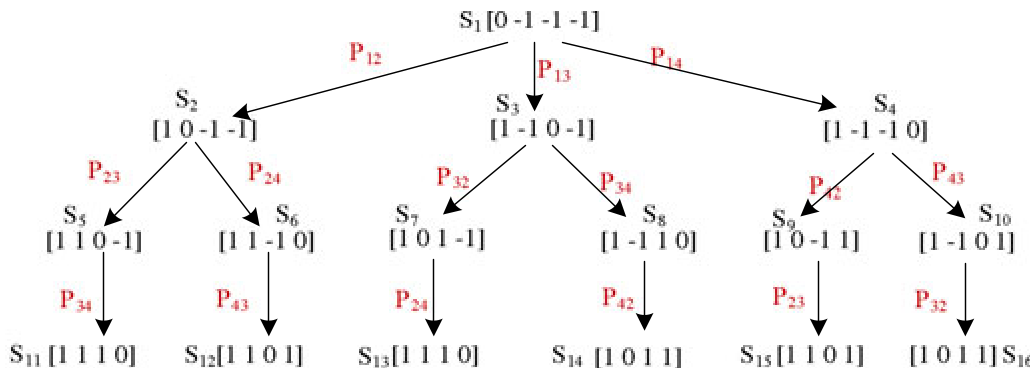
The authors first build a state-diagram model to calculate the probability of a query being answered within a delay budget. The goal is to minimize the transmission matrix while satisfying the success threshold .
2. Reachable Expertise (The Metric)
Instead of just asking "who is nearby?", the protocol asks "who can likely reach an expert within hops?".
- Expertise (): Updated via an EWMA feedback loop from successful query replies.
- k-hop Reachable Expertise: A recursive probability calculation that combines meeting probabilities with the expertise of potential relays.
3. Dynamic Redundancy Control
Unlike "Spray and Wait" which uses a fixed number of copies, MASON's protocol evaluates the effective redundancy. A query is only forwarded if the meeting node has a higher Aggregated Reachable Expertise () than the current carrier, and only until the estimated success probability meets the user's requirement.
Experimental Evidence
The researchers didn't just simulate; they deployed a testbed of 25 Dell Streak tablets for 15 days.
Performance Benchmarks
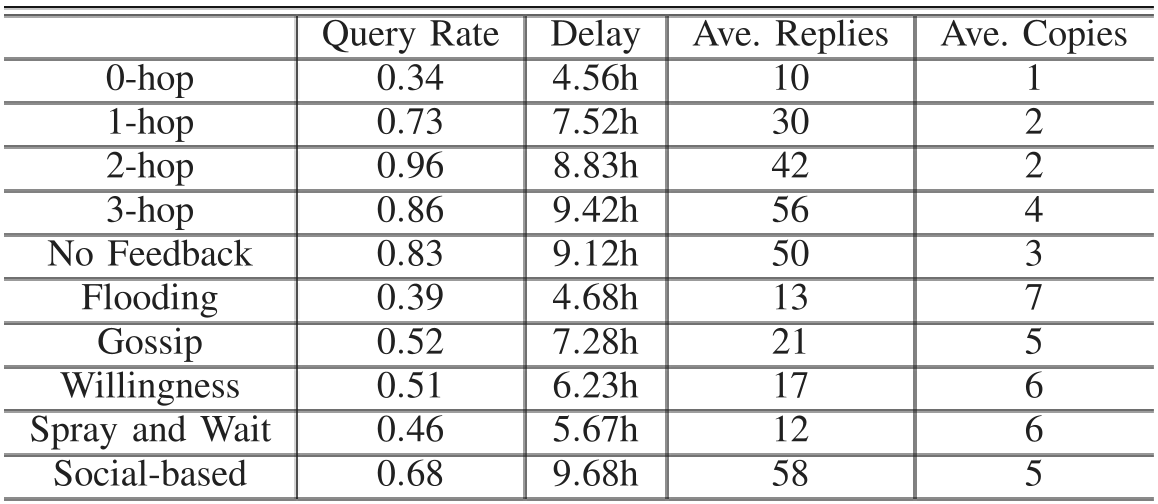
As shown in the table below, the "2-hop" relay configuration provided the sweet spot for MASONs.
Real-World Dynamics
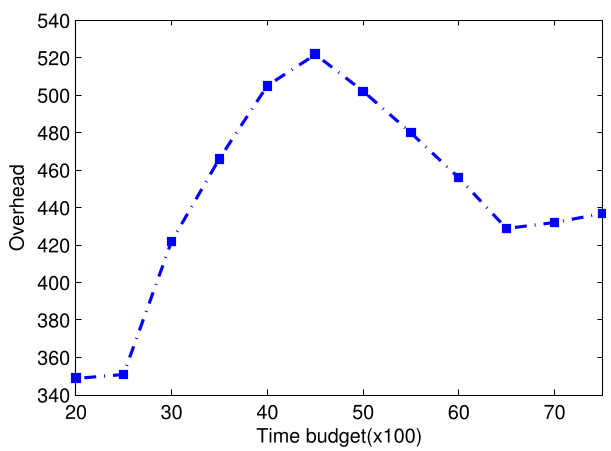
The experiment revealed fascinating human patterns. Query success rates peaked on weekdays when interactions were high and dipped during weekends.
Simulation & Scalability
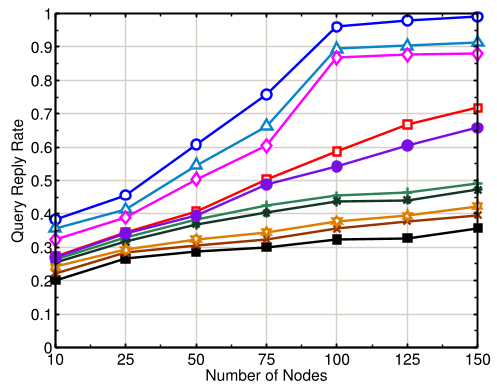
Using the Haggle Trace (98 participants) and Power-Law Mobility Models, the researchers proved that:
- Density Matters: Increasing node density naturally lifts the query reply rate.
- Factor 's' Importance: In power-law models, if nodes stay home too much (high ) or move too uniformly (low ), the protocol's effectiveness changes, peaking at .
Critical Analysis & Conclusion
Takeaway: This paper successfully shifts the paradigm of ad-hoc networking from "moving packets" to "finding information." By quantifying expertise and its reachability, it provides a mathematically sound way to handle the uncertainty of human-centric networks.
Limitations:
- The protocol assumes a feedback packet can always find its way back to update expertise, which may be difficult in extremely sparse environments.
- The storage cost of maintaining a category-based expertise matrix might scale poorly if the number of categories () becomes massive.
Future Outlook: This framework is a precursor to modern decentralized AI agents, where local devices must collaborate to solve tasks without a central brain.