
Hybrid-IM: Scaling Influence Maximization via Path-Based Community Logic
Efficient and effective influence maximization in social networks: A hybrid-approach
2018-07-10
Summary
Problem
Method
Results
Takeaways
Abstract
This paper introduces Hybrid-IM, a novel framework for Influence Maximization (IM) that combines Path-Based (PB-IM) and Community-Based (CB-IM) approaches. It addresses efficiency bottlenecks at both the micro (expensive MC simulations) and macro (redundant node re-evaluations) levels, achieving up to 43x speedup while maintaining 96.2% influence spread accuracy of state-of-the-art methods.
## TL;DR
The quest for "Influence Maximization" (IM)—finding the top-k most influential people in a network—has long been a tug-of-war between accuracy and speed. Simple greedy algorithms are accurate but painfully slow (NP-hard), while heuristics are fast but often miss the mark. **Hybrid-IM** settles the score by combining path-based estimation with community-based partitioning, delivering a **43x performance boost** over previous SOTA methods while keeping **96%+ accuracy**.
## The Dual-Level Bottleneck: Why IM is Hard
To understand the contribution of this paper, one must look at the two layers of "computational hell" in standard IM algorithms:
1. **Micro-Level**: To know how much influence a node $v$ has, you traditionally run 10,000 Monte-Carlo (MC) simulations. This is computationally expensive.
2. **Macro-Level**: Once you pick your first "seed" node, the influence of every other node changes. Traditional greedy algorithms re-evaluate the entire network for the next pick, leading to massive redundancy.
## The Core Insight: Path-Based Community Detection (PB-CD)
The authors argue that previous community-based methods (CB-IM) failed because they simplified the network too much—essentially "blinding" the algorithm to how influence leaks across community borders.
### Strategy 1: PB-CD
Unlike prior works that only looked at "live edges" (binary connectivity), **PB-CD** uses actual edge weights and paths to define communities. This ensures that nodes within a community truly share influence, while inter-community influence is strictly controlled.
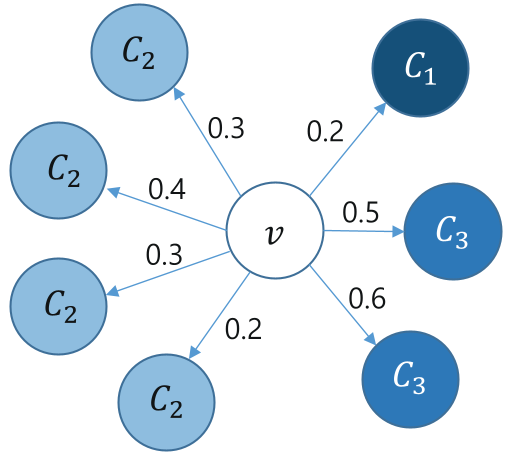
*Fig 1: PB-CD recognizes that node affinity isn't just about presence, but the strength of the path weights.*
## Optimization: Global-CELF (G-CELF)
The second breakthrough is **Global-CELF**. Standard CELF (Cost-Effective Lazy Forward) optimizes a single queue. In a community-structured approach, you'd usually have multiple local queues.
**The "Hybrid" Magic**: G-CELF maintains a single global priority queue while respecting community boundaries. By leveraging the **submodularity** of influence (the diminishing returns of adding more seeds), G-CELF can prove that certain nodes in Community B don't need re-evaluation just because a seed was picked in Community A. This eliminates the "O(M)" comparison overhead where M is the number of communities.
## Experimental Results: Faster and Better
The authors tested Hybrid-IM on massive datasets like DBLP (655K nodes) and Stanford web graphs.
### 1. Speed Comparison
Hybrid-IM outperformed PB-IM by up to **43 times** and was **100 times faster** than original community-greedy algorithms (CGA). Even compared to simple heuristics like "Single Degree Discount" (SDD), Hybrid-IM remained competitive while providing significantly better results on specific graph types like the Stanford dataset.
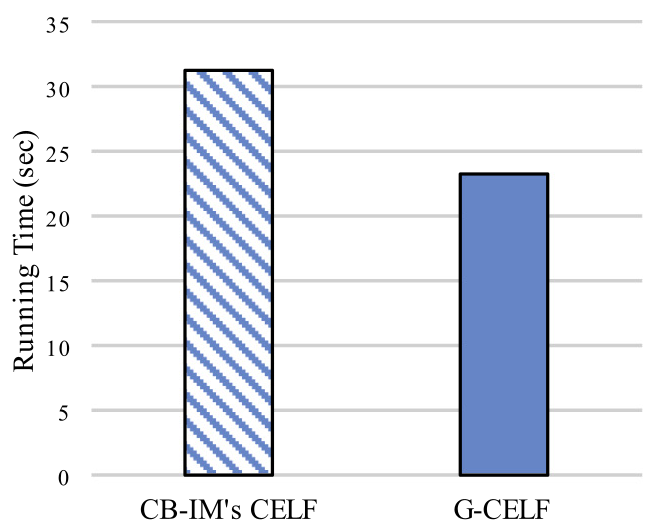
*Fig 2: Running time comparison across different datasets (Note the log-scale).*
### 2. Influence Quality
Does speed cost quality? Barely. Hybrid-IM achieved nearly the same influence spread as the "Ground Truth" MC-based greedy algorithms. More importantly, it crushed previous community-based methods (which had 26-30% lower spread) because its community detection (PB-CD) is far more accurate.
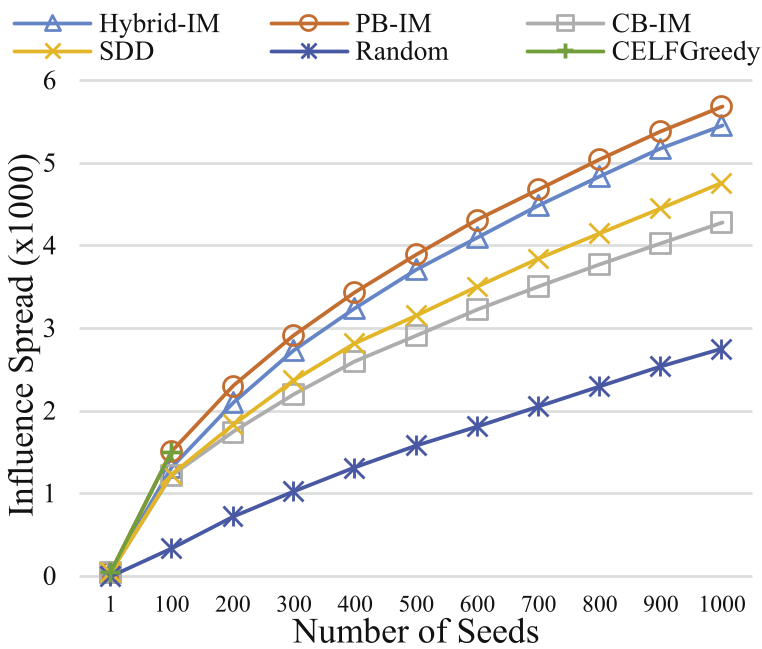
*Fig 3: Influence spread vs. seed set size. Hybrid-IM (Red line) stays at the top.*
## Takeaway and Future Work
Hybrid-IM proves that the "Divide and Conquer" strategy of community detection only works if the "Divide" part respects the underlying physics of the problem—in this case, path-based influence weights.
**Limitations**: While highly efficient, the algorithm still relies on a pre-defined threshold ($\alpha$) for path pruning. Future improvements might involve dynamic thresholding or using local graph embeddings to replace path-summing entirely.
**Conclusion**: For real-world viral marketing where budgets are large and networks are huge, Hybrid-IM offers the best trade-off currently available in academic literature.