
IoMT in Smart Agriculture: Beyond Moisture Sensors to Visual Plant Intelligence
An efficient employment of internet of multimedia things in smart and future agriculture
This paper introduces an "Internet of Multimedia Things" (IoMT) framework for smart agriculture, specifically targeting optimized irrigation. By integrating traditional scalar sensors with multimedia sensors (IP cameras) and Deep Learning (CNN), the system detects plant thirst through soil crack analysis and leaf yellowing to automate irrigation decisions.
TL;DR
Precision agriculture is evolving from simple "if-moisture-low-then-water" logic to sophisticated visual intelligence. This paper presents an Internet of Multimedia Things (IoMT) framework that utilizes IP cameras and Convolutional Neural Networks (CNNs) to "read" soil cracks and leaf discoloration, achieving a 96% precision in irrigation decision-making.
Background Positioning
While traditional IoT in farming focuses on scalar data (temperature, humidity), this work addresses the Internet of Multimedia Things. It is a significant step toward "No-Man" agriculture, moving from sensor-based reactive systems to vision-based predictive systems that mimic the intuition of an expert farmer.
Problem & Motivation: The Blind Spots of Traditional IoT
Conventional smart irrigation systems often suffer from two main issues:
- The Feedback Gap: Moisture sensors only measure a localized spot in the soil, often missing the broader physical signs of plant stress.
- Environmental Neglect: Factors like evaporation rates (influenced by light and temperature) are frequently overlooked in static threshold systems.
The authors' insight is simple yet profound: Experienced farmers don't just check a gauge; they look at the plant. If the leaves are yellowing or the soil is cracking, the plant is thirsty. The IoMT approach digitizes this visual intuition.
Methodology: Fusing Vision with Sensors
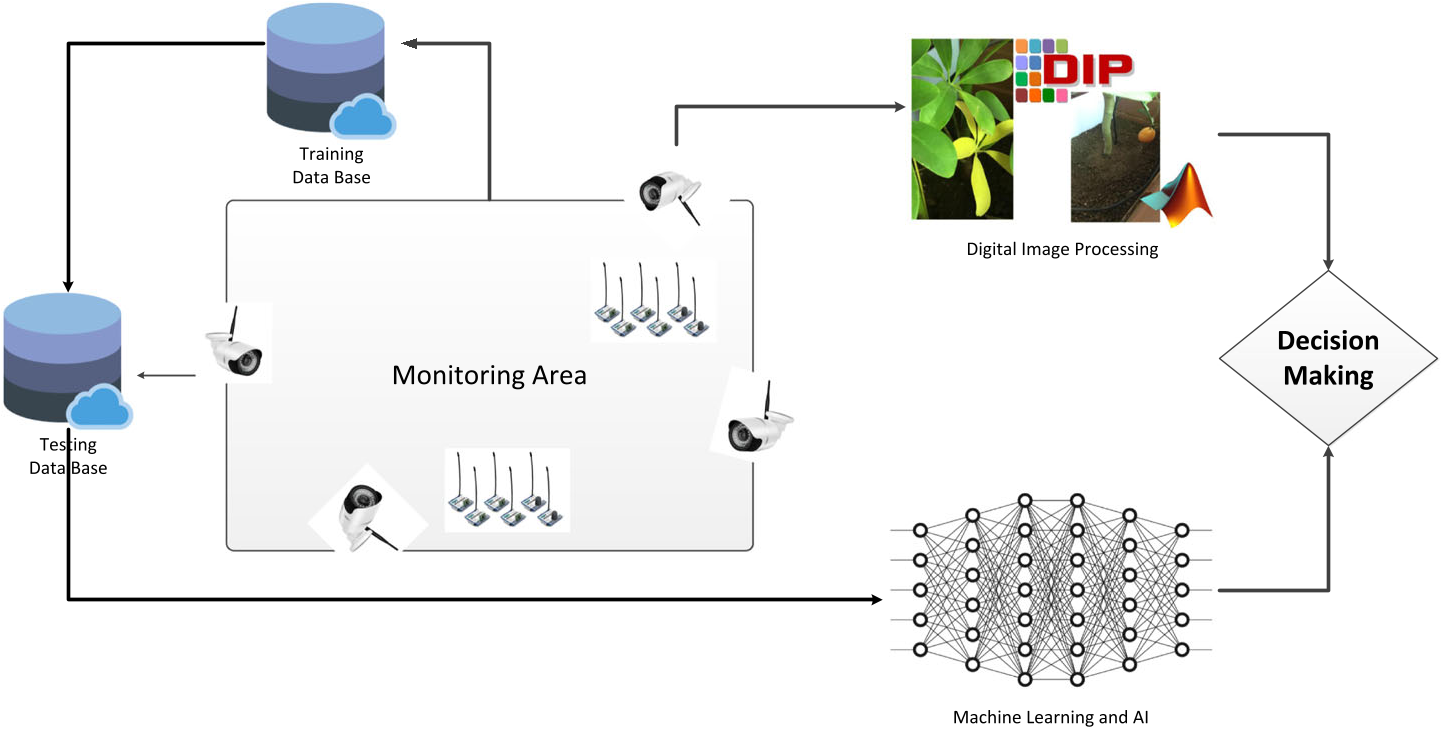
The proposed system is a hybrid architecture involving a Wireless Sensor Network (WSN) and a Multimedia Sensing layer.
1. The IoMT Architecture
Data flows from two streams:
- Scalar Stream: Arduino Mega controllers collect data from Soil Moisture, DHT11 (Temp/Humidity), Light, and Rain sensors.
- Multimedia Stream: IP Cameras capture real-time images of the soil and the plant canopy.
2. Digital Image Processing (DIP) Logic
The authors use Matlab to extract two critical percentages:
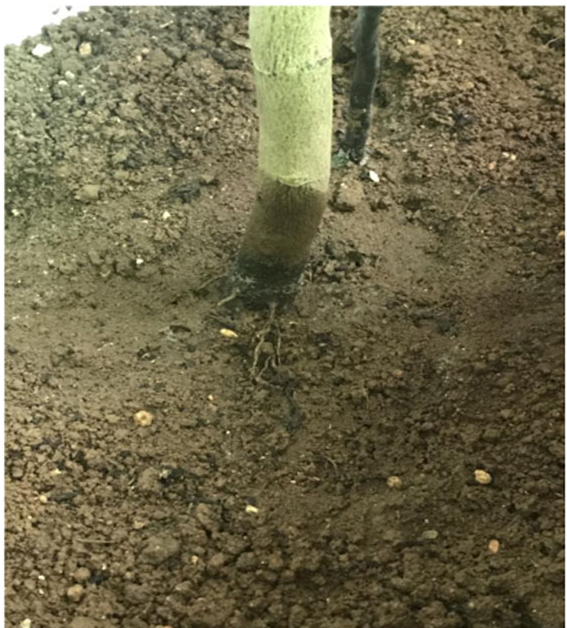
- Soil Crack Percentage: Inverted gray-scale analysis detects "sprinkles" or cracks in the dirt, a sign of extreme drought.
- Leaf Color Index: Analysis of green vs. yellow pixels (using gray-scale inversion and green-plane extraction) identifies the onset of chlorosis (yellowing).
Experiments & Results: Deep Learning Superiority
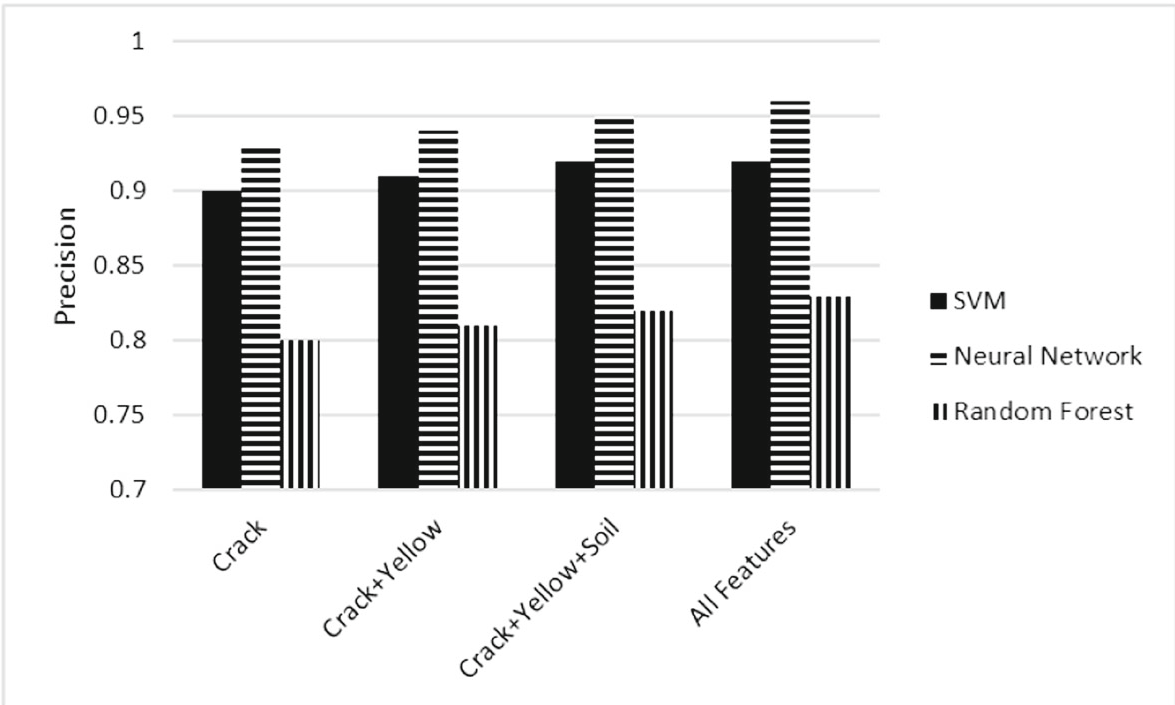
The researchers compared several Machine Learning models—Support Vector Machines (SVM), Random Forest, and CNN—across various evaluation metrics (Precision, Recall, F1).
Key Findings:
- Performance: The CNN model achieved the highest Precision (0.96), significantly outperforming Random Forest.
- Feature Importance: Using CHI-square feature selection, the study found that Crack Level and Yellow Level were among the top three most influential variables for a correct "Irrigate" decision.
- Trade-offs: While CNN provided the best accuracy, it required the longest training time, suggesting a need for GPU acceleration or optimized edge deployment in future iterations.
Critical Analysis & Conclusion
Takeaway
By treating "the look of the plant" as a data point, IoMT offers a much more robust framework than scalar IoT. Integrating image processing allows the system to validate sensor data—for instance, if a moisture sensor is faulty but the soil looks dry, the multimedia data acts as a fail-safe.
Limitations & Future Work
- Computational Load: Running CNNs on high-resolution multimedia streams is resource-intensive for standard agricultural hardware.
- Specificity: The current study focuses on specific plant types (like Kumquat). Scaling this to diverse crops would require a much larger, diverse training dataset to account for different "healthy" leaf shades.
Future Outlook: The authors suggest extending this to diagnose specific diseases, leaf spots, and even structural changes in the plant, potentially transforming IoMT into a comprehensive, autonomous "Plant Doctor."