
LBMS: Solving the "Bieber Fever" Congestion in Social Data Center Networks
An efficient load balancing multicast scheduling for solving congestion problem in social data center networks
The paper introduces LBMS (Load Balancing Multicast Scheduling), a specialized traffic management framework for Social Data Center Networks (SDCNs). It leverages social media behavior insights to redistribute multicast traffic, achieving significant improvements in throughput and latency within Fat-Tree topologies.
TL;DR
When a superstar like Justin Bieber tweets, the sudden surge of millions of simultaneous interactions can crush even the most robust data centers. This paper proposes LBMS (Load Balancing Multicast Scheduling), a mechanism that predicts these "hot issues" and intelligently spreads the multicast workload across servers without breaking the group relationships or incurring high migration costs.
Background: The Social Data Center Crisis
In a Social Data Center Network (SDCN), traffic isn't just point-to-point; it is heavily multicast-based. When a popular user posts a video, that data is pushed to thousands or millions of followers.
Current SOTA methods face two massive hurdles:
- The Overlap Problem: Different multicast groups often share the same switches and links, creating "bottleneck hotspots" that traditional hashing or round-robin schedulers can't see.
- The Distance Paradox: Standard load balancers might move traffic to a "lightly loaded" server that is physically too far away, actually increasing latency and wasting bandwidth due to the migration itself.
Methodology: Intelligence via Social Context
The authors propose a four-stage mechanism to stay ahead of the congestion curve:
1. Identifying Potential Hotspots
Instead of monitoring the entire network (high overhead), LBMS uses a Potential Hotspot Search Algorithm. It specifically tracks "tags" (sources and weights) of video and picture traffic, as these are the primary culprits for link saturation.
2. The Issue Filter
This is the "Social Insight" module. By analyzing how frequently certain tags appear across different flows, the system identifies "Hot Issues." If a specific content piece (like an Oscar-winning video) accounts for >80% of a switch's traffic, that switch is immediately prioritized for load balancing.
3. Smart Migration (The LBMS Core)
When congestion is detected, LBMS doesn't just move data randomly. It looks for "Available Hosts" within the same multicast group. It calculates a priority using: Where is the available room and is the distance. This ensures we move data to the closest available host to keep latency at a minimum.
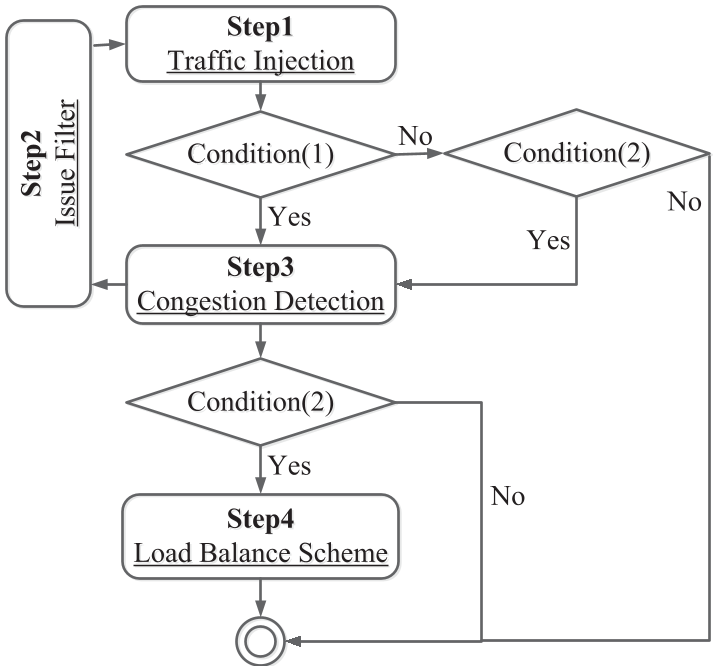 Figure 1: The LBMS framework integrated within a Data Center Pod.
Experiments & Results: Real-World Validation
The researchers didn't rely on synthetic data; they used Twitter's Stream APIs to capture real traffic patterns, characterized by massive spikes in video and photo sharing.
SOTA Comparison
LBMS was compared against:
- Twitter's Default Scheme: Primarily focuses on storage capacity, ignoring real-time link congestion.
- BCMS: A leading multicast scheduling algorithm for Fat-Tree topologies.
Key Findings:
- Throughput: LBMS outperformed the competition by up to 11.3% during peak traffic hours.
- Success Delivery Ratio: By balancing the load before the buffers overflowed, LBMS maintained a 6.7% higher delivery rate than BCMS.
- Latency: Specifically for video traffic, which is most sensitive to delay, LBMS slashed latency by 8-8.8%.
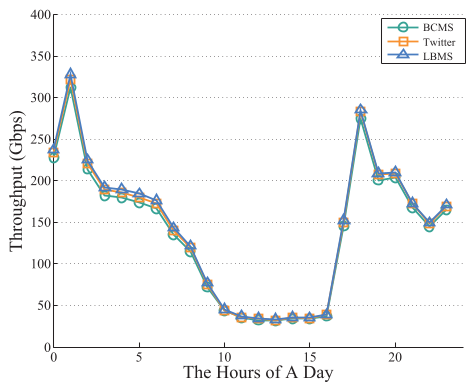 Figure 2: Success delivery ratio under maximum traffic load, showcasing LBMS's stability during bursts.
Deep Insight & Conclusion
The genius of LBMS lies in its Inductive Bias: it assumes that in a social network, the most effective way to balance a load is to keep the "work" within the community (the multicast group). By migrating data only to hosts that are already part of the conversation, the system maintains the integrity of the multicast tree while preventing any single switch from becoming a point of failure.
Limitations
While effective, LBMS currently relies on a centralized "Flow Manager" per pod. In hyper-scale environments with thousands of pods, the coordination between Flow Managers remains a potential bottleneck for future research.
Future Outlook
The next step for this technology is implementation in Software Defined Networks (SDN) at scale. As we move toward 8K video and VR social spaces, the ability to balance loads based on what is being watched rather than just how much is being sent will be the industry standard.