
Efficient Nonparametric Population Modeling: Leveraging Global Insight for Individual Precision
Efficient Nonparametric Population Modeling for Large Data Sets
The paper introduces a computationally efficient nonparametric population modeling framework using Gaussian Processes (GPs) for large-scale biomedical datasets. It proposes a "client-server" architecture to reconstruct individual subject curves by leveraging global population statistics, achieving significantly higher predictive accuracy in Sparse-data scenarios compared to traditional single-subject models.
TL;DR
Biomedical data analysis often suffers from a "sparse data" problem where individual subjects don't provide enough samples for accurate modeling. This paper presents a Gaussian Process-based population modeling framework that uses a client-server architecture. By calculating "sufficient statistics" from a large population, the model enables precise individual curve reconstruction with complexity per subject, significantly outperforming individual modeling in both accuracy and stability.
Why Standard Models Fail in Biomedical Contexts
In pharmacokinetics and metabolic studies (like the Intravenous Glucose Tolerance Test - IVGTT), researchers aim to understand both the typical population response and individual deviations.
Historically, researchers faced two bad choices:
- Parametric Models: Require a deep mechanistic understanding (e.g., compartmental models) which may not exist for new diseases or complex physiology.
- Single-Subject Nonparametric Models: Smoothing splines or GPs fit to one person. However, if that person has only 10-15 data points, the model often "hallucinates" oscillations or fails to converge on a physiologically sound curve.
The computational bottleneck is also severe: Gaussian Processes usually scale cubically with the number of data points. If you have 200 subjects with 20 points each, a 4,000-point GP inversion is a heavy lift.
The Secret Sauce: Standardized Schedules & Matrix Decomposition
The authors realize that most clinical trials use a standardized sampling schedule (e.g., everyone is measured at 5, 10, 20... minutes). By exploiting this symmetry, they decompose the problem.
1. Mathematical Intuition
The model assumes: Where is the average population curve and is the individual's unique shift. Both are treated as realizations of stochastic processes (specifically, integrated Wiener processes).
2. High-Efficiency Architecture
Instead of processing all data at once, they propose a Client-Server Architecture:
- Server: Processes historical data from subjects to compute a "Sufficient Statistic" (Matrix and Vector ).
- Client: When a new patient arrives, the client asks the server for and . The client can then reconstruct the patient's curve with negligible effort, even if the patient's sampling schedule is different from the standard.
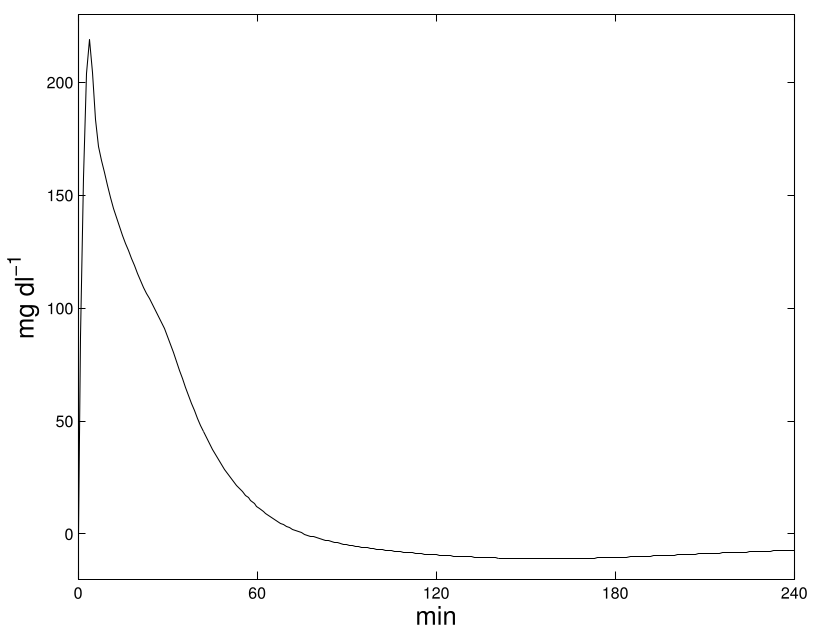 Figure 1: The estimated average curve derived from 204 subjects ensures that the starting point for any individual reconstruction is grounded in population reality.
Experimental Evidence: Glucose Metabolism
The team tested this on a massive database of 224 healthy subjects undergoing IVGTT.
Population vs. Individual Approach
They compared their "Population Approach" against the "Single-Subject Approach" (Cubic Splines). The results were stark:
- Stability: Single-subject models showed erratic oscillations at the end of the experiment (t > 120 min) due to sparse data. The population approach remained smooth and physiologically plausible.
- Predictive Power: In a "reduced sampling" test, the population approach maintained low RMSE, proving it can "fill in the blanks" using knowledge from previous subjects.
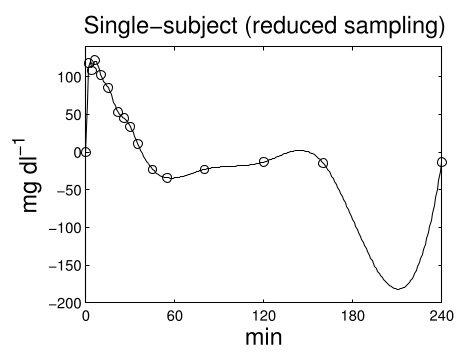 Figure 2: Comparison of reconstruction for Subject #209. Note how the Single-Subject approach (bottom right) fluctuates wildly with reduced data, while the Population approach (top right) stays stable.
Confidence and Precision
By sharing information, the uncertainty (Confidence Intervals) significantly shrinks.
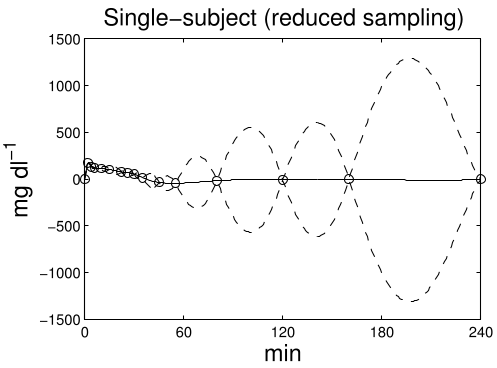 Figure 3: Subject #211 shows that the population approach (narrow bands) provides much higher certainty than the single-subject approach (wide, dashed bands).
Critical Analysis & Future Outlook
The beauty of this research lies in its computational pragmatism. By moving the "heavy lifting" to a server that only updates occasionally, clinical laboratories (clients) can perform state-of-the-art Bayesian inference on a simple laptop.
Limitations:
- The efficiency gains rely heavily on the standardized schedule of the historical training data. If the historical data is a "mess" of random time points, the complexity returns.
- The assumption of a Gaussian "Average + Shift" structure might oversimplify populations with distinct sub-clusters (e.g., diabetics vs. healthy subjects).
Takeaway: This is a masterclasses in applying Gaussian Processes to real-world healthcare constraints. It moves us away from isolated data silos and toward a collaborative "Global Knowledge, Local Application" model of medical identification.