
Efficient Privacy-Preserving Adversarial Learning in Decentralized Social Networks
430_Efficient Privacy-preserving Adversarial Learning in Decentralized Online Social Networks.
This paper introduces an efficient, privacy-preserving adversarial learning framework for abuse detection in Decentralized Online Social Networks (DOSNs). It utilizes a specialized protocol for Private Set Intersection (PSI) and MinHashes approximation to detect abusive behavior using social graph metadata without compromising user privacy.
TL;DR
As social interactions shift toward decentralized architectures to avoid censorship and surveillance, they lose the "birds-eye view" needed to stop abuse. This paper presents a method for privacy-preserving abuse detection that uses Cryptographic Private Set Intersection (PSI) and MinHashes to identify malicious actors based on their social neighborhood metadata, achieving higher efficiency (13% faster) without sacrificing detection accuracy.
The Transparency Trap: Why Decentralization Struggles with Abuse
In a centralized world (e.g., Twitter or Facebook), a single entity sees everything. They can easily identify a spammer by looking at their global follower patterns. In Decentralized Online Social Networks (DOSNs), metadata is fragmented. If User A interacts with User B, they only see their local "neighborhood."
Previous attempts to solve this faced a binary choice:
- Sacrifice Privacy: Exchange list of followers to see if accounts are "legitimate" (risking mass surveillance).
- Sacrifice Security: Use only local tweet content, which is easily bypassed by sophisticated "badword" filtering.
The authors argue that the "neighborhood" (who you follow and who follows you) is the ultimate signal for abuse, but it must be computed blindly.
Methodology: Blindfolded Social Graph Analysis
The core innovation lies in extracting "Neighborhood Knowledge" through a privacy-preserving protocol.
1. Private Set Intersection (PSI)
The method calculates the Jaccard Index (similarity) between the sender's and receiver's subscription lists. Instead of sharing the lists, they use a protocol involving Boneh-Lynn-Shacham (BLS) signatures and cut-and-choose methods. This allows two parties to find commonalities without revealing their non-common connections.
2. Efficiency via MinHashes
To solve the communication overhead of cryptographic protocols, the authors apply Data Minimization. By using MinHashes, they generate a compact fingerprint of the social set.
- The Intuition: If you hash a set of followers many times and pick the minimum hash value, the probability that two users have the same minimum hash is equal to their Jaccard similarity.
- The Result: This allows for "offline" computation of features, significantly reducing bandwidth.
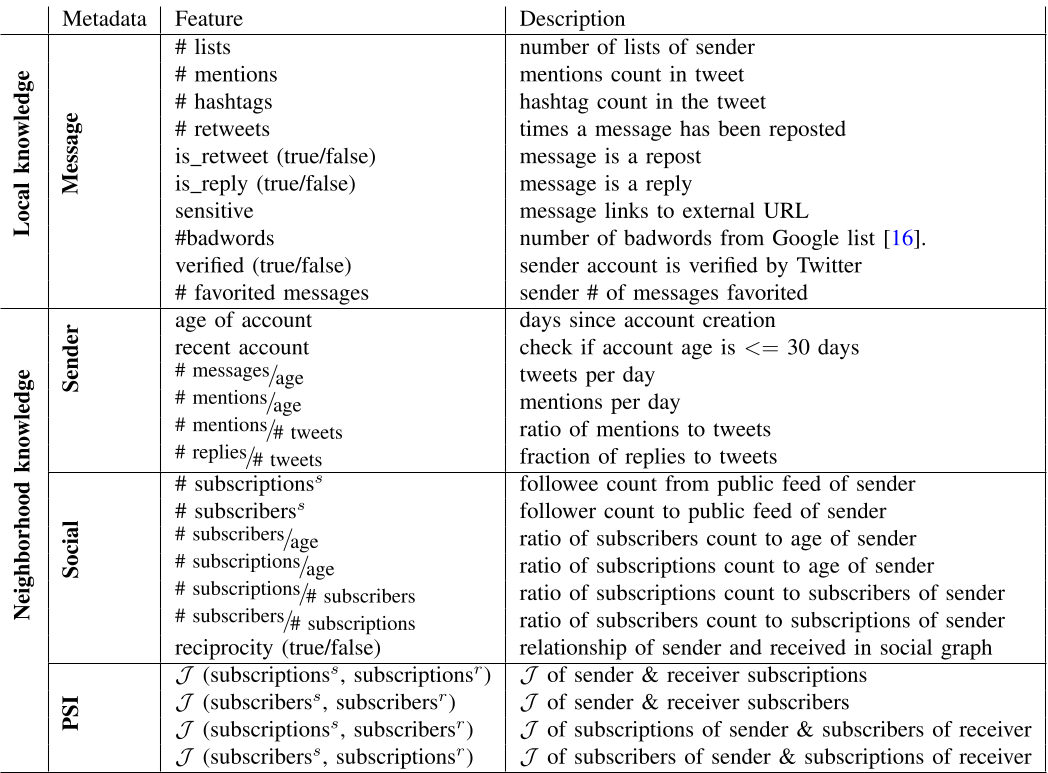 Figure 1: Comparison of Local vs. Neighborhood Knowledge features.
Experimental Battleground
The researchers used a combination of human-annotated data (via Trollslayer) and commercial crowdsourcing (Crowdflower) to establish a ground truth for abuse. They tested several classifiers, including Random Forests (RF), Gradient Boosting (GB), and SVMs.
Key Performance Metrics:
- Speed: Approximated PSI features were computed 13% faster than exact indices (approx. 2.6M ms vs 3.0M ms for the entire dataset).
- Accuracy: In some instances, such as with SVMs, the approximation actually improved the F-score for abusive content detection compared to exact calculations, suggesting that the probabilistic sampling might act as a form of regularization.
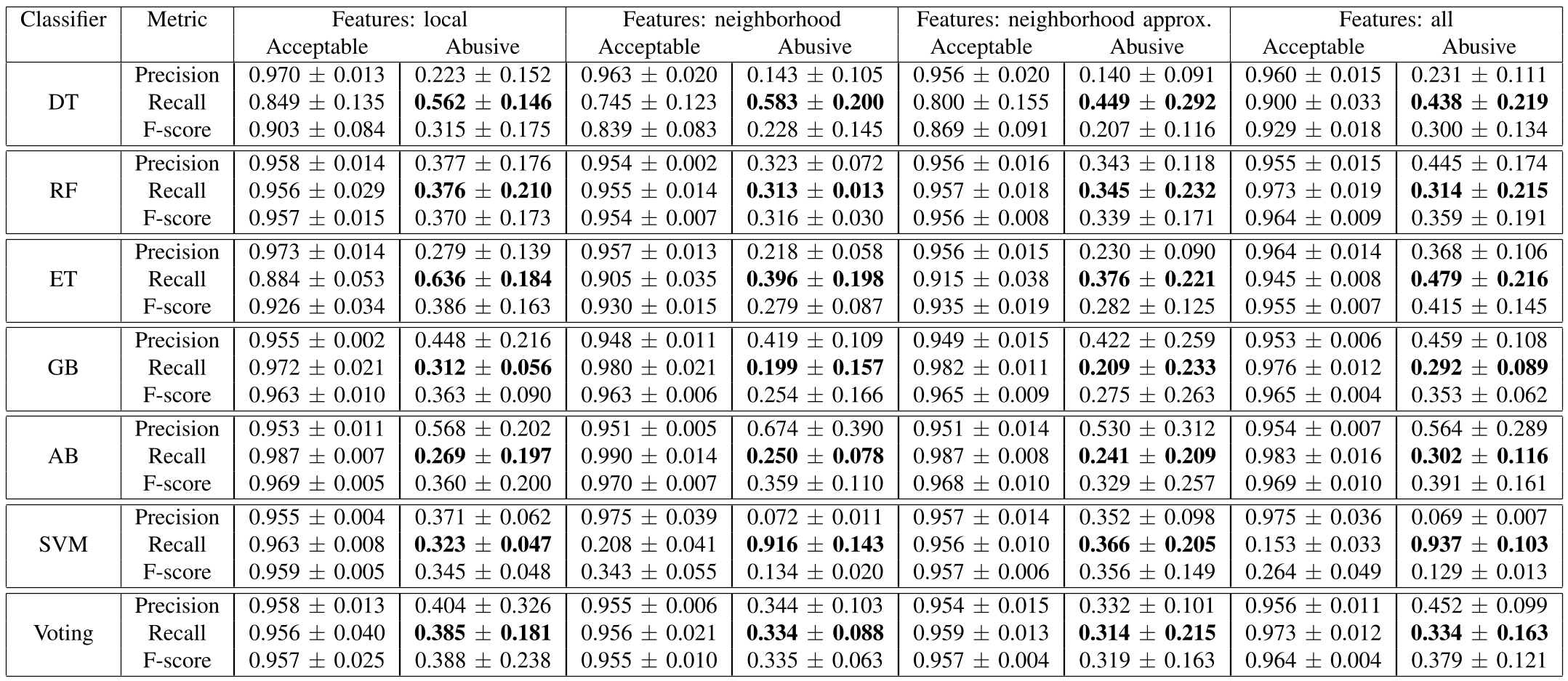 Table 1: Detailed performance metrics across different supervised learning algorithms.
Critical Insight: The "Human Baseline" (HB)
An interesting takeaway is that the machine learning models are inherently capped by the Human Baseline. Humans often disagree on what constitutes "abuse" or "hate speech." The paper notes that their voting classifier provides results very close to this human limit, implying that the bottleneck for automated abuse detection is no longer just the algorithm, but the ambiguity of human social norms.
Conclusion & Future Outlook
This work proves that we don't need a "Big Brother" to have a safe social network. By using adversarial learning and neighborhood fingerprints, decentralized systems can defend themselves.
Future Work: The authors suggest extending this to secure multicast environments (like secushare.org) where the detection must happen at the network level, potentially preempting abusive content before it even reaches the victim's UI.
Takeaway for Architects:
If you are building a P2P or decentralized application, don't just rely on content filtering. The topological metadata of your network is your strongest defense—just make sure you hash it before you share it.