
Efficient & Private: Protecting Your Location in Social Proximity Detection
Efficient and Privacy-Preserving Proximity Detection Schemes for Social Applications
This paper introduces AGRQ-P and AGRQ-C, two efficient, privacy-preserving proximity detection schemes for Location-Based Social Networking Services (LBSNS). By leveraging lightweight multiparty random masking and a modified cosine similarity protocol, the schemes allow users to perform polygon and circular range queries regarding friends' locations without leaking sensitive data to the server or peers.
TL;DR
Is it possible to find out if your friends are "nearby" inside a specific area of a map without actually knowing where they are, and without the social media server seeing anything? This paper introduces AGRQ-P (for polygons) and AGRQ-C (for circles), two protocols that solve the "proximity detection" problem. By using lightweight random masking instead of heavy encryption, they achieve high security with minimal battery drain on smartphones.
The "Location Paradox" in LBSNS
Location-Based Social Networking Services (LBSNS) like WeChat or Facebook often provide features to "find nearby friends." However, this creates a major privacy risk:
- Server Overreach: Social application servers (SS) usually see your exact GPS coordinates.
- Peer Privacy: You want to know if a friend is in a specific park (range query), but your friend doesn't want to share their exact street address.
- The Efficiency Wall: Traditional solutions like Homomorphic Encryption (checking properties on encrypted data) are too slow for mobile phones, while "k-anonymity" is easily broken if everyone in the group is at a specific sensitive location (like a hospital).
The Insight: Geometric Judgment via Ciphertext
The authors shift the focus from "encrypting everything" to "masking the geometry." They utilize two mathematical foundations:
- Cross Products: To determine if a point is inside a polygon without seeing the coordinates.
- Multiparty Random Masking: Blurring the data with random numbers () so that intermediate values look like noise to everyone except the intended recipient.
How it Works (Methodology)
The system involves three parties: the Query User (QU), the Server (SS), and the Friends (UFs).
- Masking (QU): The user draws a shape on the map. The coordinates of the shape's vertices are mixed with large primes and random numbers to create "blurred" query data.
- Hybrid Calculation (UF): The friend's phone receives the blurred data. It performs a calculation using its own location and sends back a response that is still partially masked.
- Decryption (QU): Only the original user has the "secret key" (the random masking seeds) to peel back the final layer and get a simple "Yes/No" if the friend is within the range.
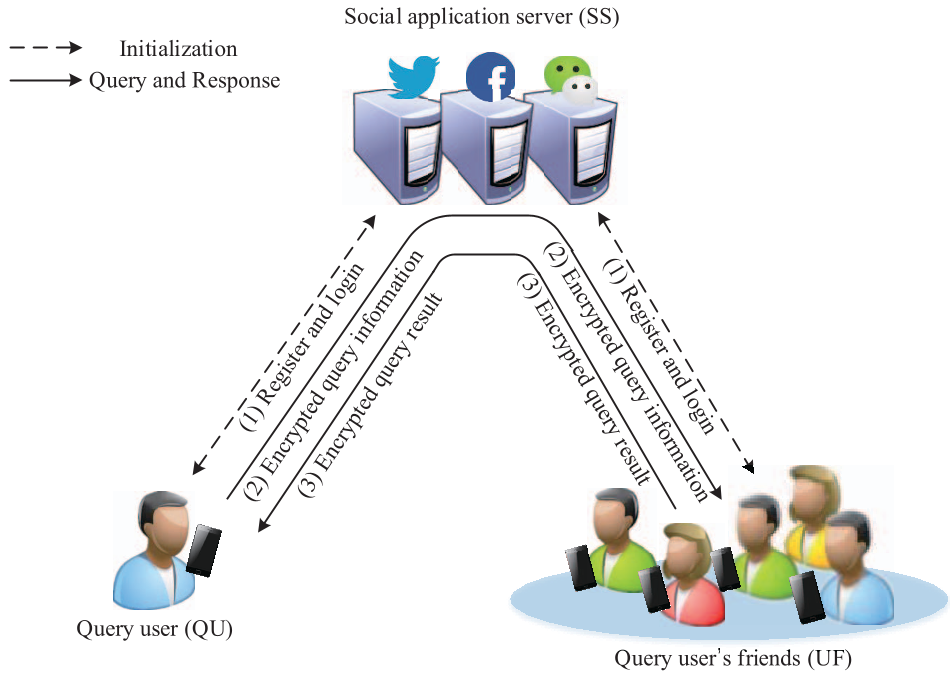 Figure 1: The Privacy-Preserving Proximity Detection System Model.
Battle-Tested Efficiency
The biggest achievement of this paper is efficiency. The authors implemented the system on real Android devices using a Beijing street map dataset.
Compared to previous frameworks like EPDCP (which relies on expensive exponentiation operations), the proposed AGRQ schemes use simple multiplication. As the number of friends or the complexity of the query polygon increases, the time savings become dramatic.
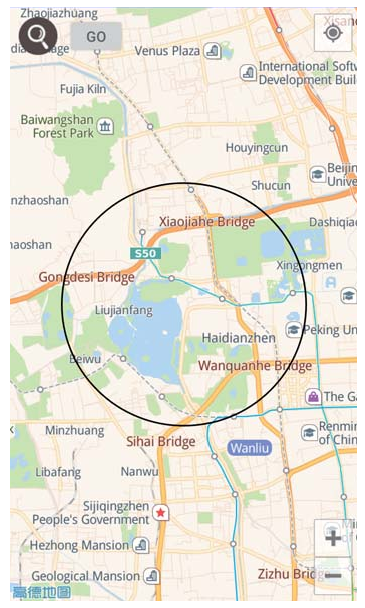 Figure 2: Computation overhead comparison between AGRQ-P and EPDCP as the number of friends increases.
Key Experimental Results:
- Computation: In a scenario with 12-edge polygons, the friend's (UF) side processing time remained nearly flat for AGRQ, while EPDCP spiked exponentially.
- Communication: The packet sizes for AGRQ are significantly smaller than Paillier-based methods (CRQP), reducing data usage for mobile users.
Critical Insight: Why Does This Matter?
Most academic papers focus solely on the "mathematical proof" of privacy. This work stands out because it balances provable security (resisting malicious servers and curious friends) with device reality. By moving the heavy lifting to local hybrid calculations and using random masking that "cancels out" at the end of the query, it shows that we don't need "Magic Black-Box Encryption" to achieve absolute privacy.
Conclusion & Limitations
AGRQ-P and AGRQ-C provide a robust framework for the next generation of privacy-first social apps. However, it is worth noting that the current implementation assumes friends are online and responsive to perform the hybrid calculation. Future work might explore how to handle offline proximity detection or integrate with decentralized "Edge" computing to further reduce latency.
Senior Editor Review: This work bridges the gap between theoretical cryptography and practical mobile software engineering, effectively solving the proximity detection bottleneck for real-world deployment.