
Efficient Emotion Regulation: How Positive Music Reshapes Brain Dynamics
Efficient regulation of emotion by positive music based on EEG valence-arousal model
This study presents a machine learning framework to quantify the efficacy of positive music in regulating negative emotions using EEG signals. By employing a Random Forest (RF) classifier on Differential Entropy (DE) and Power Spectral Density (PSD) features, the authors achieved binary classification accuracies of 78.75% for valence and 73.98% for arousal.
TL;DR
Researchers have developed a machine learning model capable of tracking how the human brain recovers from negative states through music. By analyzing EEG signals, the study proves that positive music significantly boosts "Valence" (pleasure) and stabilizes "Arousal" (intensity), achieving nearly 79% accuracy in predicting these emotional shifts.
Background: Beyond Simple "Happy" or "Sad"
In the realm of Affective Computing, understanding emotion requires more than a binary label. The industry standard is the Valence-Arousal Model:
- Valence: The degree of pleasure (Negative to Positive).
- Arousal: The level of physiological activation (Calm to Excited).
While we know music "makes us feel better," the technical mechanism—specifically how it regulates these two dimensions in someone suffering from negative induction—remains under-explored. This paper bridges the gap between music therapy and signal processing.
The Problem: The Quantization of Mood Repair
Existing literature often treats emotion recognition as a static task. However, the real challenge in Human-Computer Interaction (HCI) is Regulation. Prior studies confirmed that music can be detected in the brain, but few have modeled the transition from a negative "baseline" (induced by sad cinema) to a regulated "recovered" state.
Methodology: Decoding the Rhythms of the Brain
The authors employed a rigorous experimental design involving 40 participants. After inducing a negative state using a 3.5-minute sad film clip, they introduced a "positive music" stimulus.
Feature Engineering
The study focused on Differential Entropy (DE) and Power Spectral Density (PSD). Unlike simple energy measures, DE captures the complexity of brain signals, which is highly correlated with emotional processing.
- Frequency Bands: Specific focus was placed on Delta (1-4Hz) and Beta (13-30Hz) bands, which the authors identified as high-impact predictors.
- Spatial Selection: 16 channels from the prefrontal and temporal lobes were used to minimize visual artifacts and focus on the brain's emotional centers.
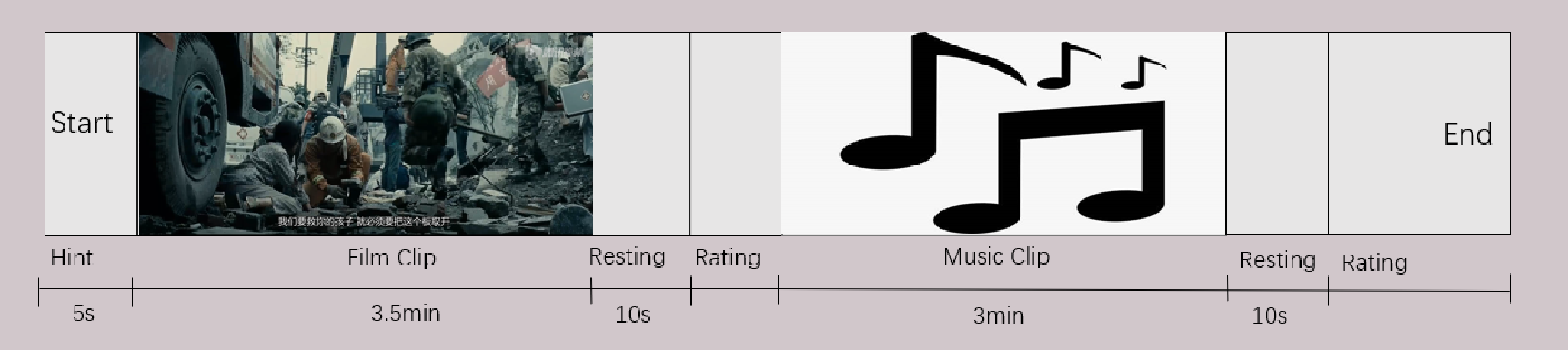 Figure 1: The experimental workflow from induction to regulation and classification.
Results: The Power of Random Forest
The behavioral results were striking: valence ratings jumped from a mean of 2.05 (Negative) to 6.60 (Positive) after music intervention.
From a technical perspective, the Random Forest (RF) classifier emerged as the champion across all metrics, benefiting from its ability to handle small, high-dimensional datasets without overfitting.
| Metric | Beta Band | Delta Band | Combined Feature Set |
|---|---|---|---|
| Valence Accuracy | 72.50% | 71.25% | 78.75% |
| Arousal Accuracy | 66.37% | 70.21% | 73.98% |
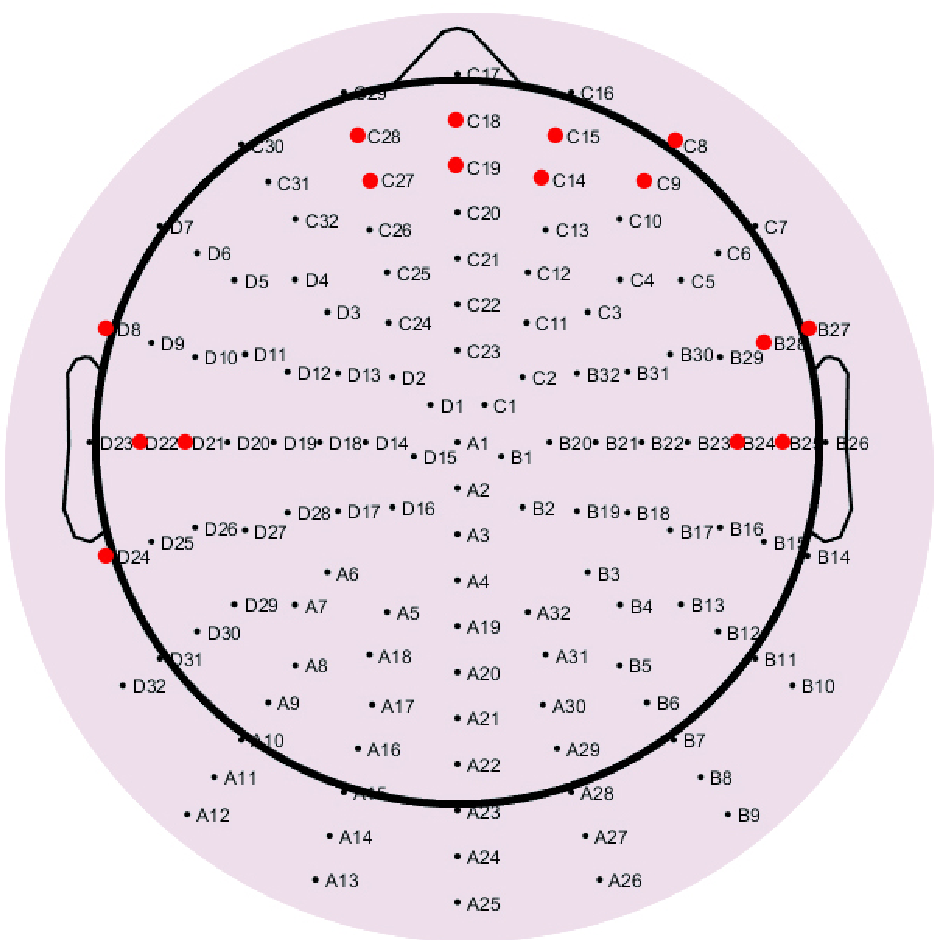 Figure 2: Distribution of the selected 16 EEG channels (red) focusing on emotional processing hubs.
Critical Insight & Future Outlook
The study's success in using specific frequency bands (Delta/Beta) confirms that emotional regulation is a multi-scale neural process. The Delta band likely tracks the low-frequency "mood" shifts, while the Beta band captures the higher-frequency cognitive response to the musical structure.
Limitations
- Binary Labeling: The study uses binary classification (High vs. Low). Future work should aim for continuous regression to track emotional "trajectories."
- Subjectivity: Music familiarity can skew results; though the authors tried to choose unfamiliar music, personal taste remains an uncontrollable variable in EEG studies.
Conclusion
This research provides a quantitative "green light" for the development of Adaptive Music Therapy. Imagine a future where a wearable EEG device detects your stress levels and automatically generates a personalized AI-composed track to shift your brain's valence from negative to positive in real-time. This paper is a significant step toward that symbiotic HCI future.