
UBLF and Quickest Path: Accelerating Outbreak Detection in Large-Scale Social Networks
Efficient Sensor Placement Optimization for Early Detection of Contagious Outbreaks in Mobile Social Networks
The paper introduces two novel approaches for sensor placement in mobile social networks to minimize outbreak detection time: the UBLF (Upper Bound based Lazy Forward) greedy algorithm and a Quickest Path heuristic. These methods aim to identify critical nodes for monitoring contaminants or misinformation, achieving state-of-the-art performance in both selection efficiency and detection speed.
TL;DR
To protect social networks from the rapid spread of misinformation or viruses, we need to place "sensors" (monitored accounts) strategically. This paper introduces UBLF, a greedy algorithm that uses a new mathematical upper bound to skip redundant simulations, and the Quickest Path Heuristic, which uses graph distances to approximate infection time. These methods are up to 8 times faster than previous SOTA (CELF) and scale to networks with over 50,000 nodes without losing detection quality.
Problem & Motivation: The Monte-Carlo Bottleneck
In the context of the Susceptible-Infected (SI) model, finding the optimal nodes to minimize detection time is NP-hard. While the submodular nature of the problem allows for a greedy approach with an approximation guarantee, the practical cost is staggering.
Current SOTA methods like CELF must run thousands of Monte-Carlo (MC) simulations to estimate the marginal gain of adding a node. On a network with nodes, the first iteration alone requires calls to these expensive simulations. For a network like Epinions (), this initialization is an absolute computational wall.
Methodology: Pruning and Pathing
The authors attack this inefficiency from two distinct angles:
1. UBLF: Theoretical Pruning
Instead of starting with MC simulations for every node, the authors derived a matrix-based upper bound for the "Remaining Time" . Using the propagation matrix and the identity matrix , they define: By calculating this bound first, the algorithm can skip nodes whose best possible performance is lower than an already observed actual performance of another node.
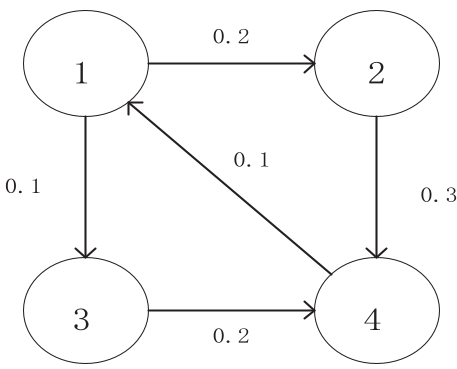 Figure 1: Illustration of how the upper bound is calculated to prune search space.
2. Quickest Path Heuristic: A Physical Intuition
The "How" here is brilliant in its simplicity: The expected time for a node to infect node is roughly . By treating as the edge weight (distance), the problem of "minimizing detection time" becomes a "shortest path" problem in a weighted graph. This turns a stochastic #P-hard problem into a deterministic calculation that can be solved with standard graph algorithms like Dijkstra.
Experiments & Results
The authors tested their methods on four datasets, including Facebook and Twitter.
- Efficiency: UBLF reduced MC simulation calls by over 92% in some cases compared to CELF.
- Speed: UBLF was 4-8 times faster in selection time.
- Accuracy: The Quickest Path heuristic, despite being a simplification, outperformed traditional centrality measures (Degree, PageRank) and matched the performance of the computationally expensive greedy algorithms.
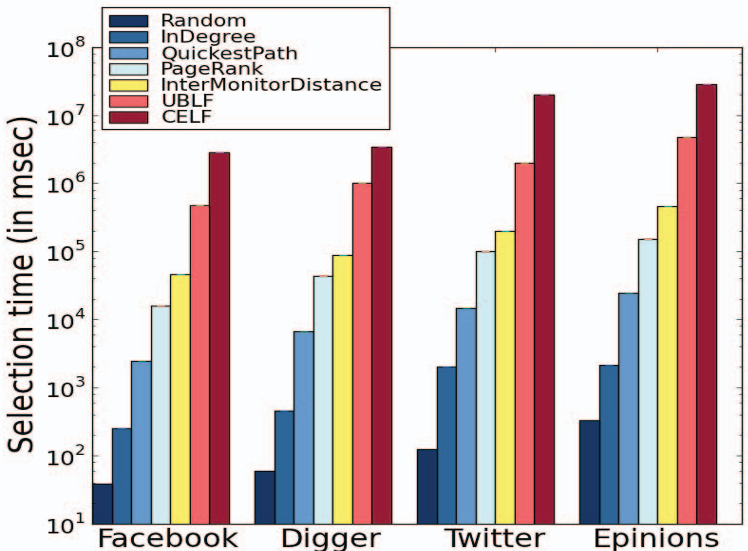 Figure 2: Selection time of different algorithms. Notice how UBLF and Quickest Path stay low as complexity grows.
Critical Analysis & Conclusion
Takeaway
The core contribution is the proof that we don't need "brute-force" simulations to achieve near-optimal sensor placement. By leveraging the graph's structural properties (Distance) and mathematical bounds, we can monitor massive networks in real-time.
Limitations & Future Work
The current model relies on the SI (Susceptible-Infected) model, which is discrete and assumes nodes stay infected. Real-world dynamics (like the SIR model where nodes recover) might require more complex bound derivations. Furthermore, the "Prior Distribution" was assumed to be uniform; future work could involve learning this distribution from historical data to make detection even more targeted.
Ultimately, this research moves us closer to real-time rumor and virus containment in the modern, hyper-connected digital world.