
TruTeam: Solving the Incentive Puzzle in Collaborative Crowdsourcing
An efficient and truthful pricing mechanism for team formation in crowdsourcing markets
This paper introduces TruTeam, a novel task allocation and pricing mechanism for collaborative crowdsourcing. It specifically addresses the "Team Formation" problem where multiple workers must combine distinct skills to complete a complex task, achieving an efficient, truthful, and profitable solution.
TL;DR
As crowdsourcing moves from simple micro-tasks (like image labeling) to complex collaborative projects (like software development), the industry faces a "Team Formation" challenge. This paper presents TruTeam, the first mechanism that ensures workers bid their true costs honestly, requesters stay profitable, and the entire team selection happens in milliseconds—even with thousands of candidates.
Problem & Motivation: The Truthfulness Gap
In a typical crowdsourcing market, a requester needs a specific set of skills (e.g., Python, UI Design, and Technical Writing). Workers bid their prices and list their certified skills. The goal is to form a valid team at the lowest cost.
However, two major roadblocks exist:
- Strategic Bidding: If a worker knows they are the only person with a specific skill, they are incentivized to "overbid" (ask for more than their actual cost) to exploit the requester.
- Computational Complexity: Finding the absolute "optimal" team is an NP-hard problem akin to the Set Cover problem. Standard truthful mechanisms like VCG (Vickrey-Clarke-Groves) take exponential time, making them useless for real-time platforms.
The authors argue that a practical system must be Truthful (incentivize honesty), Efficient (run fast), Individually Rational (workers don't lose money), and Profitable (requesters make money).
Methodology: The TruTeam Mechanism
TruTeam splits the challenge into two distinct rules:
1. The Allocation Rule (Who gets picked?)
TruTeam uses a greedy approach. It doesn't just look for the cheapest bid; it looks for the best value per skill. In each step, it selects the worker who provides the most "marginal skill contribution" (skills the team doesn't have yet) for the lowest price.
2. The Payment Rule (The "Threshold Price")
This is the secret sauce for truthfulness. Instead of paying workers what they bid, TruTeam calculates a Threshold Price.
- Intuition: A worker's payment is defined by the highest price they could have bid without losing their spot to a competitor.
- If worker bids , the system checks the next best workers who could have covered those same skills. The payment is derived from the "value-for-money" ratio of those competitors.
 Equation: Calculating the threshold price based on the max marginal contribution of competitors.
Experiments & Results: Efficiency Meets Profit
The researchers compared four models: OPT (Brute force), GREEDY (Fast but cheatable), VCG (Truthful but slow), and TruTeam.
Scalability
As shown in the figures below, OPT and VCG "explode" in computation time as soon as you have more than 25 workers. TruTeam, however, remains nearly flat, handling 3,000 workers with ease.
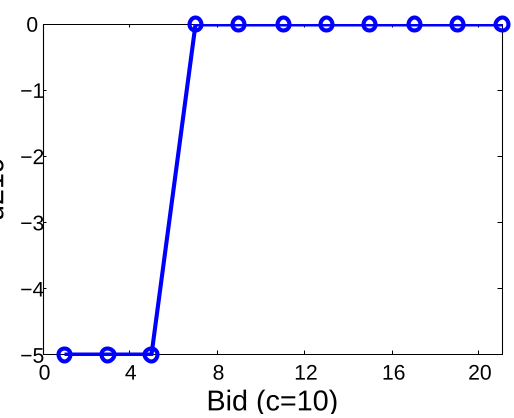 Fig 2. (a-d) Running time comparison: TruTeam maintains high efficiency compared to traditional VCG.
The Cost of Honesty
While a simple GREEDY mechanism might seem more profitable for the requester on paper (if everyone is honest), in the real world where workers overbid to maximize gain, TruTeam yields higher utility for the requester. By removing the incentive to lie, TruTeam stabilizes the market prices.
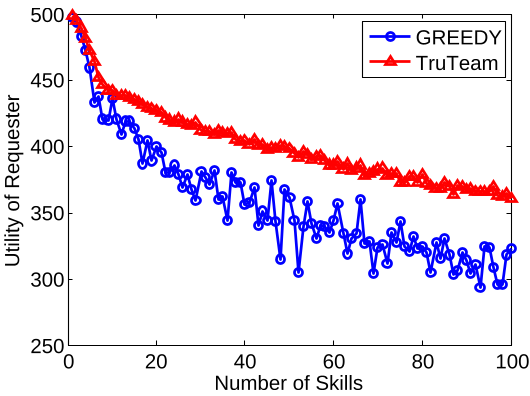 Fig 2. (f) In overbidding scenarios, TruTeam (Truthful) secures higher utility than GREEDY.
Critical Insight: Why it Works
The beauty of TruTeam lies in its Monotonicity. Because the selection is based on a "cost-per-skill" ratio, bidding higher can only hurt a worker's chances of being selected, and bidding lower than their cost would lead to a negative utility (losing money). This mathematical "forcing" of honesty enables a healthy, self-regulating ecosystem.
Limitations & Future Work
- Skill Quality: The current model assumes skills are binary (you have it or you don't). Future iterations should account for different levels of expertise.
- Trustworthiness: The model assumes workers definitely complete the task once paid; incorporating worker reputation would be a logical next step.
Conclusion
TruTeam is a significant milestone for the gig economy. It provides a mathematically sound yet computationally practical framework for building teams of experts, ensuring that honesty is literally the best policy for workers, and efficiency is guaranteed for the platform.