
ICMA: Revolutionizing Semiautomatic Ontology Matching with Efficient Human-in-the-Loop AI
Efficient User Involvement in Semiautomatic Ontology Matching
This paper introduces the Interactive Compact Memetic Algorithm (ICMA), an evolutionary-based semiautomatic ontology matching technique designed to optimize user interaction. ICMA achieves state-of-the-art performance across OAEI tracks by intelligently determining interaction timing, filtering candidate correspondences, and propagating user validations.
TL;DR
In the world of Semantic Web, "Ontology Matching" is the bridge that connects different vocabularies. However, automatic tools often hit a "quality ceiling." This paper introduces ICMA (Interactive Compact Memetic Algorithm), a framework that treats user interaction not as a burden, but as a strategic resource. By combining evolutionary computing with smart propagation, ICMA achieves SOTA results with significantly less user effort and faster runtimes.
Background: The Semiautomatic Dilemma
Why do we need humans in the loop? Because ontologies are designed by different people with different views, leading to lexical and structural "heterogeneity." Purely automatic tools often reach a plateau in F-measure. Semiautomatic matching involves a user, but current systems face three major questions:
- When should the user intervene?
- Which mappings should they check?
- How do we maximize the utility of their answers?
The Core Innovation: ICMA
The authors propose an Interactive Compact Memetic Algorithm. Unlike standard Genetic Algorithms (GA) that maintain large populations, a Compact GA uses a probability distribution to represent the population, drastically saving memory.
1. Timing is Everything
ICMA doesn't pester the user constantly. It monitors the "Elite" solution (the best found so far). If the solution doesn't improve for generations (the authors used ), the system identifies it is "stuck" in a local optimum and signals for human help.
2. Intelligent Candidate Selection
Instead of showing every mapping, ICMA uses Ontology Partitioning to break large tasks into small chunks. It then only presents "problematic" correspondences—those where the algorithm is uncertain or where conflicts exist—to the user.
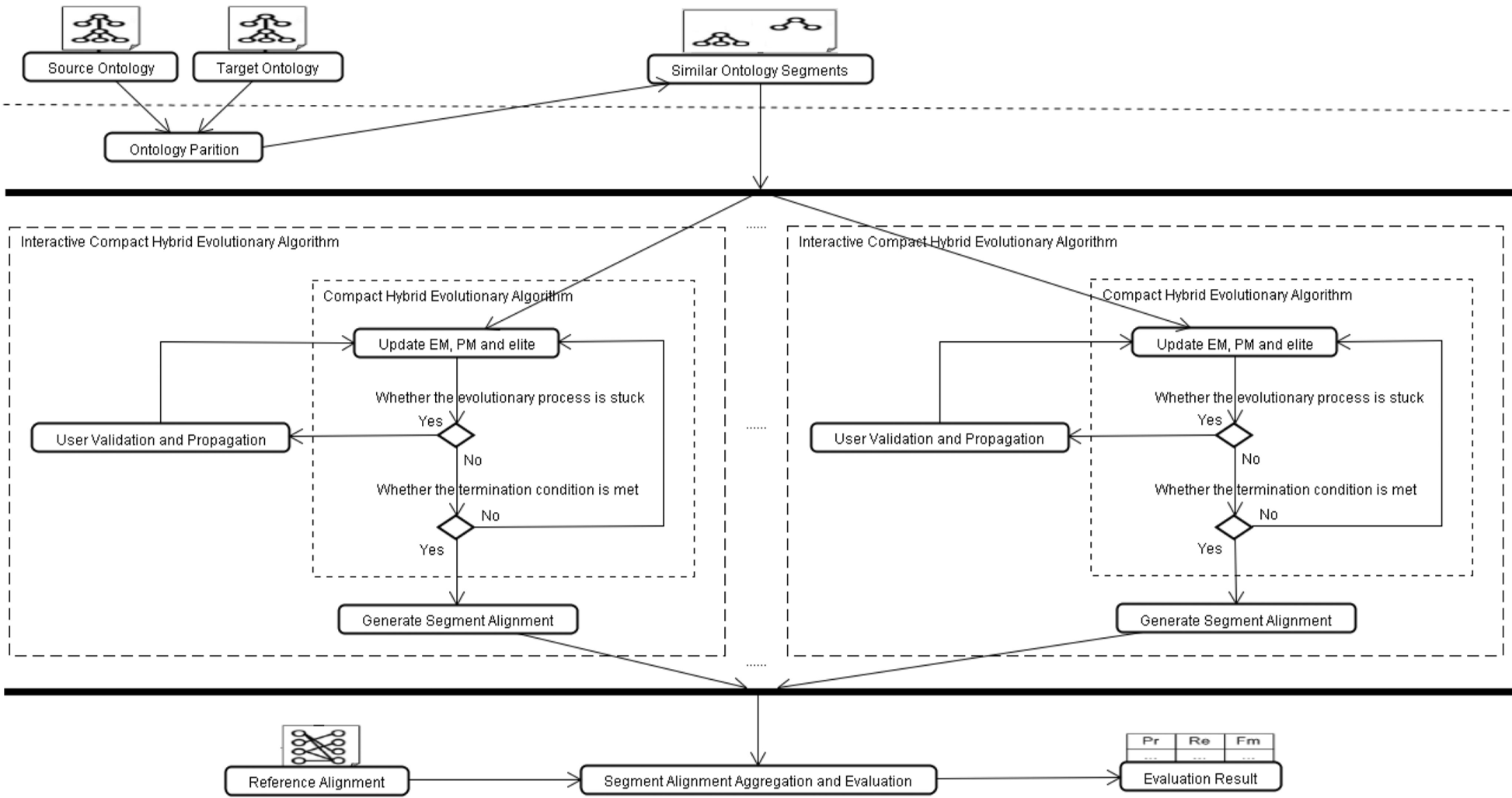 Figure 1: The four-phase ICMA framework: Partitioning, Matching, Interaction, and Aggregation.
3. Propagation: One Click, Many Results
This is the "secret sauce." When a user validates a mapping (e.g., Concept A = Concept B), ICMA doesn't just record that one point. It uses the Ontology Hierarchy. If A is an ancestor of A', and B is an ancestor of B', the algorithm intelligently adjusts the probabilities for descendant mappings, effectively "spreading" the human's knowledge across the ontology tree.
Experimental Battleground: OAEI 2016
The authors tested ICMA against heavyweights like AML (AgreementMakerLight) and LogMap across three tracks: Anatomy, Conference, and Large Bio.
Key Performance Metrics:
- Quality: In the Anatomy track, ICMA achieved an F-measure of 0.96, outperforming all competitors.
- Efficiency: ICMA's "Mean Improvement per Request" was consistently the highest, meaning every time a human clicked "Yes" or "No," the model learned more than its competitors did.
- Robustness: Even when the user (simulated by an oracle) made mistakes 30% of the time, ICMA's performance only dropped marginally (~1-2%), thanks to its Asymmetrical Similarity Measure that filters inconsistent inputs.
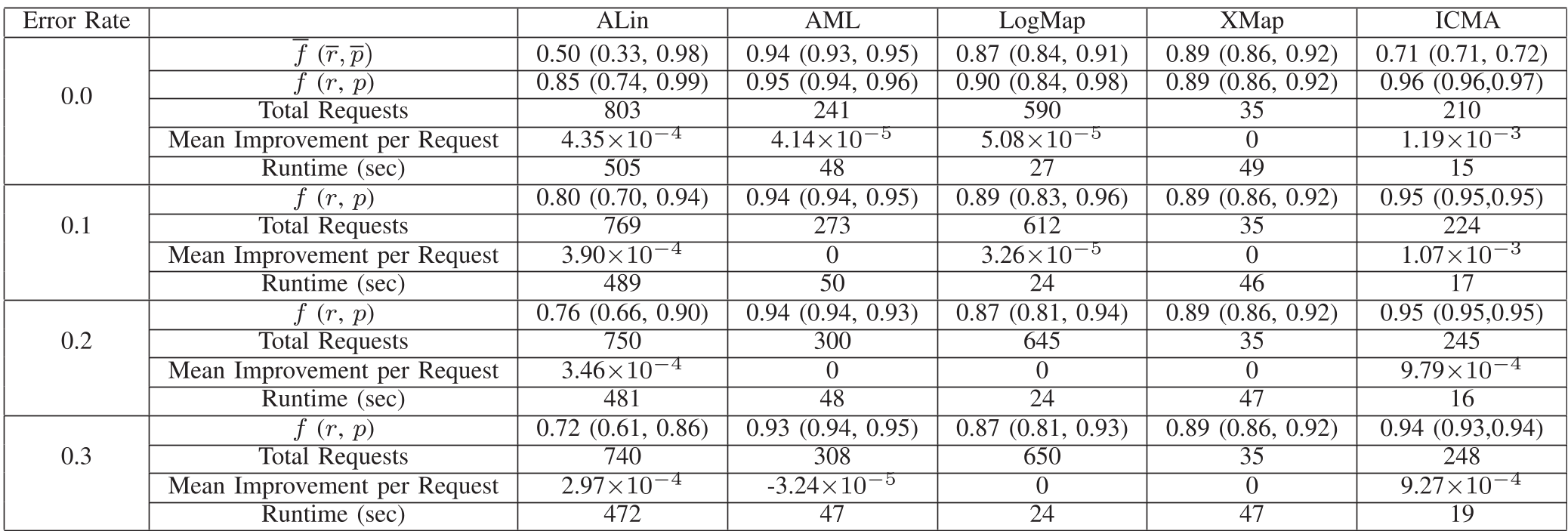 Table 1: Comparison of ICMA against state-of-the-art tools across different user error rates.
Deep Insight: Why ICMA Wins
The brilliance of ICMA lies in its Memetic nature—combining global search (evolutionary) with local search (crossover). By using Probability Matrices (PM) to represent the elite, local best, and "global" (user-validated) best, the algorithm builds a probabilistic model of the optimal alignment. When a user provides feedback, the PM is updated directly, shifting the search space towards the ground truth in real-time.
Summary & Future Outlook
ICMA proves that "more human interaction" isn't the answer; "smarter interaction" is. By reducing user workload and shielding the system from human error, ICMA sets a new standard for semiautomatic data integration.
Future Work: As we move into the era of Large Language Models (LLMs), integrating the probabilistic constraints of ICMA with the semantic reasoning of LLMs could potentially solve the most complex "Large Bio" ontology tasks with near-zero human intervention.
Editor's Note: This paper is a must-read for practitioners in Knowledge Graphs and Semantic Integration looking to build efficient human-in-the-loop workflows.