
Timeline Gen: Engineering Realistic and Scalable Social Media Timelines
On efficiently generating realistic social media timeline structures
This paper introduces Timeline Gen, a distributed synthetic data generator designed to produce realistic social media timeline structures (including tweets and retweets). By modeling user activity as nonhomogeneous Poisson processes and employing a parallel architecture with a delayed update strategy, it achieves high throughput while maintaining consistency with real-world distributions like Sina Weibo.
TL;DR
Social media analysis requires massive, realistic datasets for benchmarking. This paper presents Timeline Gen, a distributed framework that generates synthetic timeline structures (tweets, retweets, and followship links) that mirror the statistical signatures of platforms like Sina Weibo. By utilizing nonhomogeneous Poisson processes and a clever "delayed update" strategy, it achieves high-throughput generation without sacrificing the structural complexity of retweet trees.
The "Realism" Gap in Synthetic Data
Why is it so hard to fake a social network? Most simple generators can create a "Follow" graph, but they fail at the temporal-link interplay. Real users don't post at random; they follow circadian rhythms (day/night cycles), and their retweets are influenced by what their friends post in a narrow time window.
Existing tools like S3G2 often result in "shallow" interactions—missing the deep, viral cascades (retweet trees) seen in the real world. Furthermore, as the number of users scales into the millions, the memory and CPU requirements for tracking "who saw what" become a bottleneck.
Methodology: The Logic of Activity
The authors break the problem into two core components:
1. Modeling Temporal Bursts (Tweet Generation)
Instead of a fixed rate, the generator uses a nonhomogeneous Poisson process.
- Physical Intuition: Your likelihood of tweeting at 3:00 AM on Monday is lower than 8:00 PM on Friday.
- Formula: The intensity is adjusted by day () and hour () factors derived from real-world datasets.
2. The Mechanics of Retweeting
A retweet is modeled as a selection process within a user's subscription feed . The probability of retweeting a specific message follows a "preferential attachment" logic: This ensures that popular messages get more retweets, naturally forming the power-law distributions observed in viral content.
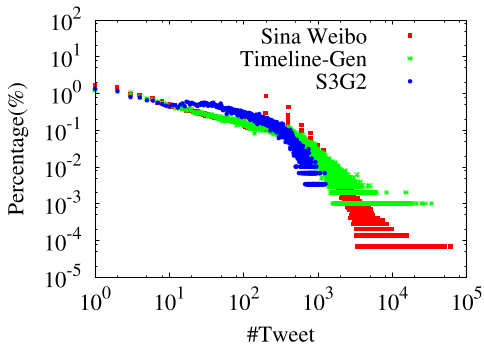 Figure 1: The Master-Slave Architecture facilitating distributed generation.
Distributed Generation & Delayed Updates
The "secret sauce" for speed is the Parallel Generation model.
- Partitioning: The user network is split across Slaves.
- The Challenge: If User A (on Slave 1) retweets User B (on Slave 2), Slave 1 needs B's post data.
- The Solution (Delayed Updates): Instead of a stop-the-world wait for network data, the system continues generating independent tweets. It only completes the retweet link once the remote data arrives, "backfilling" the timeline. Experiments show this has a negligible impact on overall statistical distributions but provides a massive boost to throughput.
Experimental Results: Sina Weibo Standard
The researchers compared Timeline Gen against the S3G2 benchmark using a year-long crawl of Sina Weibo as ground truth.
- Tree Depth: While S3G2 failed to generate deep trees, Timeline Gen's results closely matched the "long-tail" nature of real retweet cascades (Fig 9 & 10).
- Temporal Accuracy: The generated data perfectly captured the weekly and daily fluctuations of user activity.
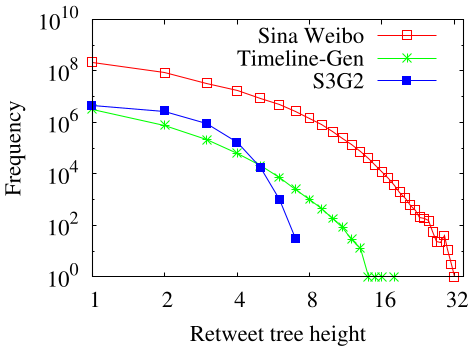 Figure 11: Minimal exponent difference between synthetic and real-world power-law distributions.
- Linear Scalability: As shown in Fig 13 (not explicitly here but described), the system achieves nearly linear speedup, making it feasible to generate datasets with hundreds of millions of tweets on commodity clusters.
Critical Insight & Conclusion
Timeline Gen proves that realistic structure is a byproduct of realistic individual behavior. By getting the user-level posting frequency and the popularity-based retweet selection right, the macro-level properties (like power-law degree distributions and deep retweet trees) emerge naturally.
Limitations: The paper focuses on structure rather than content. While it generates the "who" and "when," it doesn't simulate the semantic topicality of the tweets. Future benchmarks may need to integrate Large Language Models (LLMs) to ensure the text content is as realistic as the timeline structure.
For developers building social media analytics engines, Timeline Gen provides a blueprint for stress-testing systems against the "viral surges" that define modern digital life.