
E-H-S Method: Why Similarity is the Secret Sauce of Online Influence
Integrating Ego, Homophily, and Structural Factors to Measure User Influence in Online Community
The paper introduces the E-H-S (Ego-Homophily-Structure) method, a novel computable framework for measuring user influence in online communities by integrating intrinsic user characteristics, inter-peer homophily (similarity), and network structural positions. Tested across scientific and logistics communities, it consistently outperforms PageRank, QSI, and Topic-Rank in predicting influence rankings.
TL;DR
Quantifying who is "influential" in an online community has long been a tug-of-war between looking at individual popularity and looking at network connections. This paper introduces the E-H-S (Ego-Homophily-Structure) method, a unified metric that proves influence is not just about who you are or how many friends you have, but how much you overlap with your audience. By integrating intrinsic traits with the "homophily effect," this method achieves up to an 85% accuracy rate in identifying top opinion leaders.
The Missing Dimension: Why Structural Logic Fails
Most existing influence algorithms (like PageRank) treat the network as a series of pipes. However, humans aren't pipes—we are filters. Previous research typically fell into two isolated camps:
- Intrinsic-Centric: Focused on user "credits" or post counts, ignoring the network effect.
- Structure-Centric: Focused on the "centrality" of a node (e.g., PageRank), ignoring why people actually listen to certain individuals.
The authors argue that Homophily—the tendency for "birds of a feather to flock together"—is the bridge. Influence is most potent when the sender and receiver share similar knowledge bases or interests. Without measuring this "attraction," structural metrics overestimate influence in noisy environments.
Methodology: The E-H-S Framework
The E-H-S method is built on a multiplicative approach. Unlike additive models (which imply factors are independent), the E-H-S model assumes factors moderate each other:
- Ego (Intrinsic Characteristics): Uses historical data (credits, "likes," reputation) to gauge the quality of the source.
- Homophily (Similarity Effect): Calculates the "overlap" in keywords and topics between pairs of users. The closer the match, the higher the weight of the influence.
- Structure (Network Position): Analyzes "recommendation paths." It accounts for both direct support and indirect (transitive) influence across the community.
Architecture of Influence
The model recognizes that influence is transitive but attenuates. As information flows from User A to User B to User C, the influence of A on C grows weaker (transitive attenuation).
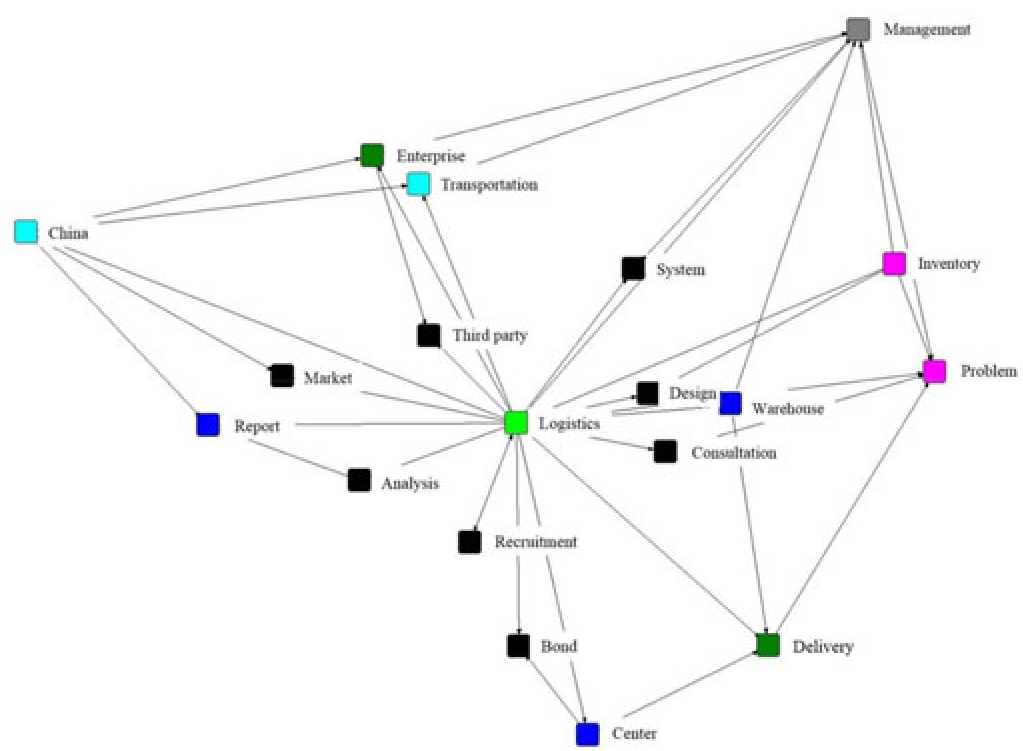 Figure 1: Visual representation of the semantic network and inter-user ties used to compute structural weights.
Battle-Tested: Outperforming the Benchmarks
The researchers tested the E-H-S index against PageRank, QSI (Quality-Structure Index), and Topic-Rank in two real-world environments: a scientific knowledge community and a professional logistics forum.
Key Breakthroughs:
- Dynamic Accuracy: In predicting future user influence ranks, the E-H-S method reduced total prediction errors significantly. In the logistics forum study, E-H-S yielded a 21.87% error rate, compared to Topic-Rank's ~35%.
- The "Celebrity Effect": The model performed exceptionally well for "Star Users" (high-quality content creators). It predicted the top 20% of influencers with 85.71% accuracy.
Comparative Performance
| Metric | History Data | PageRank | QSI | E-H-S (Ours) |
|---|---|---|---|---|
| Total Errors | 34,395 | 32,305 | 27,238 | 22,167 |
| Top 20% Accuracy | 41.07% | 44.64% | 57.14% | 69.64% |
Data from Table I: Comparison of user influence rank prediction for active users.
Deep Insight: Why This Matters for the Future
The real innovation here is the shift from Global Influence to Relational Influence.
- For Marketers: Stop looking for the user with the most followers (the "Million Follower Fallacy"). Use E-H-S logic to find the user with the highest Similarity Score to your target segment.
- For Community Managers: To increase "stickiness," use homophily-based engines to connect similar users. When like attracts like, relationships become stable and influence flows more naturally.
Critical Analysis & Conclusion
While the E-H-S method is a major step forward, it assumes user credit is a perfect proxy for quality. Future work could refine this by using NLP to analyze the sentiment of interactions—distinguishing between a "famous" user who is loved and one who is controversial (polarization).
The Takeaway: Influence is a three-legged stool. If you ignore the personality (Ego), the similarity (Homophily), or the network (Structure), the measurement falls over. The E-H-S method provides the most stable stool yet for navigating the complex social contagion of the digital age.