
Egobile: Bridging the Gap Between Social Networks and Mobile Context Awareness
Egobile: where social networks go mobile
The paper introduces Egobile, a mobile context-aware social network framework that utilizes the W3C Geolocation API and memory-based collaborative filtering to provide personalized location recommendations. Developed specifically for university students, it overcomes cross-platform fragmentation by using a web-based approach (HTML5/PHP) and a NoSQL (MongoDB) backend.
TL;DR
Egobile is a pioneering framework designed to transform how we interact with social networks on the move. By leveraging web standards like the W3C Geolocation API and the flexible scaling of NoSQL (MongoDB), it creates a cross-platform ecosystem where students can share locations, custom routes, and receive "trust-based" recommendations from their social circle.
Context & Motivation: The Fragmentation Headache
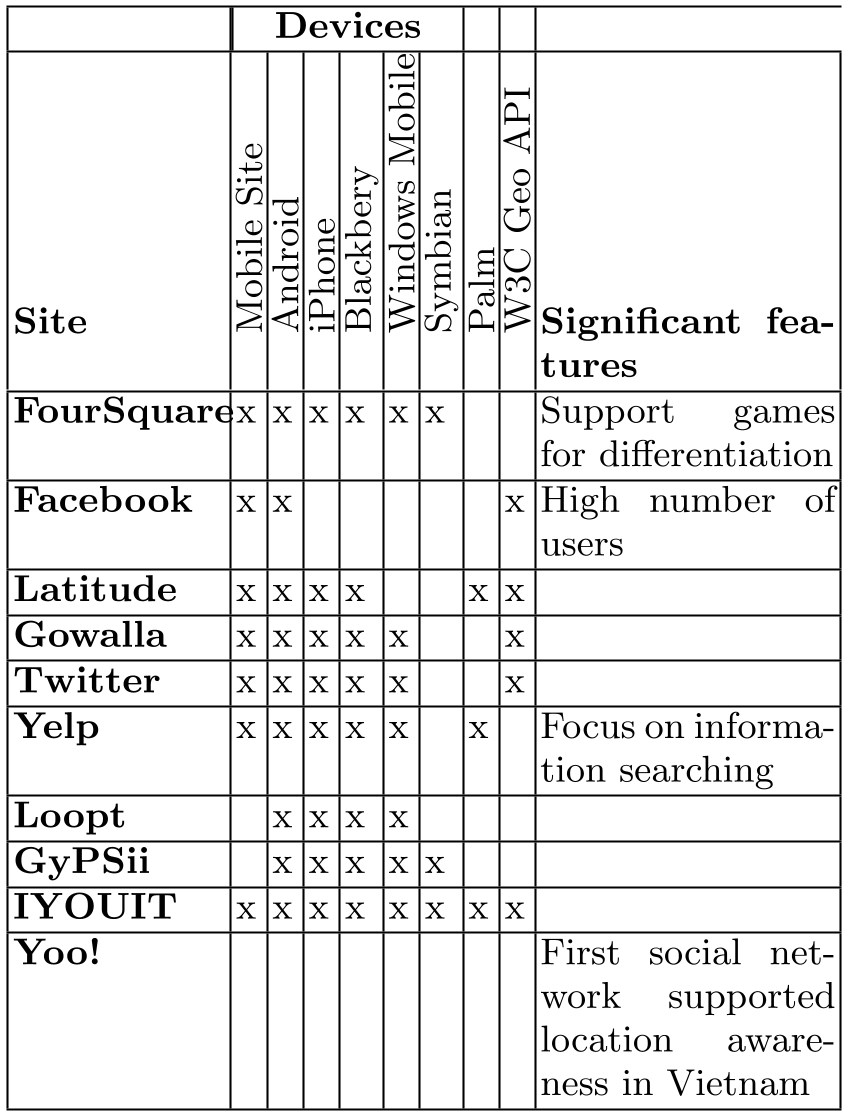
Back in 2011, the mobile landscape was a "Wild West" of operating systems (early Android, iOS, Windows Phone, and Symbian). For developers, building a location-aware social network meant writing separate code for every device's GPS API.
The authors of Egobile identified two critical gaps:
- Technical Gap: The lack of a unified method to access location data across different handsets.
- Social Gap: Existing recommendation systems were generic; they didn't leverage the inherent "trust" we place in recommendations from our actual friends.
Methodology: The Architecture of Egobile
The core innovation of Egobile lies in its Web-Centric Architecture. Instead of building native apps, the team utilized HTML5 and the W3C Geolocation API. This allowed the app to retrieve coordinates via GPS, Wi-Fi, or IP address through a single JavaScript interface, effectively bypassing manufacturer constraints.
1. Data Modeling with NoSQL
Traditional SQL databases struggle with the complex, many-to-many relationships found in social networks (Users ↔ Friends ↔ Locations ↔ Comments). Egobile opted for MongoDB, utilizing its document-based structure to colocate related data, which significantly boosted performance and simplified the handling of Geospatial Indexes.

2. Trust-Based Recommendations
The system uses Memory-Based Collaborative Filtering. Unlike cold algorithms that suggest popular spots to everyone, Egobile prioritizes what your friends like. If your close friend "ratings" a library or cafe highly, the system intelligently highlights it on your map, filtering out the noise of the city.
Experimental Validation
To prove the framework's viability, the authors tested it under a simulated load at the University of Information Technology, Ho Chi Minh City.
- Efficiency: Even with 100 users active simultaneously, the delay remained under 2 seconds.
- Cross-Platform Stability: The "Write Once, Run Everywhere" promise held true across Android, iOS, and even Opera Mobile.
- Data Usage: In an era of limited 3G data, the app only consumed ~2 KB/s, making it affordable for the target student demographic.
Critical Insight: The "Social Shadows" of Technology
The paper doesn't just stop at technical implementation. The authors offer a refreshingly honest look at the limitations and societal impacts of mobile social networking:
- The Isolationism Trap: They acknowledge the irony that "always-on" mobile social networks can lead to young people ignoring their physical surroundings (a precursor to today's "phubbing" phenomenon).
- Privacy vs. Utility: They identify a core tension—intelligent services require location data, but recording that data creates huge privacy risks.
Conclusion
Egobile serves as an early blueprint for the "Check-in" and "Social Discovery" apps that would eventually dominate the mid-2010s. By prioritizing cross-platform accessibility and social trust over sheer algorithmic complexity, it provided a scalable model for context-aware computing that remains relevant in the age of ubiquitous mobile sensing.
Future Directions: The authors suggest that the next frontier is not just showing where friends are, but facilitating active coordination—using social networks to help people navigate the physical world together in real-time.