
Deciphering Complexity: Egocentric Abstraction in Heterogeneous Social Networks
Egocentric Information Abstraction for Heterogeneous Social Networks
This paper introduces an unsupervised framework for egocentric information abstraction in Heterogeneous Social Networks (HSN). It maps complex network structures into a vector space of "Linear Combinations of Relations" (LCRs) to distill representative subgraphs for visualization and analysis.
TL;DR
In an era of "Big Data," the sheer volume of connections in Heterogeneous Social Networks (HSNs) makes manual analysis nearly impossible. This paper presents an unsupervised mechanism to generate egocentric abstractions—compact subgraphs that summarize the most meaningful relationships surrounding a specific node. By distilling complexity through statistical dependency and "Linear Combinations of Relations," the method helps users identify both the "normal" and the "uniquely rare" behaviors of an entity.
The Motivation: Why "More Information" is Sometimes Worse
Modern social networks are rarely simple. A movie network doesn't just contain "friends"; it links actors, directors, and genres through a web of multi-typed relations. Traditional graph algorithms like PageRank often flatten this richness into a homogeneous structure, losing the semantic nuance.
The authors argue that when a human analyst asks, "What makes this specific node special?", they are often blinded by the "hairball" of a k-step neighborhood graph. The challenge is to filter out the noise without losing the critical relational context—a problem the authors solve by moving from a topological view to a statistical vector-space representation.
Methodology: The Core Engine
The methodology operates on the principle that the "semantics" of a node (the Ego) are defined by the paths radiating from it.
1. Feature Extraction via LCR
Instead of looking at single edges, the system extracts Linear Combinations of Relations (LCR). If an actor (Ego) is connected to a movie, which is then connected to a director, the LCR is <hasActor-1, DirectedBy>. This sequence represents a high-order "behavior."
2. Statistical Dependency Measures
The framework uses two Random Experiments (RE1 and RE2) to calculate:
- Local Frequency: How often does this Ego participate in this specific behavior compared to its other behaviors?
- Relative Frequency: How unique is this behavior to this Ego compared to all other nodes of the same type in the entire network?
3. The Three Abstraction Views
The researchers provide three "lenses" to view the data:
- Local Frequency: Shows the "regular" life of the ego (e.g., an actress who mostly does romantic comedies).
- Local Rarity: Highlights anomalies or "black swan" events (e.g., that same actress suddenly producing a niche indie film).
- Relative Frequency: Identifies the ego's "signature" (e.g., compared to other actors, this person appears in an unusually high percentage of remakes).
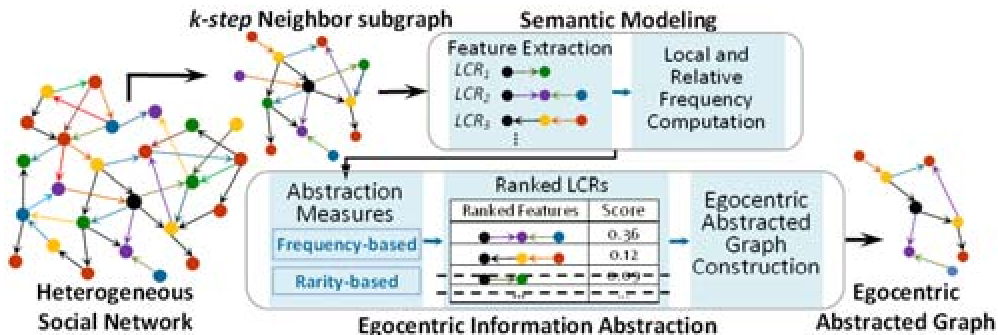 Fig 1: The information abstraction flowchart—from raw HSN to vector space, then back to a distilled graph.
Experiments: Real-world Proof
The authors tested their framework on the UCI KDD Movie Dataset and a DARPA Crime Dataset.
Case Study: Meg Ryan
By applying the abstraction to the actress Meg Ryan, the system was able to reduce a messy 116-node neighborhood into clear, interpretable motifs.
- The Local Frequency view clearly showed her dominant presence in romantic and comedic genres alongside her then-husband, Dennis Quaid.
- The Relative Frequency view (Fig 2) unearthed a less obvious trait: her propensity for starring in "remake" movies—a feature that distinguishes her from typical peers.
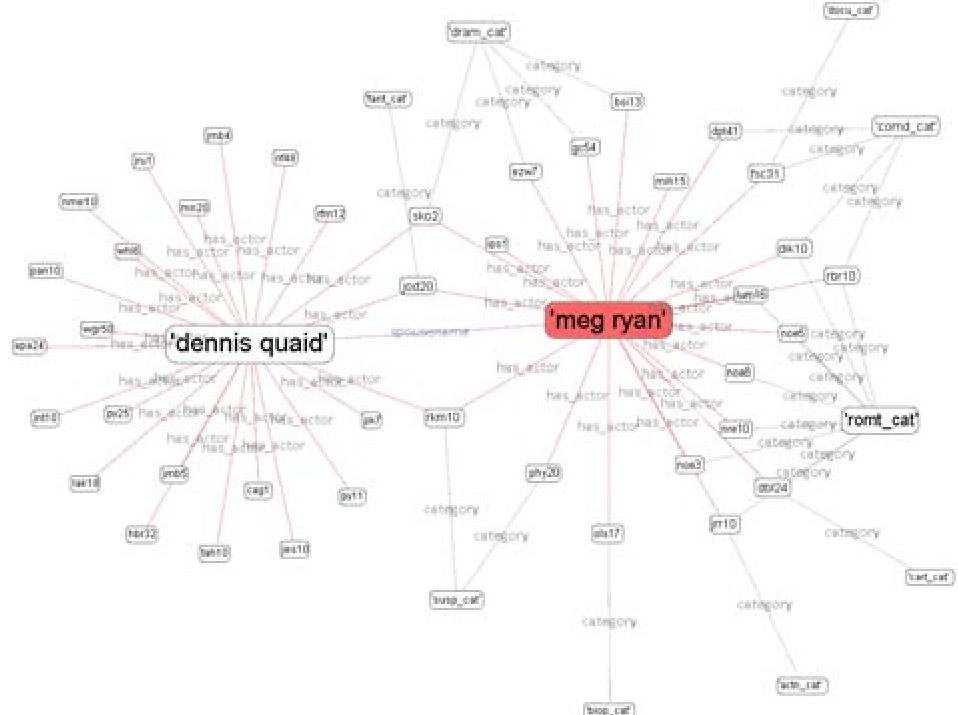 Fig 2: Relative Frequency abstraction for Meg Ryan, revealing her "signature" behaviors in the industry.
Human-in-the-loop: Crime Identification
In a simulated Russian organized crime dataset, human subjects were tasked with identifying high-level criminals. The results were staggering:
- Accuracy: Improved by up to 13.3%.
- Efficiency: Analysts using the Relative Frequency view made their decisions in 10.9 minutes, compared to 36.6 minutes when using raw subgraphs.
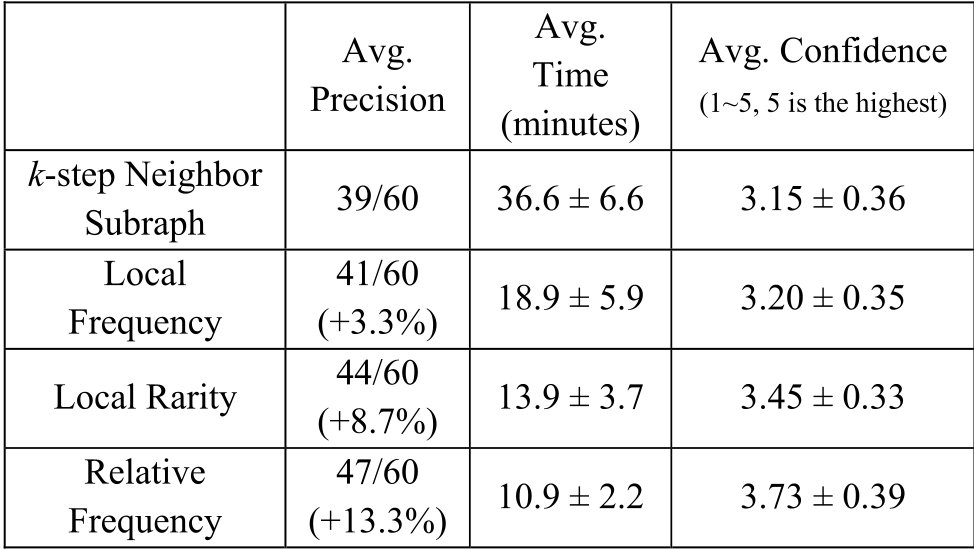 Fig 3: Performance metrics showing massive gains in efficiency and accuracy using distilled views.
Critical Analysis & Takeaways
The brilliance of this work lies in its shift from eliminating edges (which can inadvertently break paths) to retaining important patterns. By reconstructing the graph only from high-scoring LCRs, the resulting visualization is guaranteed to be semantically coherent.
Limitations:
- Computational Cost: Sampling high-order paths is expensive. The authors suggest "likelihood weighting" to mitigate this, but it remains a bottleneck for massive, dynamic graphs.
- Thresholding: The choice of (neighborhood depth) and (filtering threshold) is still more of an art than a science.
Future Outlook: This "egocentric" approach is a precursor to modern "explainable AI" (XAI) in graph mining. As HSNs grow into the trillions of edges, such abstraction mechanisms will be vital for human-AI collaboration in fields like forensic accounting, cyber-security, and personalized recommendation systems.
Summary Statement: This research provides a robust mathematical foundation for turning "graph noise" into "relational signals," proving that in complex networks, less is indeed more—provided you keep the right "less."