
PELS: Bridging Personal Knowledge and Social Business through DRM
A Framework for eLearning with Social Media Using DRM
This paper proposes the Personal eLearning System (PELS), a framework that integrates individual knowledge management with social networking and Digital Rights Management (DRM). PELS aims to facilitate the creation, verification, and monetization of learning artifacts within a collaborative digital ecosystem.
TL;DR
The Personal eLearning System (PELS) framework reimagines eLearning not just as a medium for instruction, but as a robust ecosystem for Value Creation. By integrating social media connectivity with Digital Rights Management (DRM), PELS allows learners to organize, verify, and—crucially—monitize their intellectual artifacts like notes and problem solutions. It addresses the gap between private study and social collaboration, ensuring that "hidden knowledge" is captured and protected.
Problem & Motivation: The Silo Effect in Learning
Traditional eLearning systems often treat students as passive consumers. The authors identify a significant "myopic view" in existing solutions:
- Knowledge Fragmentation: Valuable insights are often buried in emails, local file shares, or isolated repositories.
- Lack of Ownership: In both corporate and academic settings, creators lack the tools to maintain control over their intellectual property (IP).
- The Synergy Gap: There is often no direct correlation between an individual's front-line learning activities and the broader organizational strategy, leading to redundant work and wasted human capital.
The authors postulate that for an eLearning system to be truly effective, it must function as an n-dimensional dynamic cloud where strategies, people, and documents are inextricably linked.
Methodology: The PELS Architecture
The PELS framework is built upon the foundation of the IEEE Learning Technology Systems Architecture (IEEE LTSA) but adds a layer of social business logic.
1. The Core Components
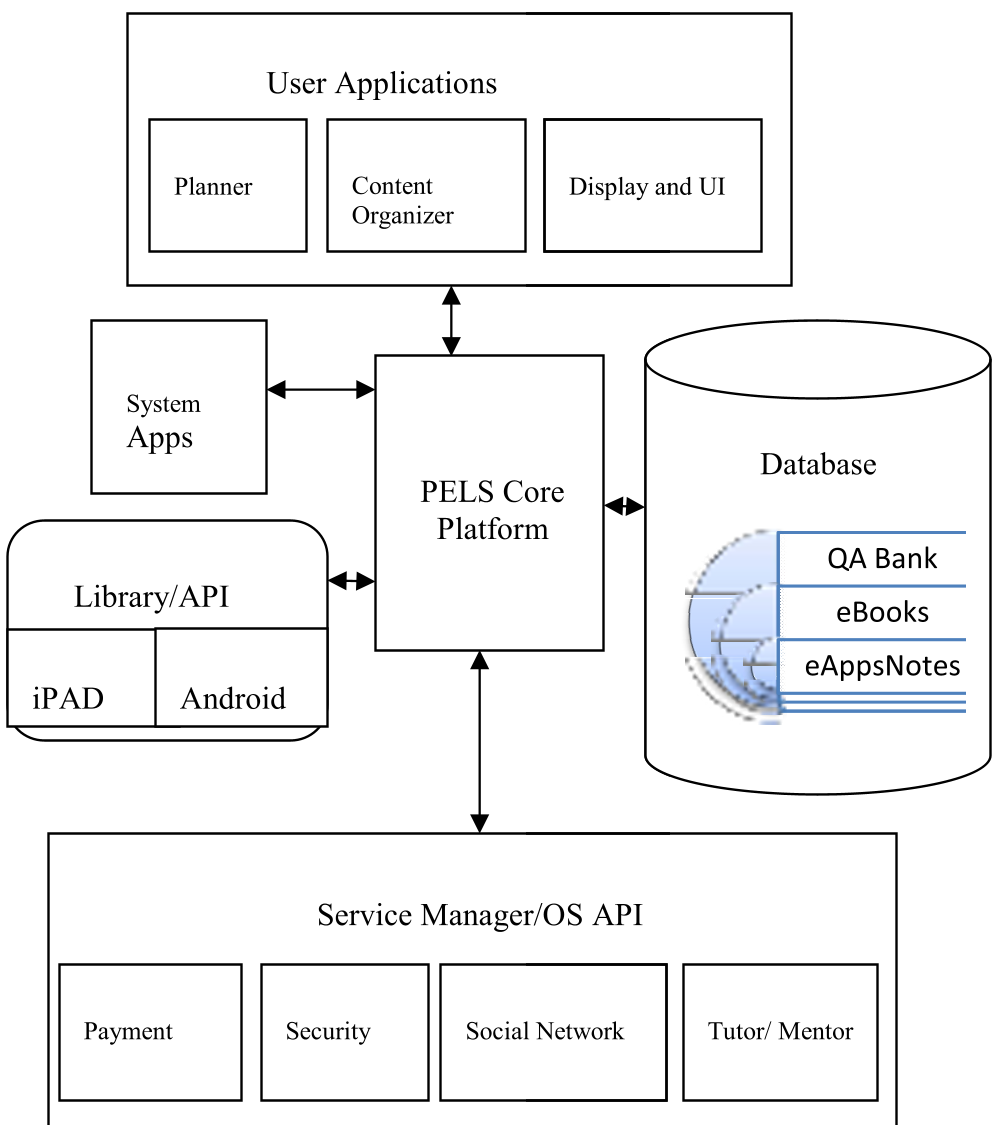
As shown in the architecture diagram, PELS is divided into several functional zones:
- User Apps: Focused on planning the learning environment and organizing content (multimedia, text).
- PELS Core Platform: The "heart" that manages the search engine, testing/reporting, and interfaces with all other modules.
- Service Manager: This is the critical differentiator. It provides DRM enforcement, payment gateways, and security protocols for content sharing.
2. The Learning Workflow
The methodology for PELS follows a cyclical path: Plan → Organize → Solve → Verify → Share. A unique feature is the QA Bank, where learners can verify the integrity of their answers against a global resource database before sharing them with their social network.
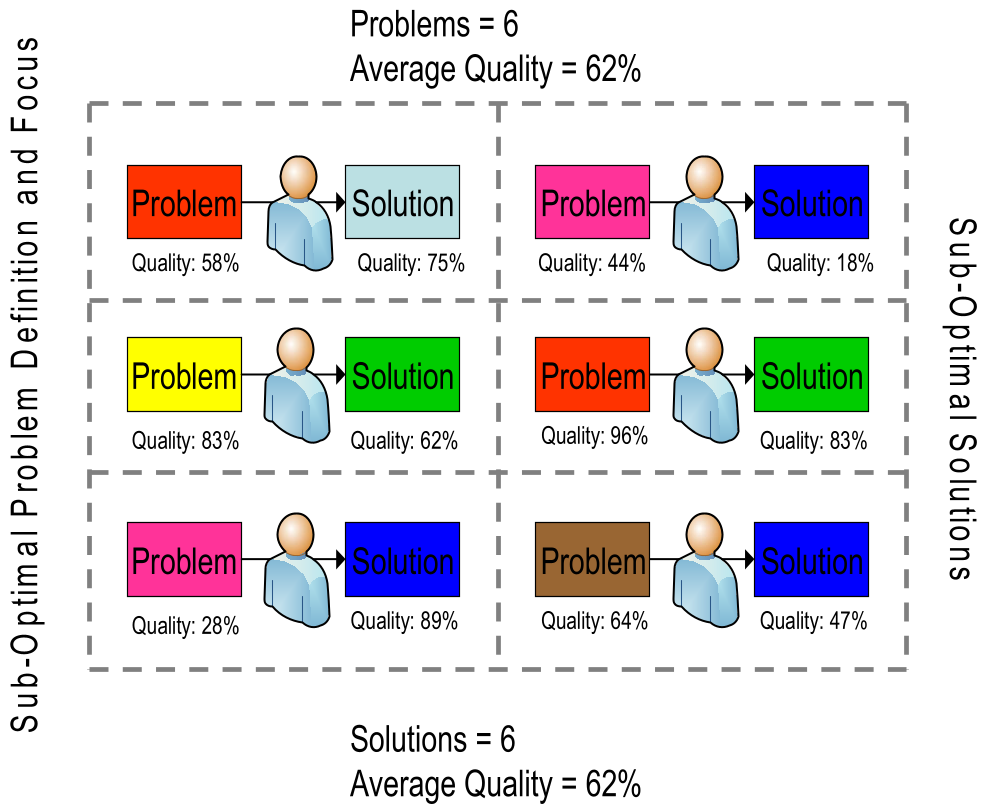 Figure: The shift from fragmented, low-integrity solutions (Figure 3) to an integrated, high-value ecosystem (Figure 4).
DRM: The Engine of Monetization
The paper argues that Digital Rights Management (DRM) is the "imperative" for modern eLearning. Without it, researchers and students have no incentive to share their highest-quality work.
- Persistent DRM: Ensuring that permissions (e.g., view-only, no-print) stay with the document even as it moves from an iPad to a web portal.
- Role-Based Access (RBAC): Only specific group leaders can modify shared artifacts, while others participate as viewers or contributors.
- Monetization: By enforcing IP rights, PELS allows authors to get "proper recognition and remuneration," turning a student's calculus notes into a sellable digital asset.
Experiments & Prototype: knowleze.com
The prototype of PELS, implemented via the knowleze.com web application, serves as a proof-of-concept for:
- Peer-to-Peer Selling: Allowing users to sell solutions and tutoring services.
- Cross-Platform Portability: Deploying services across mobile devices (iPAD/iPhone) and web browsers.
- Community Hubs: Using "Communities of Practice" where coordination is tight and knowledge is distributed across the group rather than held individually.
Critical Analysis & Conclusion
Takeaway
PELS represents an early vision of the "Creator Economy" applied to education. By shifting the focus from Learning Management (LMS) to Learning Content Management (LCMS) with a DRM-secured social wrapper, it transforms passive study into a proactive business activity.
Limitations
- Technical Implementation: While the paper details the need for REL (Right Expression Language), it provides limited details on the specific cryptographic implementation used for the persistent DRM.
- Platform Lock-in: The reliance on a specific platform (knowleze.com) might limit the "n-dimensional" portability theoretical framework aims for.
Future Outlook
As we move into an era of AI-generated content, the DRM principles proposed in this PELS framework become even more relevant. Verifying the authenticity and integrity of shared human knowledge will be the next frontier for social eLearning environments.