
Electrosense+: Scaling Global Radio Spectrum Decoding via IoT Crowdsourcing
Electrosense+: Crowdsourcing radio spectrum decoding using IoT receivers
Electrosense+ is an open, crowdsourcing-based IoT platform designed for real-time radio spectrum monitoring and decoding. It utilizes low-cost Software-Defined Radio (SDR) sensors and a peer-to-peer (P2P) architecture via WebRTC to enable scalable, decentralized signal decoding of various technologies including FM, AM, ADS-B, and LTE.
TL;DR
Radio spectrum monitoring is transitioning from centralized, expensive governmental infrastructures to decentralized, user-driven networks. Electrosense+ introduces a scalable architecture using low-cost IoT sensors (like Raspberry Pi and RTL-SDR) that allows anyone to remotely decode radio signals (FM, ADS-B, LTE) in real-time. By moving decoding to the edge and introducing a virtual token incentive system, it solves the bottlenecks of network bandwidth, privacy, and user participation.
Background: Beyond Simple Monitoring
Traditional spectrum monitoring initiatives like Electrosense (the predecessor) or Microsoft Spectrum Observatory primarily focused on "spectrum occupancy"—simply knowing if a frequency was in use. However, the interest of the general public lies in decoding: listening to FM radio, tracking aircraft (ADS-B), or maritime traffic (AIS). Electrosense+ bridges this gap by transforming passive sensors into interactive decoders.
Problem & Motivation: The Scalability and Privacy Barrier
The primary hurdle for previous systems was the "I/Q Data Deluge." Sending raw I/Q samples (the digital representation of radio signals) from a sensor to a user requires massive bandwidth, often exceeding the capabilities of home internet connections. Furthermore, sending raw data allows users to potentially decode private communications, creating a massive privacy risk.
The authors recognized that for a crowdsourced network to thrive, it must:
- Reduce Bandwidth: By decoding signals locally on the sensor.
- Protect Privacy: By filtering data and only allowing trusted, public-interest decoders.
- Incentivize Growth: By rewarding those who host sensors in underserved areas.
Methodology: Edge Decoding and P2P Architecture
1. Dual Processing Pipelines
Electrosense+ sensors run two parallel pipelines:
- PSD Pipeline: Computes Power Spectral Density for visual waterfall displays.
- Decoding Pipeline: Local demodulation of the signal. By sending only the decoded JSON messages or compressed audio, network throughput is slashed by orders of magnitude.
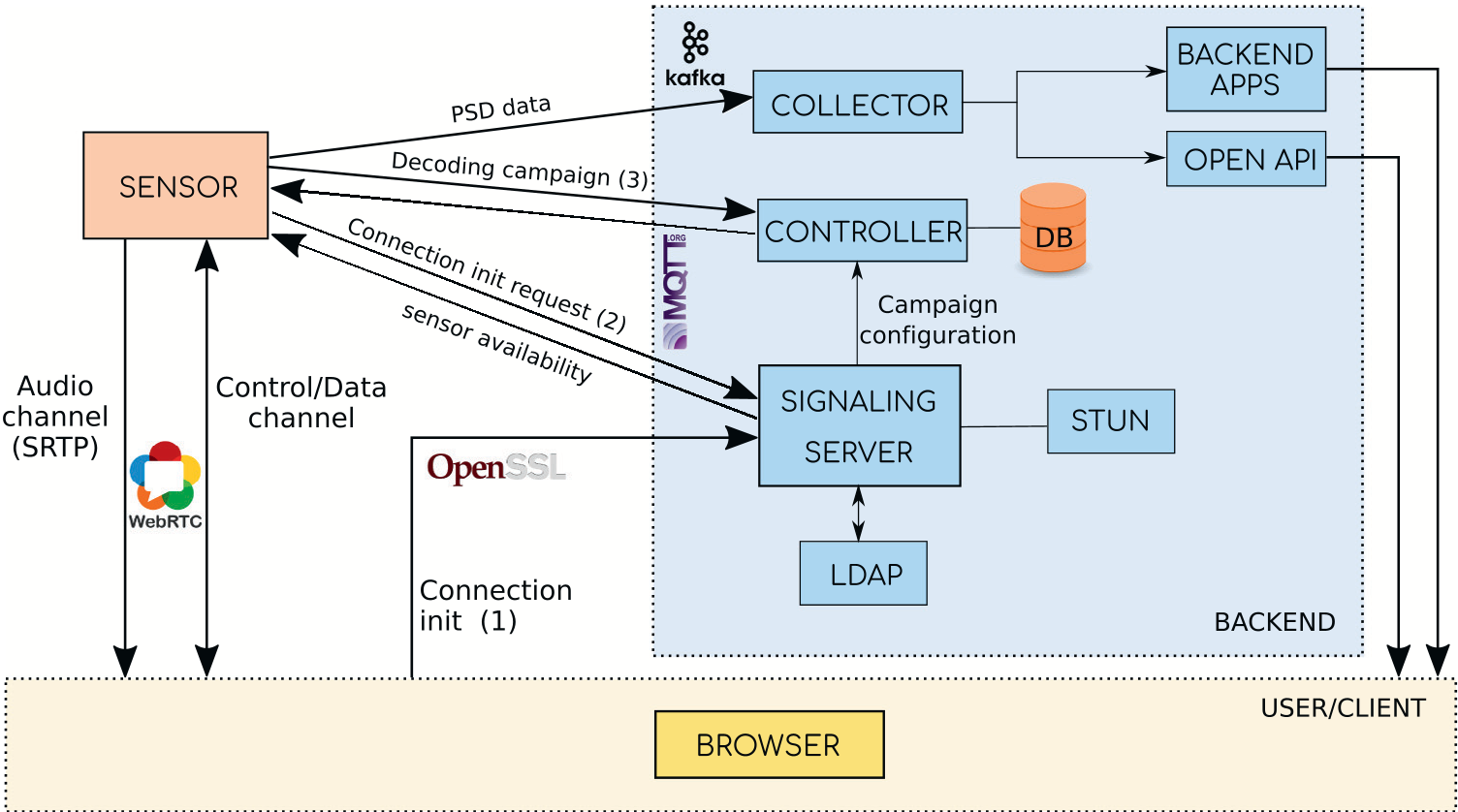 Fig 1: The architecture shows the Backend controlling signaling while data flows directly between the Sensor and Client via WebRTC.
2. Peer-to-Peer (P2P) via WebRTC
To ensure low latency and scalability, Electrosense+ eliminates the backend bottleneck for live streaming. Using WebRTC, it establishes a direct P2P link between the sensor and the browser. This allows for sub-second response times, essential for high-quality audio and real-time aircraft tracking.
Experimental Validation: Performance and SOTA Comparison
The system was tested on a Raspberry Pi 3B+ using various decoders.
- Efficiency: Even intensive decoders like LTE-Cell or FM Radio were optimized to run within the CPU limits of the Pi, maintaining total load mostly below 70%.
- Network Comparison: Compared to traditional solutions like OpenWebRX or KiwiSDR, Electrosense+ showed superior network efficiency, requiring significantly less throughput for the same decoding tasks.
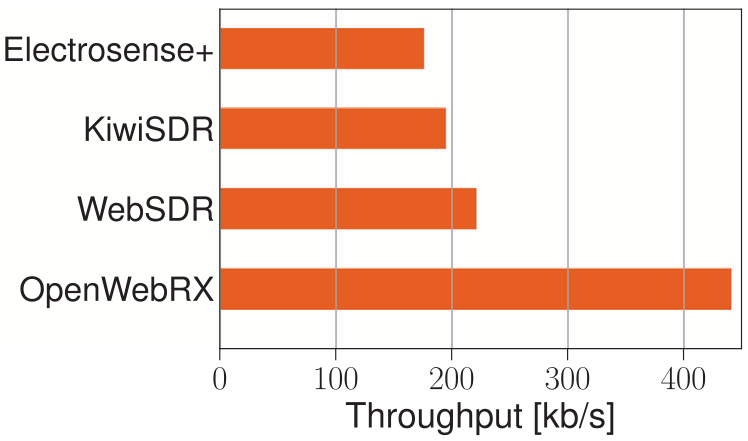 Fig 2: Comparison vs SOTA—Electrosense+ maintains lower CPU and network overhead on the client side.
Tokenomics: Designing a Sustainable Network
A standout feature of this paper is the mathematical Reward Model. Participants earn virtual tokens based on:
- Sensor Density: Higher rewards for placing sensors in "white spaces" with no coverage.
- Operational Time: Rewards for high uptime.
- Legacy Benefit: Early adopters are rewarded more to bootstrap the network.
This ensures that the network is not just a scientific experiment, but a self-sustaining ecosystem where "consumers" pay tokens to access decoding services, which are then distributed to "providers" (sensor hosts).
Critical Insight & Conclusion
Electrosense+ effectively demonstrates that Edge AI/DSP (Digital Signal Processing) is the key to scaling the Internet of Radio. By treating the radio spectrum as a crowdsourced utility rather than a restricted resource, the platform democratizes access to global radio data.
Limitations: The current system supports only one active user per sensor to prevent local network saturation. Future iterations could explore multicast P2P to allow multiple users to listen to the same stream simultaneously.
Future Work: The transition to higher-frequency signal decoding (above 6 GHz) and the integration of more complex protocols like LoRA or 5G signaling would further increase the platform's value for the research community and industry alike.