
Elevator.Locky: Scaling 3D Localization through Global Crowdsourcing
Elevator Acceleration Sensing: Design and Estimation Recognition Algorithm Using Crowdsourcing
The paper introduces "Elevator.Locky," a crowdsourcing-based system and algorithm for robust elevator recognition and displacement estimation using smartphone accelerometers. By leveraging data from hundreds of diverse devices and elevators worldwide, the authors achieved a 98% recall rate in elevator segment recognition and a 3D localization accuracy suitable for floor estimation.
TL;DR
While GPS provides 2D positioning, vertical displacement in skyscrapers remains a challenge. This paper presents Elevator.Locky, a robust framework that turns standard smartphone accelerometers into high-precision vertical odometers. By crowdsourcing data from over 230 devices and 351 different elevators, the authors developed an algorithm capable of recognizing elevator movement with a 98% recall rate, paving the way for seamless 3D indoor navigation.
Background: The Problem of Specificity
In the realm of Activity Recognition (AR), researchers often report near-perfect accuracy (95%+). However, these results usually come from "clean" environments where the researcher chooses the phone, the person carrying it, and the building. When deployed in the wild, these algorithms break because:
- Device Heterogeneity: Android sampling frequencies vary wildly (36Hz to 200Hz).
- Subject Diversity: Different people carry phones in different pockets or bags.
- Mechanical Variance: A high-speed lift in the Tokyo Sky Tree behaves differently than a freight elevator in a 3-story office.
Methodology: Identifying the "Hill and Valley"
The core intuition behind the algorithm is that human activities (walking, running) are periodic and short-term, whereas elevator movements produce sustained, non-periodic acceleration blocks.
1. Gravity Removal
To calculate distance, gravity must be subtracted. The authors use a sliding window variance check: if the variance of acceleration is below a threshold for 1 second, the average of that window is defined as the current gravity vector.
2. Segment Recognition
An elevator trip consists of two phases:
- The Hill: Continued positive acceleration (going up) or negative (going down).
- The Valley: The corresponding deceleration to stop at the floor. By setting a minimum duration threshold of 1.0 second for these "hills" and "valleys," the algorithm filters out the "noise" of walking or shifting the phone in a pocket.
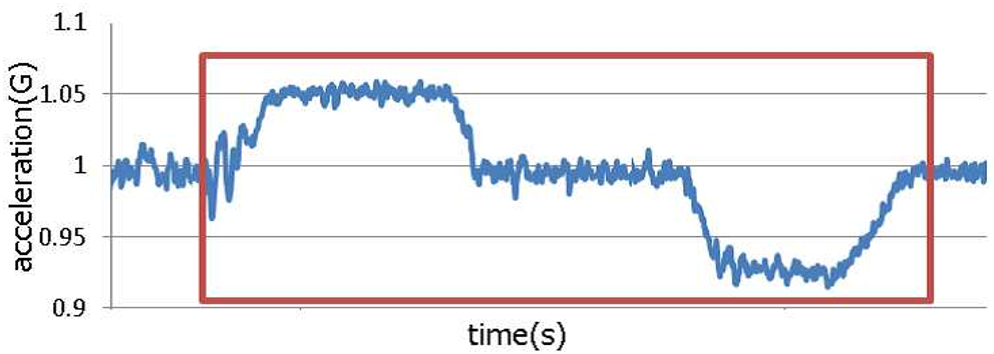 Fig 1: Characteristic 'hill and valley' pattern in elevator acceleration data.
The Power of Crowdsourcing
Instead of hiring 20 students, the authors released an Android app. This provided a rich database of 1,056 files across 74 different device types. Key findings from this "big data" approach included:
- Max Velocity: Ranged from 0.4m/s to a staggering 9.9m/s.
- Distance: The longest recorded trip was 333m (Tokyo Sky Tree).
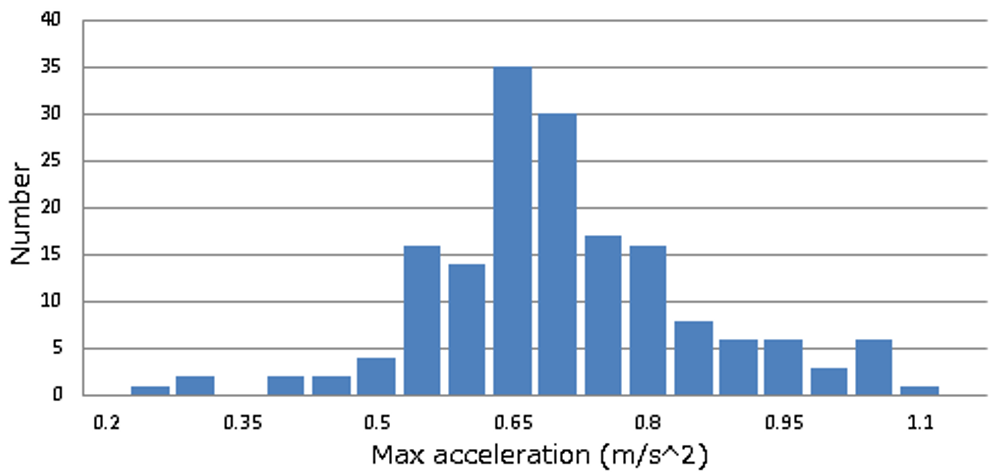 Fig 2: Heatmap showing the global distribution of crowdsourced elevator data.
Performance & Experiments
The algorithm's robustness was tested against the HASC (Human Activity Sensing Corpus), which includes complex activities like taking escalators, riding bicycles, and climbing stairs.
Results Highlights:
- Recognition Rate: 98% recall and 92% precision across all test sets.
- Distance Accuracy: In middle-rise buildings, the error was only ~0.22m. In high-rise buildings, the error rose to ~1.71m due to integration drift, but still remained well within the typical 3.5m floor height margin of error.
- Floor Identification: By combining velocity and acceleration features using a J48 decision tree, the system could even distinguish between different elevators with 74.3% accuracy, suggesting that every elevator has a unique "vibration signature."
 Table 1: Final recognition rates confirming the algorithm's robustness.
Critical Insight & Conclusion
The genius of this work isn't just in the signal processing—it's in the standardization. By recognizing that sampling rates vary, the authors used linear interpolation to "sync" global data to a 100Hz standard, allowing a single algorithm to work on a $100 budget phone and a flagship device.
Limitations: While displacement error is low, "drift" is inevitable with pure double-integration of acceleration. Future iterations could benefit from fusing this data with barometric pressure sensors (found in newer smartphones) to calibrate the altitude and eliminate cumulative error.