
Personalized Edge Intelligence: Real-Time Emotion Recognition on Ultra-Low-Power Wearables
Embedded Emotion Recognition within Cyber-Physical Systems using Physiological Signals
This paper proposes an embedded emotion recognition system for Cyber-Physical Systems (CPS) using a simplified KNN-based machine learning approach on an ultra-low-power SoC (ARM Cortex-M4). By utilizing a minimal set of raw physiological signals (PPG, GSR, SK), the system achieves state-of-the-art efficiency for wearable stress detection.
TL;DR
Researchers have developed a highly efficient, embedded emotion recognition system designed for Cyber-Physical Systems (CPS). By leveraging an ad-hoc KNN approach and Approximate Computing, they successfully moved emotion detection from heavy computers to a tiny ARM Cortex-M4 microcontroller, achieving 99% sensitivity in stress detection while utilizing minimal memory.
Problem & Motivation: The Heavy Burden of "Smart" Sensing
Most modern emotion recognition research focuses on accuracy at any cost, often utilizing high-density EEG caps or extracting hundreds of complex statistical features. While effective in a lab, this is a nightmare for real-world Cyber-Physical Systems where:
- Latency matters: Processing must be local to ensure real-time human-machine collaboration.
- Energy is scarce: Wearables cannot afford power-hungry GPUs or deep neural networks.
- Comfort is key: Nobody wants to wear bulky wires in a production environment.
The authors argue that we don't need "perfect" complexity; we need "sufficient" intelligence that acts as a reliable trigger.
Methodology: The "Less is More" Architecture
The core innovation lies in the simplification of the pipeline. Instead of a daunting feature extraction stage, the system uses only three signals from the Autonomous Nervous System (ANS):
- Photoplethysmography (PPG): Measuring Blood Volume Pressure.
- Galvanic Skin Response (GSR): Tracking skin conductance related to arousal.
- Skin Temperature (SK): Monitoring thermal changes.
The system architecture follows a distinct "Approximate Computing" philosophy:
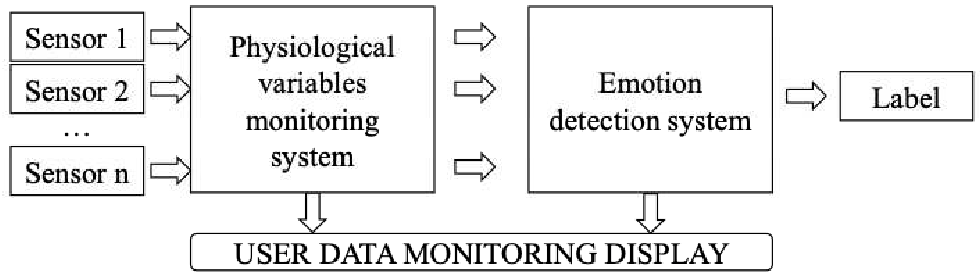
The KNN Edge implementation
The team chose K-Nearest Neighbors (KNN) due to its non-parametric nature. To make it work on a tiny 32MHz Cortex-M4, they implemented:
- Feature Normalization: Rescaling raw data into a [0, 1] range to ensure Euclidean distance remains fair.
- Miss-classification Cost: A critical tuning parameter that penalizes False Negatives more than False Positives. This ensures that the system rarely "misses" a stress event, even if it occasionally flags a non-stress event as a precaution.
Experimental Results: Ad-hoc vs. Global Knowledge
The study reveals a profound insight: Universal models fail where personalized models excel.
When training a "Global" model (mixing data from many subjects), accuracy plummeted to 54%. However, when using an ad-hoc approach—where the model is trained specifically on an individual's unique physiological baseline—the performance surged:
- Accuracy: 85%
- Sensitivity (Recall): 99% (Crucial for safety-trigger applications)
- Specificity: 81%
 Fig: The custom-developed PCB embedding the ARM Cortex-M4 and sensors.
The resource footprint was remarkably small. The intelligent system used only 36KB of Flash, leaving plenty of room (256KB) for other application-specific code. This proves that emotion awareness can be an "add-on" feature for existing IoT devices without requiring specialized hardware.
Critical Analysis & Conclusion
The "Trigger" Philosophy
The most valuable takeaway is the Cascade Approach. The authors don't expect the wearable to do everything. Instead, it acts as the "first line of defense." If the tiny KNN model detects high stress with its 99% sensitivity, it can then wake up more powerful, power-hungry algorithms in upper layers (like a smartphone or edge server).
Limitations
- Database Constraints: The study utilized the DEAP database, which is quite small (15 people used in final testing).
- Static KNN: Currently, the training happens offline on a PC. Future iterations should explore on-device incremental learning to adapt to the user's physiological drift over time.
Future Outlook
By integrating their newly developed "Emotion-inator" tool for better data labeling, the authors are setting the stage for more robust, personalized CPS environments where machines truly understand the state of their human counterparts.