
Beyond Anatomy: How the Developing Brain Reorganizes Adult-Like Functions
Emergence and organization of adult brain function throughout child development
This study utilizes Shared Response Modeling (SRM), a machine learning approach for functional alignment, to map adult-defined brain functions onto the fMRI activity of children (ages 3–12) watching a naturalistic movie. The researchers demonstrate that "adult-like" functional patterns are present even in early childhood and that brain maturation involves the emergence, consistency, and anatomical reorganization of these functions.
TL;DR
Is a child’s brain just a "small adult brain," or does it operate on entirely different principles? By applying machine learning (Shared Response Modeling) to fMRI data of kids watching movies, researchers from Yale have discovered that children as young as 3.5 years old already possess adult-like cognitive "features." However, these functions aren't always where they're supposed to be—they often migrate across the cortex as the child grows.
The Problem with the "Anatomical Constraint"
For decades, developmental neuroscience has operated under a simple assumption: to see if a child's brain is mature, we look at the "adult" location for a task (like the fusiform face area) and see if it's active. If it's not, we assume the function hasn't developed yet.
But what if the function is there, just in a different spot? This paper argues that by forcing child data into adult anatomical templates, we might be missing the "interactive specialization" of the brain. The authors suggest that brain regions don't mature in isolation; they compete and specialize through experience.
Methodology: Functional Alignment via SRM
The researchers used Shared Response Modeling (SRM) to bypass anatomical boundaries.
- Learning the "Adult Code": They identified 10 shared temporal features from adults watching the movie "Partly Cloudy."
- Reconstruction: They projected these adult features into each child’s unique brain space.
- The Litmus Test: If a child’s brain is "adult-like," their actual fMRI activity should correlate with this reconstructed "adult" signal.
 Fig 1: The signal reconstruction pipeline allows for "anatomically agnostic" comparisons between age groups.
Three Paths of Development
The study identified three distinct trajectories for how brain functions mature between age 3 and 12:
- Emergence: A function is absent in toddlers but appears in a specific region in older children (e.g., Feature 4 in the lingual gyrus).
- Consistency: A function starts in one region and stays there through adulthood (e.g., Feature 6 in the posterior cingulate).
- Reorganization: This is the most striking finding. A function is present in young children but moves to a different anatomical location as they age.
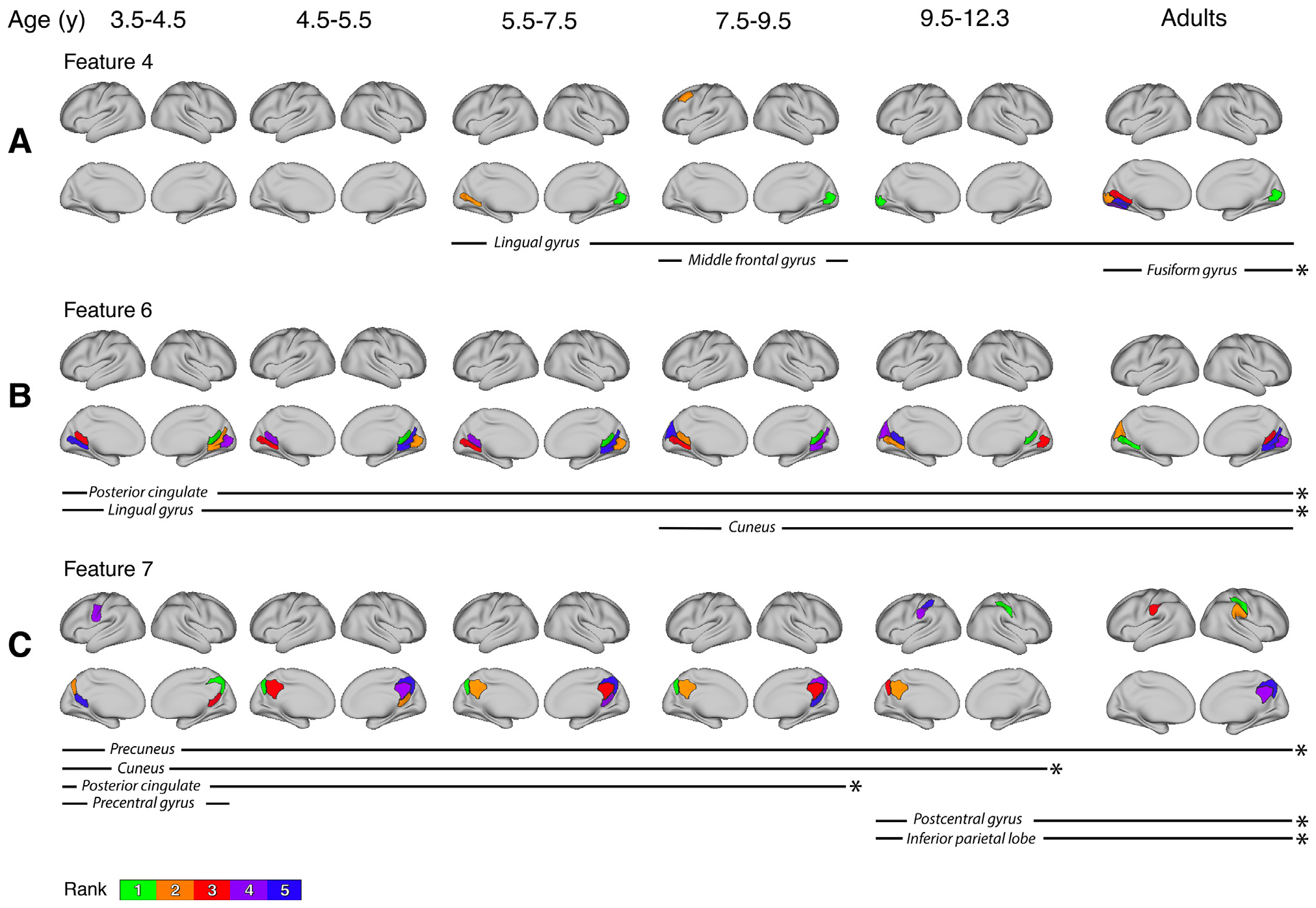 Fig 2: Visualization of Emergence, Consistency, and Reorganization across the 100-parcel Schaefer atlas.
A Case Study in Reorganization: Pain Processing
The authors specifically looked at "Pain" events in the movie. In adults, observing others in pain typically activates the cuneus and postcentral gyrus. In the youngest children (ages 3-5), the authors found that the "Pain Feature" was actually hosted in the posterior cingulate—a region usually associated with "mentalizing" (thinking about others' thoughts) in adults.
This suggests that young children can process the concept of pain, but they might use different cognitive "machinery" to do so before the brain specializes.
Experiments & Results
The researchers weren't just looking for qualitative patterns; they built a predictive model. By looking at the "Signal Reconstruction" scores (how well the child matched the adult features), they could accurately predict a child's age with a mean error of only ~2.46 years.
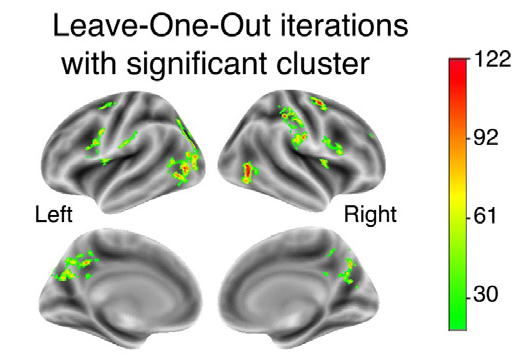 Fig 3: Regions where signal reconstruction correlation with age was highest (A) and the resulting age-prediction accuracy (B).
Critical Insight: The Value of "Noise"
One might argue that younger kids just provide "noisier" fMRI data. The authors accounted for this by calculating "within-group" reliability. They found that even after controlling for noise, the "adult-likeness" of the brain activity independently increased with age. This proves that the results reflect true functional maturation, not just better data quality in older kids.
Conclusion
This work challenges the "maturational account" that ties specific functions to specific brain regions from birth. Instead, it supports Interactive Specialization. The takeaway for future AI and neuroscience research is clear: when comparing two different systems (like a child vs. an adult, or a biological brain vs. a neural network), we must look for shared functional spaces rather than just comparing identical coordinates.
Limitations: The study is limited by the "Partly Cloudy" movie content. A different movie might reveal different features. Furthermore, the 10-feature limit is an abstraction that likely bundles multiple complex cognitive processes together.