
The Architecture of Serendipity: Why Social Games Need "Design Gaps"
Emergence and playfulness in social games
This paper explores the ludological concepts of "Paidia" (playfulness) and "Ludus" (formal rules) within the context of social games. By analyzing popular titles like Farm Town and conducting a case study on the experimental game "PASION Fruit," the author identifies how "design gaps"—unintentional or non-functional freedoms—enable emergent player behaviors and self-directed goals.
TL;DR
Is a game defined by its rules, or by what you do when you ignore them? This paper argues that the soul of social gaming lies in Paidia—the spirit of improvisation. By analyzing "design gaps" in titles like Farm Town and PASION Fruit, the author demonstrates that the most meaningful fun often emerges when players subvert a game's formal systems to create their own "meta-games."
Background: From Social Toys to Rigid Systems
In 2007, social games were "social toys"—lightweight extensions of our digital identity. Fast forward to 2010 (and beyond), and they have become a multi-billion dollar industry characterized by rigid, repetitive loops. The author notes a dangerous trend: as game designs become more formalized to appeal to non-gamers, they risk becoming "homogenized," leaving no room for the very playfulness that defines the human play instinct.
The Ludic Axis: Paidia vs. Ludus
Borrowing from sociologist Roger Caillois, the paper places games on an axis:
- Ludus: Strict rules, defined goals, and "gratuitous difficulty" (e.g., Guitar Hero or Mafia Wars).
- Paidia: Spontaneous, anarchic, and improvisational play (e.g., The Sims or a child with a rattle).
The author argues that modern social games are leaning too heavily into Ludus, creating "tight" designs that punish players for straying from the path.
Methodology: Observing the "Design Gap"
The paper introduces the concept of the Design Gap—virtual spaces or mechanics that have no direct impact on the game's formal success but allow for creative expression.
Case Study 1: Creative Agriculture in Farm Town
In Farm Town, the placement of buildings and crops doesn't affect yield. Logically, a player should place them randomly. Instead, players utilized this "gap" to create stunning "pixel art" and functional mazes.
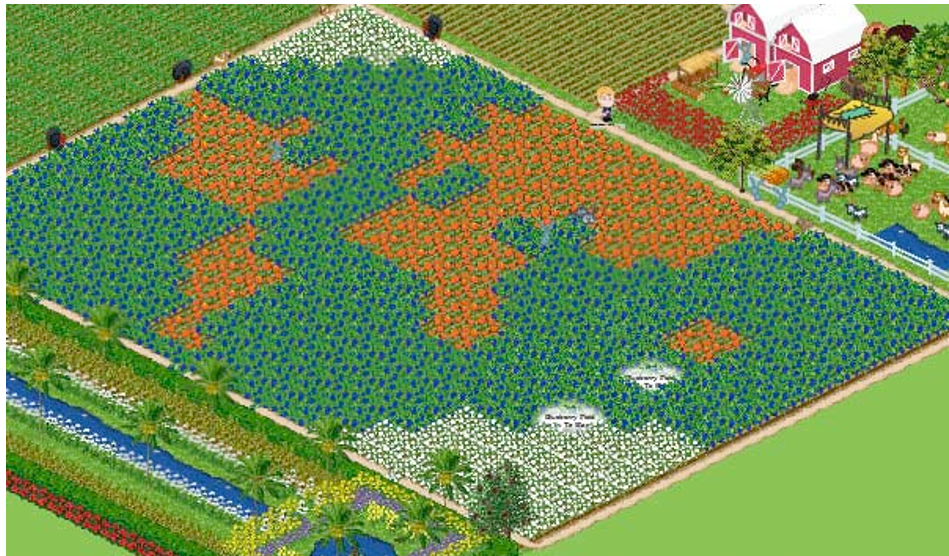 Figure 1: Players subverting farming mechanics to create aesthetic mazes and art.
Case Study 2: PASION Fruit and the Freedom to Fail
The author developed PASION Fruit, a game about environmental sustainability. The formal goal: maximize points by balancing fruit diversity against the CO2 cost of transport.
However, the trial revealed that players weren't playing for the score. They were playing for completionism. One player even convinced the entire community to sacrifice their own scores to help him achieve a "Zero CO2 - 20 Fruit" garden—a meta-goal that totally bypassed the intended competitive balance.
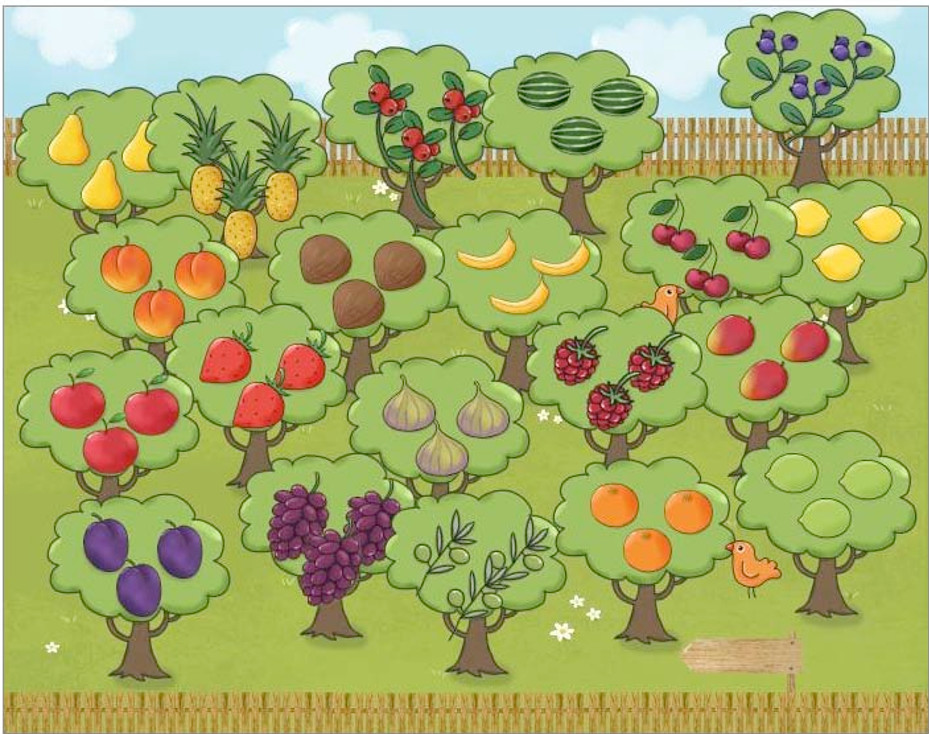 Figure 2: The "Perfect" Garden achieved through social collaboration rather than competitive optimization.
Why Barriers Kill the Fun
The author highlights that many social games (like Mafia Wars) are "restrictive." They consist purely of clicking a button to advance a narrative. There are no gaps. There is no "freedom to fail," only the binary state of progress or stagnation.
When a design is "too tight," any attempt at playfulness is interpreted by the system as failure. For example, in Rock Band, trying to improvise a drum solo leads to a "Game Over." This deprivation of the "right to die" or "right to fail" stifles the emergence of new play styles like "speedrunning" or "pacifist runs" seen in more open games like Nethack or GTA.
Critical Insights & Takeaways
- The SOTA of Play: Effectiveness in social game design isn't just about smooth UI or viral loops; it's about the depth of "emergent properties."
- Design for Flexibility: Designers should intentionally leave non-functional "holes" (like avatar customization or spatial arrangement) to allow players to communicate their identity.
- Emergence is Accidental: You cannot force "fun," but you can remove the barriers that prevent players from finding it themselves.
Conclusion
Social games should not just be spreadsheets with graphics. By embracing the "anarchic nebula" of Paidia, designers can create experiences that are not just played, but inhabited. The value of a game is often found not in the rules the designer wrote, but in the "design gaps" the players filled with their own creativity.