
Breaking the "Frozen Ring": Leveraging SNS Visual Data for Bus Hijacking Emergency Decisions
18315_Emergency Decision Support Architectures for Bus Hijacking Based on Massive Image Anomaly Detection in Social Networks.
This paper proposes an Emergency Decision Support Architecture for bus hijacking incidents using social media image data. It introduces a computer vision pipeline—combining SIFT feature extraction, K-means clustering, and SVM classification—to achieve an average anomaly detection accuracy of approximately 81% (89.7% for hijacking-specific images).
TL;DR
In critical security incidents like bus hijackings, authorities often face a total information blackout—a "Frozen Ring." This paper introduces a specialized Emergency Decision Support Architecture that transforms noisy social media images into actionable intelligence. Using a robust SIFT + SVM pipeline, the system filters incident-related images with up to 89.7% accuracy, providing rescuers with vital data on hostage counts, weapon types, and kidnapper positions.
Background: The Information Asymmetry in Emergency Management
When a bus is hijacked, it becomes a "Confined Space Scene" (CSS). Historically, Emergency Decision Centers (EDC) have relied on external observations or risky drone surveillance. The 2010 Manila hostage crisis is a haunting example where the lack of internal situational awareness led to a tragic outcome. However, with the ubiquity of mobile internet, hostages often upload photos to platforms like Twitter or Facebook. The challenge is not the availability of data, but the automated filtering of it.
The "Frozen Ring" Problem
The authors define the "Frozen Ring" as the barrier preventing internal information from reaching external rescuers effectively. While images contain significantly more information than text (e.g., the specific model of a weapon or the physical state of a victim), EDCs lack the tools to parse thousands of social media posts in real-time to find the three or four photos that actually matter.
Methodology: The SIFT + K-Means + SVM Pipeline
To solve the anomaly detection problem, the paper proposes a classical yet highly effective computer vision stack designed for robustness across different lighting and camera angles.
1. Scale-Invariant Feature Transform (SIFT)
The system first detects local keypoints that are invariant to image scaling, rotation, and changes in illumination. This is crucial because hostage photos are often taken in haste under poor conditions.
2. Feature Quantization via K-Means
Because different images have a different number of SIFT keypoints, the data must be standardized. The model uses K-means clustering to find "vocal motifs" in the feature space, creating a 128-dimensional distribution vector for every image.
3. Classification with SVM
Finally, a Support Vector Machine (SVM) acts as a binary classifier. It distinguishes between "Normal" images (daily life, irrelevant news) and "Anomaly" images (hijacking scenes, weapons, bus interiors).
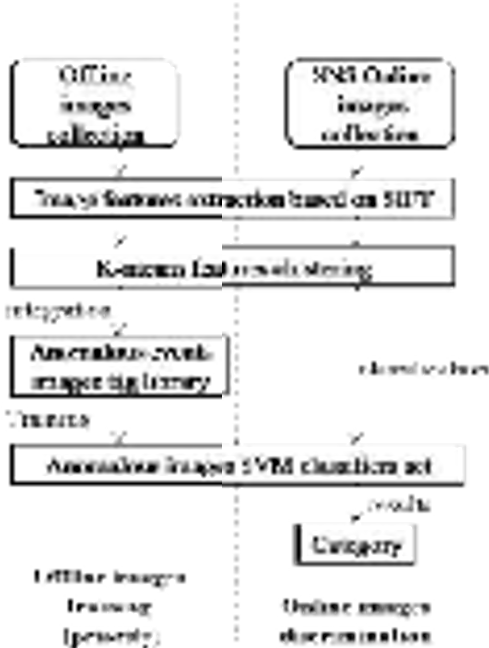 Figure 1: The proposed workflow for filtering social media images to support emergency decisions.
Experimental Results
The researchers tested their model on a dataset of 4,186 images. The training set included 858 hijacking-related images and 2,128 irrelevant images.
| Metric | Hijacking-Related | Irrelevant Images |
|---|---|---|
| Accuracy | 89.7% | 79.5% |
| Recall | 82.5% | 80.8% |
The higher accuracy for hijacking-related images suggests that the SIFT features of bus interiors and tactical weapons are highly distinctive, making them easier for the SVM to identify compared to the broader "irrelevant" category.
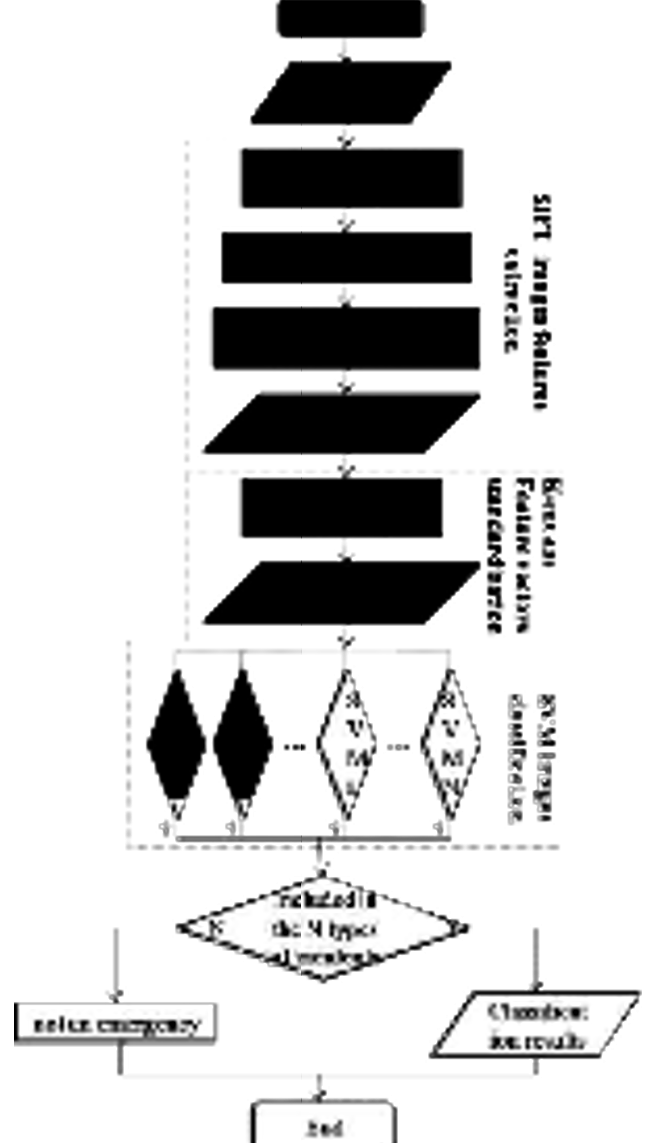 Figure 2: The anomaly detection logic used to separate critical incident data from environmental noise.
Critical Insights & Future Outlook
The core contribution of this paper is the formalization of the Social Media-to-Decision pipeline. It moves beyond theoretical discussion and provides a quantifiable framework for using SNS as a "crowdsourced sensor."
Limitations:
- The transition from SIFT/SVM to modern Convolutional Neural Networks (CNNs) or Vision Transformers (ViTs) could likely improve the recall rate, especially in extremely low-light conditions often found in nighttime hijackings.
- Real-time processing speed across millions of SNS posts remains a logistical barrier that requires high-performance computing clusters.
Future Work: The authors suggest extending this architecture to other emergencies, such as gas explosions in residential buildings or school security incidents, where internal visual data can be the difference between a successful rescue and a catastrophe.
Conclusion
By breaking the "Frozen Ring," this research provides a blueprint for the next generation of smart emergency response systems. When every second counts, the ability to automatically "see" inside a crisis through the eyes of those trapped within is a powerful tool for saving lives.