
Emergency Management 2.0: Leveraging Social Influence for Disaster Response
Emergency Management using Social Networks
The paper proposes an end-to-end Emergency Management framework that leverages social network data (primarily Twitter and Facebook) for real-time disaster detection, information summarization, and strategic dissemination. By integrating a novel information diffusion model based on the Bass innovation adoption theory, the system aims to maximize the reach of actionable information during crises.
TL;DR
In the golden hour of a disaster, information is as vital as physical aid. This paper presents a framework that transforms chaotic social media feeds into structured, actionable alerts and utilizes Influence Maximization to ensure these alerts penetrate the most isolated parts of a social network. By treating information like a "positive virus," the authors show how selecting the right "Patient Zeros" (seeds) can bridge the gap between affected zones and rescue authorities.
The Information Chasm: Why Traditional Methods Fail
When a disaster strikes, communication infrastructure often fails, or worse, becomes flooded with noise. The authors identify several critical hurdles:
- The Velocity vs. Veracity Trade-off: High-speed streaming data is hard to process in-situ without losing accuracy.
- Data Heterogeneity: Slang, emojis, and multimedia content make semantic analysis difficult for standard classifiers.
- The Diffusion Gap: Even if an authority posts a warning, it may not reach "Ego Networks" (isolated clusters) effectively without a strategic propagation plan.
Methodology: From Raw Tweets to Mass Influence
The proposed system architecture is a pipeline designed for speed and reach.
1. The Pipeline Structure
The framework follows a logical flow: Acquisition (Twitter API) Detection (Burst detection) Summarization (Textual nuggets) Diffusion (Influence maximization).
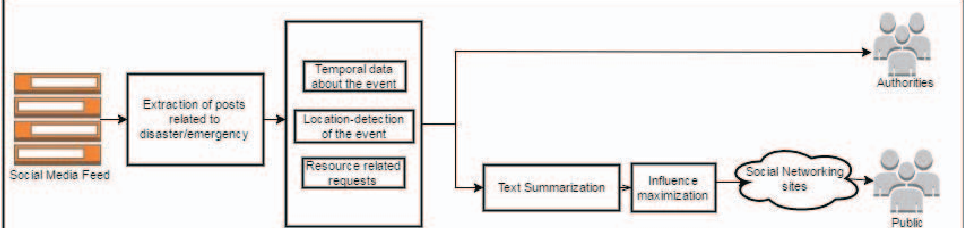 Fig 1. The proposed end-to-end emergency framework.
2. The Modified Bass Diffusion Model
Borrowing from marketing theory (innovation adoption), the authors propose a predictive model for how information spreads. The core intuition is that a user "adopts" (retweets/shares) an emergency post based on an infection threshold.
The probability of infection is defined by: where is the number of infected neighbors and is total neighbors. This acknowledges that social pressure and repeated exposure are required to validate a "crisis" signal in a user's mind.
Experimental Insights: Who Carries the Message Best?
Using the Stanford SNAP Facebook dataset, the researchers simulated the diffusion of post-disaster summaries.
Key Comparison: Influence Strategy
The study compared different ways to select "Seed Nodes" (initial influencers):
- Degree Centrality: Picking users with the most followers.
- Closeness Centrality: Picking users who can reach others in the fewest "hops."
- Betweenness: Picking users who act as bridges between different communities.
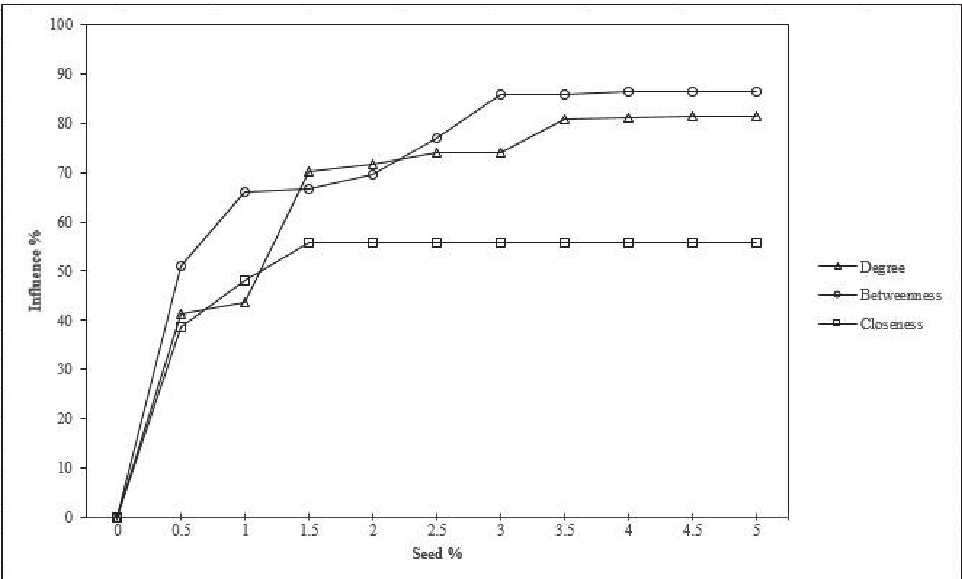 Fig 2. Performance of various seed selection methods. 'Degree' consistently provides the highest reach.
The Verdict: Selecting seeds based on Degree (number of direct connections) proved most effective for rapid emergency diffusion, reaching the maximum number of users within the critical 7-time-step window before information becomes stale.
Critical Analysis & Future Outlook
While the framework is robust in its pursuit of "reach," it faces real-world challenges:
- Handling Misinformation: The paper briefly mentions rumors, but the diffusion model assumes all information is "positive." In reality, hoaxes spread using the same mechanisms.
- Resource Matching: The authors propose matching resource requests with offers, a "prescriptive" step that is notoriously difficult to automate due to the nuance of human needs.
Summary Takeaway
This research shifts the focus from simply "reading" social media to "steering" it. By applying influence maximization, emergency responders can turn a chaotic social network into a massive, coordinated search-and-rescue sensor array. The next frontier, as the authors suggest, lies in Deep Learning to better classify images and videos within these high-stakes pipelines.