
TDS: Securing the Highway with Trust-Based Emergency Message Dissemination
Emergency warning messages dissemination in vehicular social networks: A trust based scheme
2019-11-05
Summary
Problem
Method
Results
Takeaways
Abstract
The paper introduces TDS (Trust-based Dissemination Scheme), a novel framework for the secure and efficient distribution of Emergency Warning Messages (EWMs) in Vehicular Social Networks (VSNs). By integrating user-post credibility analysis and a multifaceted reputation mechanism, TDS achieves significantly higher delivery ratios and lower transmission counts compared to existing SOTA methods like SUDS and SCARF.
## TL;DR
Researchers have developed **TDS (Trust-based Dissemination Scheme)**, a system designed to filter out malicious false alarms in Vehicular Social Networks (VSNs). By analyzing social "trust scores" and using a hybrid V2V/V2I communication model, TDS ensures that true emergency messages (like crash alerts) reach 97%+ of vehicles while drastically reducing redundant network traffic.
## The Motivation: When "Fake News" Causes Real Crashes
In the era of the **Social Internet of Vehicles (SIoV)**, cars aren't just machines; they are social nodes. While this connectivity allows for rapid broadcasting of Emergency Warning Messages (EWMs), it creates a dangerous vulnerability. A single malicious actor can broadcast a fake "accident ahead" alert, causing sudden braking and traffic chaos.
Current VANET protocols focus on *how* to broadcast (avoiding the "broadcast storm") but ignore *what* is being broadcast. They lack a "truth filter." This paper argues that by leveraging the social patterns of drivers—who they interact with and how consistent their history is—we can identify and ignore rogue actors.
## Methodology: The Three Layers of Trust
The authors propose a three-layered architecture to process information:
1. **Post-Credibility Layer**: Uses Non-negative Matrix Factorization (NMF) to treat EWMs like news posts, comparing the originator’s history against known behavior patterns.
2. **Social Network Layer**: Calculates **Percolation Centrality**. Unlike simple degree centrality, this measures how critical a car is to the "flow" of information over time.
3. **Physical Layer**: The actual hardware (OBU/RSU) that switches between Vehicle-to-Vehicle (V2V) and Vehicle-to-Infrastructure (V2I) modes.
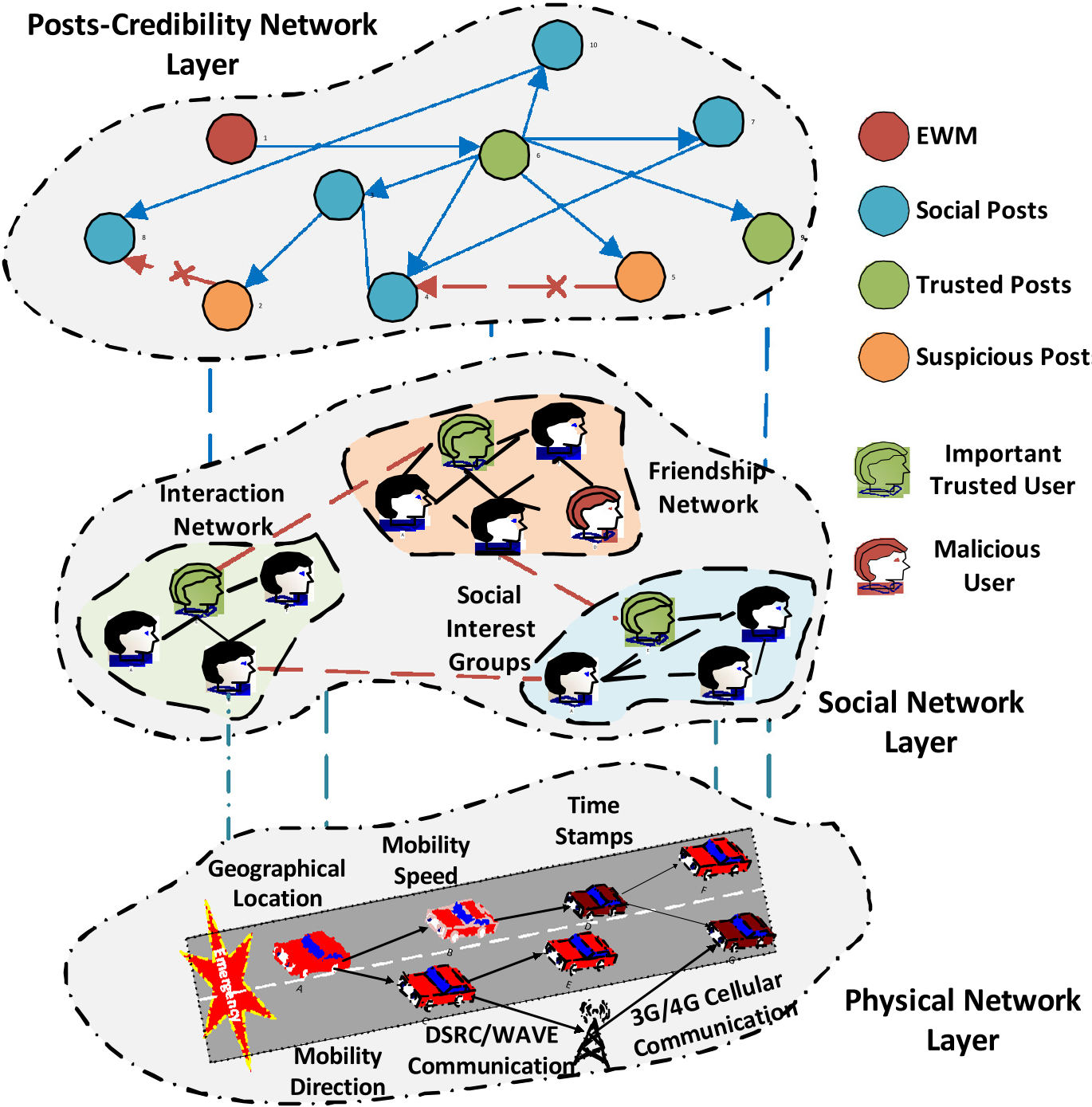
*Figure 1: The three-layered hybrid VSN model.*
### Calculating the "Trust Score"
The system doesn't just look at a car’s ID. it calculates a **Social Utility ($U_{s}$)** based on:
* **Tie-Strength**: How often has this vehicle interacted with others successfully?
* **Homophily**: Are the drivers part of the same "social group" or community?
* **Reputation Decay**: Trust isn't permanent. If a vehicle becomes inactive or suspicious, its score exponentially decays over time.
## Experiments: Resilience Under Attack
The researchers tested TDS against a daunting scenario: a network where up to **70% of the cars are malicious**.
### Key Findings:
* **Accuracy**: Even at high malicious density, the Mean Square Error (MSE) of trust estimation remained below 0.005, showing the system is nearly immune to "Sybil" style attacks.
* **Scalability**: In sparse networks (10 cars/km), TDS outperformed the SBTE protocol by **88.9%** in delivery ratio.
* **Efficiency**: TDS required significantly fewer "hops" to cover the same 3km stretch of highway, preserving precious bandwidth.
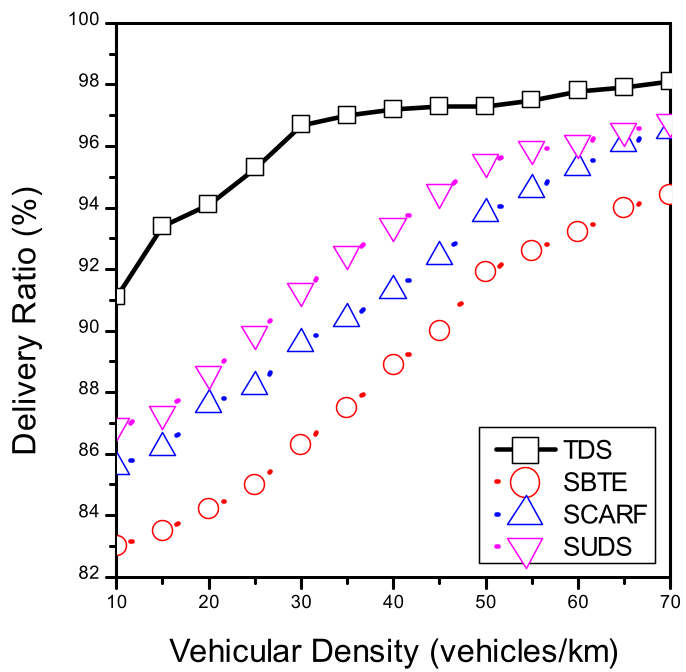
*Figure 2: Performance comparison across delivery ratio, delay, and transmissions.*
## Critical Analysis: The Price of Security
The one area where TDS slightly lags is **Transmission Delay**. Compared to the SUDS protocol (which does not verify trust), TDS is roughly 9% slower. This is the "computational tax" required to run the trust validation algorithms. However, the authors argue—and we agree—that a half-second delay is a small price to pay for ensuring a message isn't a malicious lie that could cause a secondary accident.
## Conclusion & Future Outlook
TDS marks a significant shift from "dumb" broadcasting to "intelligent, social" dissemination. By treating cars as social entities with reputations, we can build a highway system that is not only faster but inherently more truthful. Future work will likely look at **selfish nodes**—cars that receive alerts but refuse to pass them on to save their own battery or bandwidth—a common challenge in decentralized networks.
---
**Source**: Ullah et al., "Emergency warning messages dissemination in vehicular social networks: A trust based scheme," *Journal of Parallel and Distributed Computing*.