Social Media’s Crossroads: From Democratic Liberator to Inverted Totalitarian Tool
An essay on the emerging political economy and the future of the social media
This paper explores the evolution of social media within the framework of political-economic history, arguing that while technological revolutions (like the Internet) create new paradigms, prevailing political philosophies dictate their ultimate use. It specifically examines the emergence of "Inverted Totalitarianism" in the West, where social media risks transitioning from a tool for liberation to one of corporate-state surveillance and propaganda.
TL;DR
Is social media a "liberation technology" or a sophisticated trap for the citizenry? This paper argues that technology does not drive history; political-economic philosophies do. We are currently moving from the "installation" phase of the Internet to a "deployment" phase defined by Inverted Totalitarianism—a state where corporations control the narrative, reduce citizens to data-points, and transform free speech into an illusion of participation.
Background: The Myth of Technological Determinism
In the wake of the Arab Spring and the "Green Revolution," it became fashionable to view Facebook and Twitter as the "causes" of democracy. The author, Abbas Strømmen-Bakhtiar, challenges this Technological Determinism. By looking back at the printing press and the industrial revolution, the paper posits that while a "big-bang" invention (like the 1991 commercial Internet) opens doors, the ruling elite eventually determines which doors remain open and who is allowed to walk through them.
The Evolution of Control: From Steam to Sanctions
The author maps the history of technological revolutions to show a recurring pattern:
- Installation: A period of friction where new paradigms (e.g., Capitalism replacing Mercantilism) emerge.
- Turning Point: A chaotic period of adaptation (our current era).
- Deployment: The "Golden Age" where the new paradigm becomes the "normal best practice."
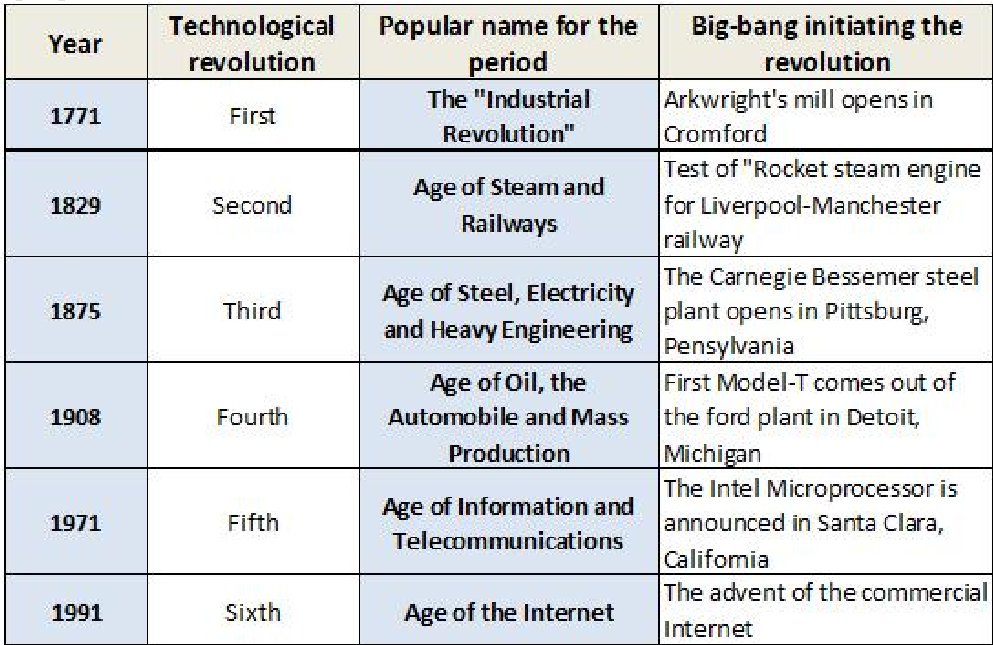
The paper notes that literacy and education historically empowered the public to use these tools for change. However, as we moved into the Information Era, the "Golden Age" of television replaced active reading with passive watching, allowing oligopolies to consolidate the "reality" that people consume.
The Specter of Inverted Totalitarianism
The core of the paper is the distinction between traditional totalitarianism (rule by brute force, like Orwell’s 1984) and Inverted Totalitarianism (rule by managed democracy and consumerism, like Huxley’s Brave New World).
In an Inverted Totalitarian state:
- Managed Democracy: Elections happen, but candidates are bankrolled by a "super-entity" of 147 corporations that control 40% of the world's wealth.
- Junk Politics: Issues are personalized and moralized rather than clarified, ensuring that the underlying economic power structure never changes.
- Depoliticized Citizenry: Social media becomes a place for "meaningless communication" (the dopamine hit of a "Like" button) rather than political deliberation.
(Note: This conceptualizes the "super-entity" of 147 tightly knit companies mentioned in the study quoted by the author.)
The Future: Surveillance or Enlightenment?
The author warns that the "Internet is the last frontier." While social media is currently used by some to dismantle the visible walls of traditional dictatorships, it is simultaneously being weaponized in the West to build invisible walls. Through legislations like SOPA and PIPA, and the relentless gathering of personal data, social media is being transformed into a "great lens" for surveillance and targeted propaganda.
Critical Takeaway
The paper concludes that knowledge, not just technology, is what prevents slavery. If we continue to treat social media as a mindless "entertainment" space while corporations and governments use it to "sift through mountains of information," we are marching toward a corporate feudal system.
The verdict? We are in a transitory period. The "Global Village" can still be a site of enlightenment, but only if civil society acts in concert to resist the total commodification of human interaction.
References & Data Points
- The 147 Super-Entities: A quantitative study of 43,000 transnational corporations.
- Educational Growth: Historical data shows a direct correlation between literacy and the power of social media (pamphlets, early newspapers) to challenge power.