
Multiagent-Based Task Allocation: Optimizing Collaboration in Large-Scale Social Networks
EMERGING TOPICS IN COMPUTING
This paper proposes a distributed multiagent-based model for complex task allocation in social networks, aiming to minimize the "Social Execution Cost." The method utilizes mobile, cooperative agents that represent subtasks and can autonomously migrate to suitable nodes or form teams to optimize both load balancing and social communication efficiency, achieving performance close to centralized optima with significantly lower computational overhead.
TL;DR
Allocating complex subtasks in a social network (like GitHub or LinkedIn) is a nightmare of balancing individual workloads and team communication efficiency. This paper introduces a distributed multiagent model where intelligent agents, representing subtasks, "walk" through the network to find the best node. By forming cooperative teams, these agents achieve near-optimal results with a massive reduction in computation time compared to traditional centralized algorithms.
The Motivating Intuition: Beyond Simple Skill Matching
Imagine managing a software project on LinkedIn. You need six experts for Requirement Analysis, Design, Coding, and Testing.
- Scenario A: You assign everything to the two most skilled people. They get overwhelmed (High Waiting Cost).
- Scenario B: You spread tasks evenly, but the specialists don't know each other or are socially "far." They spend all their time in Zoom meetings trying to coordinate (High Communication Cost).
The "Social Execution Cost" is the sum of these two pains. Previous solutions required a "God-mode" central server to calculate the perfect balance—an impossible task as networks grow to millions of users.
Methodology: Mobile and Cooperative Agents
The authors flip the script. Instead of a central scheduler, every subtask is an Agent.
1. The Strategy of Movement (Mobility)
Each agent carries a subtask and evaluates a target node based on three metrics:
- Capability: Does the node have the required skill?
- Waiting Cost: How long is the queue of tasks already there?
- Social Distance: How far is this node from the nodes where my interdependent subtasks are being handled?
2. The Power of Teamwork (Cooperation)
The secret sauce is the Breadth-First Negotiation Mechanism. Agents aren't just selfish; they talk to other agents at the same node. If three agents realize that moving together to a different node would lower their collective "Social Execution Cost," they move as a team.
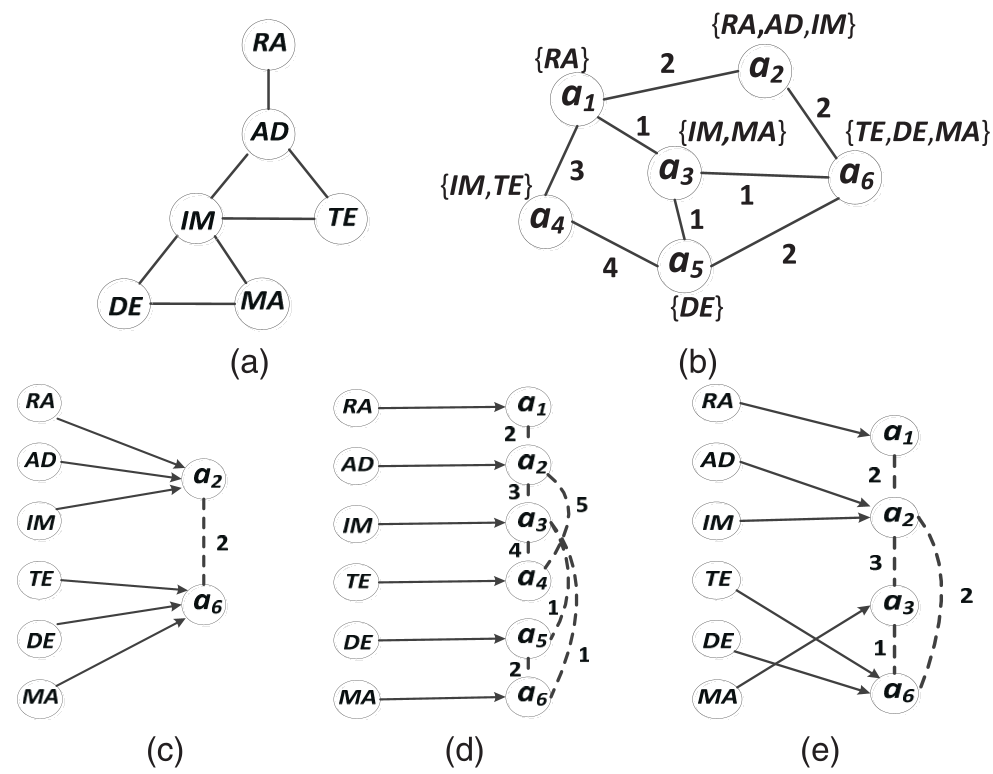 Figure 1: Comparison of different allocation schemes balancing load and social closeness.
Theoretical Breakthroughs
The authors provide a Potential Function proof, showing that the system is guaranteed to converge to a stable equilibrium in polynomial time (). They also analyze the Price of Anarchy (PoA)—proving that the gap between their distributed "chaos" and a perfect centralized "order" is strictly bounded.
Experiments: Speed Meets Quality
The model was tested against several baselines, including Brute-force Optimal and Centralized Greedy models.
- Efficiency: In small-scale tests, the agent model's performance was virtually indistinguishable from the mathematical optimum.
- Scalability: On 2,000-node networks with 1,000 complex tasks, while centralized models (Greedy/IReplace) took over 1.5 hours to compute, the multiagent model finished in minutes.
- Robustness: When the network "breaks" (nodes leave or connections fail), the agents simply recalculate and migrate, stabilizing the system almost instantly.
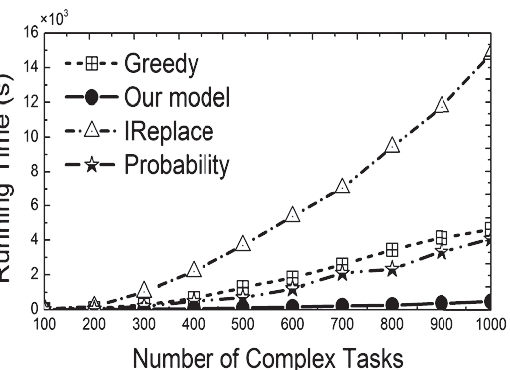 Figure 2: Performance across different network topologies (Small-World, Scale-Free, etc.).
Final Insight: The Future of Distributed Work
As we move toward decentralized organizations (DAOs) and globally distributed software teams, we cannot rely on a single "manager" to assign tasks. This research proves that local intelligence—agents making smart decisions and cooperating with their neighbors—can solve NP-hard organizational problems at scale.
Key Takeaway: Social distance is just as important as CPU load. By treating tasks as autonomous entities that "seek" social proximity, we can build more resilient and efficient collaborative systems.
Critical Analysis
While the model is robust, it assumes agents have a degree of global visibility to choose their target nodes. In truly massive, opaque networks, adding a "discovery" phase or a "recommendation" layer for agents could be the next logical step in this research lineage.