
EmoSnaps: Leveraging the "Selfie" for Scientific Emotion Recall
EmoSnaps: a mobile application for emotion recall from facial expressions
This paper introduces EmoSnaps, a mobile application that unobtrusively captures facial expressions via the front-facing camera during routine interactions (e.g., screen unlock) to facilitate emotion recall. The research validates "Technology-Assisted Reconstruction" (TAR) as a viable alternative to traditional Experience Sampling Methods (ESM), demonstrating that self-face pictures serve as powerful memory cues for reconstructing momentary psychological well-being.
TL;DR
Researchers have developed EmoSnaps, a mobile tool that captures your facial expressions unobtrusively throughout the day. By showing these "accidental selfies" back to you later, they found that you are actually better at knowing how you felt a week ago than you are at the end of the same day. This works by bypassing messy memory biases and letting you "read" your own face like a stranger would.
Background: The Problem with Knowing How We Feel
In User Experience (UX) and psychology, the Experience Sampling Method (ESM) is the gold standard. It pings you: "How do you feel right now?" The problem? It’s annoying. It interrupts your dinner, your work, and your flow.
The alternative is the Day Reconstruction Method (DRM), where you look back at your day every evening. But human memory is a reconstructive process, not a video recording. We often "guess" our past emotions based on what we think we should have felt, leading to significant bias.
Methodology: The EmoSnaps Approach
The authors suggest a mid-way point: Technology-Assisted Reconstruction (TAR). EmoSnaps sits silently on your phone. When you unlock your screen or answer a call, it takes a quick photo (within 300-500ms).
The Two Paths to Recall
The paper explores two psychological pathways:
- Reconstruction: "I see I was in the office, and I remember I had a deadline, so I must have been stressed."
- Recognition: "I see my own face; my eyes are squinted and my mouth is tight. I look stressed."
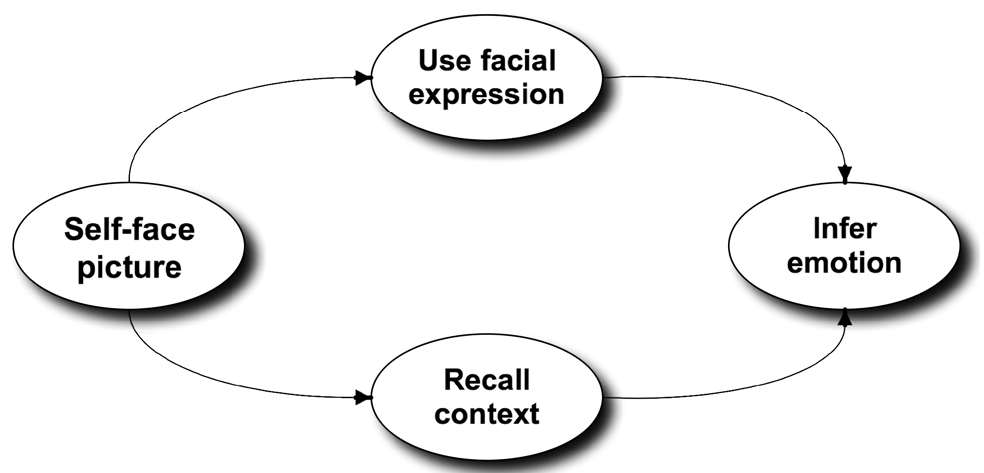 Fig 1: The ESM prompt (left) vs. the Reconstruction cues (right).
Surprising Results: The "Week-Later" Advantage
The most striking finding from Study 1 was that accuracy improved over time.
- At the end of the day, users tried to use the "Reconstruction" path. They looked at the background of the photo, remembered their schedule, and over-analyzed.
- A week later, the episodic memories had faded. Users couldn't remember the specifics of the background, so they performed "Recognition"—they just looked at their face.
Counterintuitively, looking at your face is more accurate than trying to remember your day.
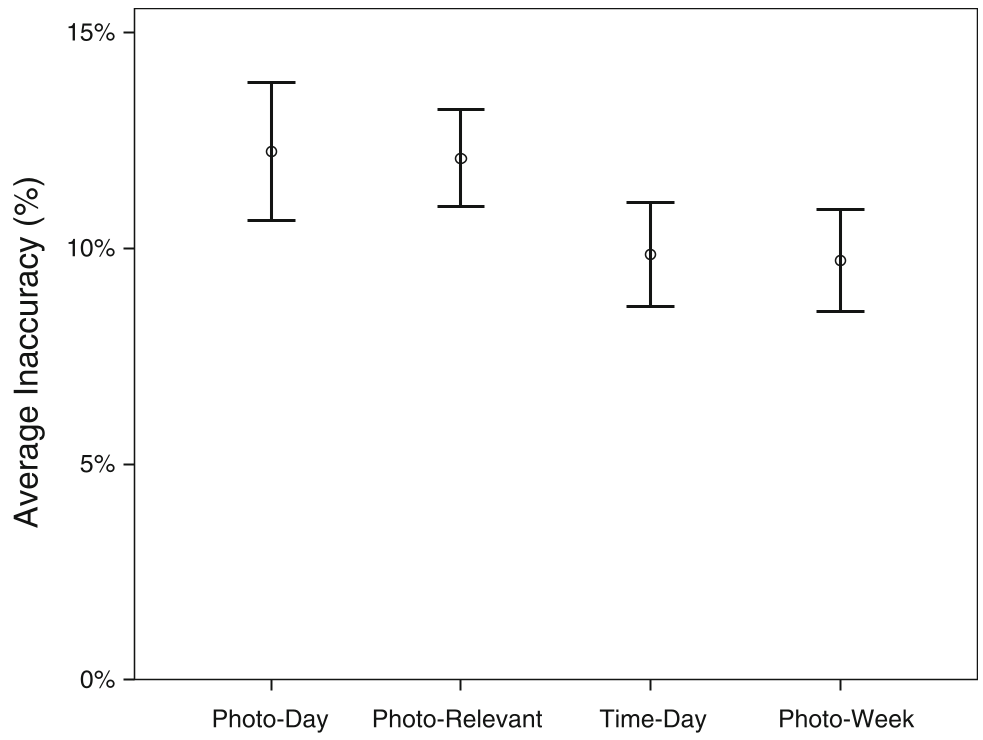 Fig 2: Error rates (D) across different conditions. Note how Photo-Week is more consistent than Photo-Day.
Study 2: Emotions "In the Wild"
When deployed at scale, EmoSnaps revealed fascinating cultural and behavioral patterns:
- The Blue Monday Effect: Self-reports dropped significantly on Mondays.
- The Intrusion of Calls: Phone calls actually led to lower happiness ratings compared to using productivity or social media apps, likely due to the "interruptive" nature of a ringtone.
- Checking Habits: Users unlock their phones ~1.76 times per hour just to check notifications, a "habit loop" that EmoSnaps was able to map to baseline happiness levels.
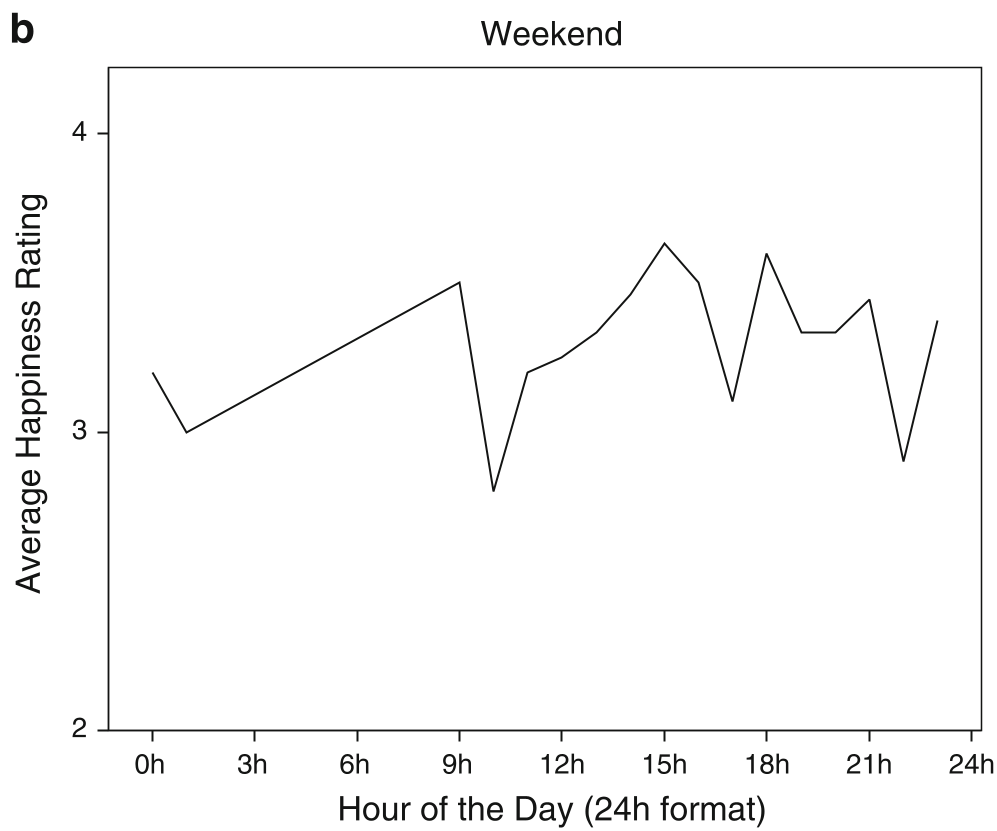 Fig 3: Hourly happiness fluctuation showing the "morning slump" and late-night peak.
Critical Insight: Why This Matters for the Future
The real takeaway here isn't just a new app; it's a shift in how we think about Personal Informatics. We spend our lives taking photos, but we rarely use them as data points for our mental health.
Limitations
- Discard Rates: About 50% of the photos were "discards" due to bad lighting or weird angles.
- Privacy: While participants in the study were comfortable (data stayed local), a commercial version would face uphill battles regarding camera permissions and trust.
Conclusion
EmoSnaps proves that our faces are "honest" mirrors that our memories are not. By using simple front-facing camera triggers, we can reconstruct our emotional lives with a level of precision that traditional diaries simply cannot match. Future UX research might rely less on asking users how they felt and more on letting users see how they looked.