
Emojis under the Microscope: Decoding the Digital Language of Emotion
Emojis Pictogram Classification for Semantic Recognition of Emotional Context
This paper presents a systematic comparative study on the automated classification of emoji pictograms into six basic emotional categories (Ekman model). The researchers evaluate both traditional supervised machine learning (SVM, K-NN, etc.) using deep feature extraction and modern deep learning models (InceptionV3, GoogleNet, AlexNet) via transfer learning, with InceptionV3 achieving a SOTA accuracy of 99.47%.
TL;DR
In the era of digital-first communication, emojis have evolved from simple punctuation to complex visual carriers of emotional context. This paper systematically explores how AI can "read" these pictograms by comparing traditional Machine Learning with Deep Learning architectures. The verdict? InceptionV3, through the power of transfer learning, can classify emoji emotions with a staggering 99.47% accuracy, far outpacing traditional heuristic methods.
The "Emoji" Problem: More Than Just a Smiley Face
While text-based emoticons like :) are easily parsed by rule-based systems, modern image-based emojis are diverse, platform-dependent, and visually nuanced. A "grin" on an iPhone might look slightly different on a Samsung device, yet its semantic "Joy" remains the same.
The authors identify a critical gap: most emotion recognition AI is obsessed with human faces (micro-expressions) or voice tonality. However, in the realm of short-form text (Twitter, WhatsApp), emojis are the primary anchors for resolving semantic ambiguity. To solve this, the researchers turned to the Ekman Model, a universal psychological framework defining six basic emotions: Fear, Anger, Joy, Sadness, Disgust, and Surprise.
Methodology: Two Paths to Emotional Intelligence
The research team designed a framework to test two major paradigms in computer vision:
1. The Traditional Pipeline (Feature Engineering)
Instead of manually defining shapes, they used pre-trained CNNs (AlexNet and ResNet-18) as "super-feature-extractors."
- Feature Vectors: They pulled a 4096-dimensional vector from AlexNet's
fc7layer and a 512-dimensional vector from ResNet'spool5. - Classifiers: These vectors were fed into K-Nearest Neighbors (K-NN), Support Vector Machines (SVM), and Decision Trees.
2. The Deep Learning Pipeline (Transfer Learning)
Recognizing that training a model from scratch requires millions of images, the authors leveraged Transfer Learning. They took models already "knowledgeable" about the world (via ImageNet) and fine-tuned their final layers to recognize the subtle differences between a "Surprised" emoji (big open mouth) and a "Fearful" one.
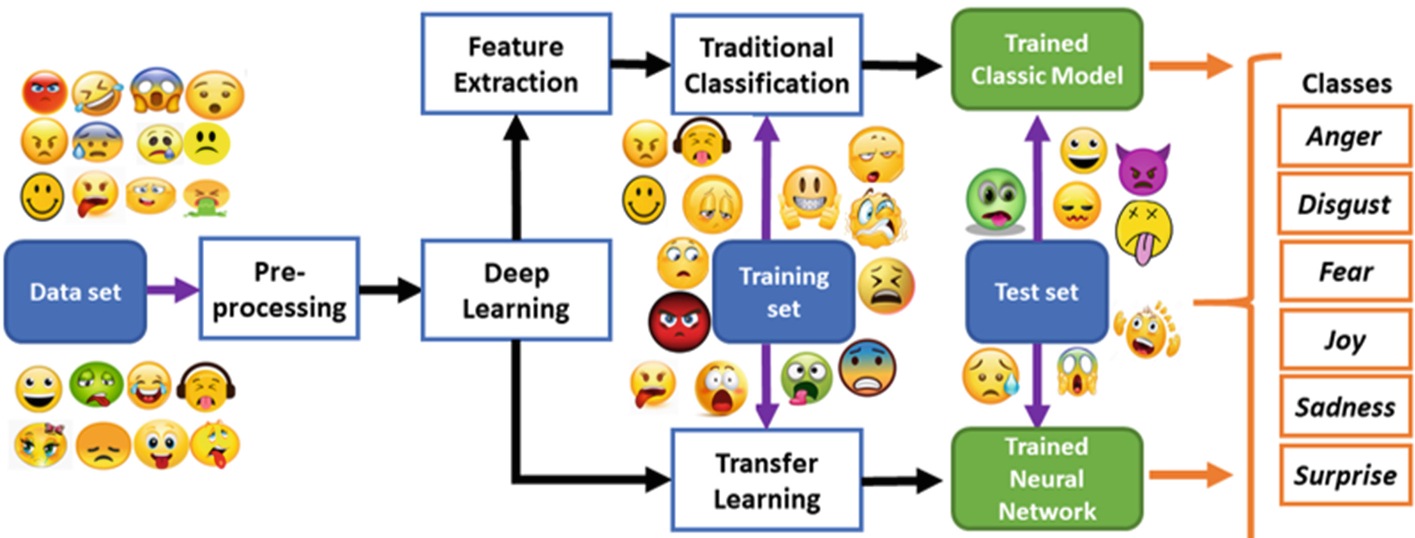 Figure 1: The dual-track framework for emoji training and testing.
Battle of the Algorithms: Experimental Results
The experiments yielded several fascinating insights into how AI perceives digital art:
- The Deep Learning Dominance: InceptionV3 was the undisputed champion. With its 48 layers and specialized Inception modules, it captured the geometric nuances of emojis almost perfectly.
- Optimizer Matters: Utilizing the Adam optimizer with a learning rate of 0.0001 was the "sweet spot" for achieving peak accuracy.
- Traditional Resilience: K-NN (k=1) and Linear SVM were surprisingly robust, hitting ~95% accuracy. This suggests that emoji categories are relatively well-clustered in the high-dimensional latent space.
- The Failure of Decision Trees: With only ~65% accuracy, Decision Trees proved too shallow to handle the abstract variance of pictograms.
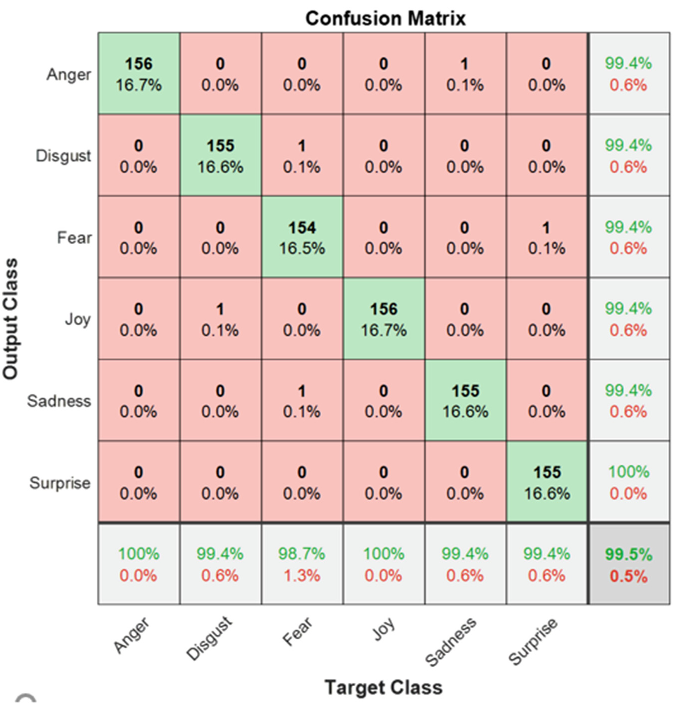 Figure 2: Confusion Matrix showing InceptionV3's near-perfect classification vs. AlexNet's minor confusions.
Critical Analysis: Why Does It Work?
The paper reveals an interesting "physical intuition": The errors made by the AI often mirror human confusion. For instance, Fear was occasionally mistaken for Sadness or Disgust. Why? Because in many emoji sets, these three share the "downward lip" or "wide-eyed" features. Joy was the easiest for the AI to detect—much like in human face recognition—because the "curved upward mouth" is a distinct, high-contrast visual feature.
However, the study is limited to the six basic Ekman emotions. As emoji culture expands into complex social concepts (like "irony" or "pride"), the model will need to evolve beyond these six buckets.
Final Takeaway
This research proves that image-based emojis are not just decorations—they are structured visual signals that AI can decode with near-perfect precision. By integrating this emoji-recognition engine with standard NLP, we can move toward a truly multi-modal understanding of human sentiment, where the "context" is finally as clear to the machine as it is to the user.
Primary Source: "Emoji Pictogram Classification for Semantic Recognition of Emotional Context" by Muhammad Atif, Valentina Franzoni, and Alfredo Milani.