
Deciphering the Human Heart: Fuzzy Affect Typing and Hebbian Learning in Textual Emotion Analysis
Emotion Analysis of the Text Using Fuzzy Affect Typing over Emotions
This paper introduces a novel fuzzy logic-based framework for emotion estimation in textual dialogues, mapping lexical items to five basic emotions: happy, surprise, neutral, anger, and sad. By combining Natural Language Processing (NLP), fuzzy modifier rules, and Hebbian learning, the system predicts emotional states from text with high adaptability to linguistic nuances.
TL;DR
Existing sentiment analysis often misses the forest for the trees, failing to capture the subtle shifts in human mood. This paper presents a framework that uses Fuzzy Logic to represent the ambiguity of words and Hebbian Learning to model the dynamic "swing" of emotions in a conversation. By adjusting for modifiers like "not," "was," or "very," the system achieves a much more realistic emotional profile than traditional averaging methods.
The Problem: The Ambiguity of Feelings
Language is inherently imprecise. A word like "discouraged" isn't just "sad"; it carries traces of powerlessness and demoralization. Traditional "Bag-of-Words" models or simple keyword-spotting techniques often struggle with:
- Linguistic Nuance: Words often belong to multiple emotional categories simultaneously.
- Modifiers: Words like "not" or "extremely" fundamentally change the intensity or direction of an emotion.
- Contextual Evolution: The emotional state at the end of a paragraph is often different from the beginning, but most models simply "average" the whole text.
Methodology: Fuzzy Logic meets Neural Adaptation
The authors propose a multi-layered approach to move beyond static classification.
1. Fuzzy Affect Lexicon
Instead of a word being "100% Happy," it is mapped to a fuzzy membership vector across five categories: Happy, Surprise, Neutral, Anger, and Sad. For instance, 'annoyed' might have a 0.8 membership in Anger but also a 0.3 in Neutral.
2. The Engine of Modification
The core "intelligence" of the system comes from its Modifier Rules. The paper defines rules for:
- Negation (NOT): Complements the membership value.
- Tense (IS vs. WAS): Attenuates the emotion if it happened in the past.
- Dominance (Shouldn't, Can't): Specifically boosts the "Anger" membership.
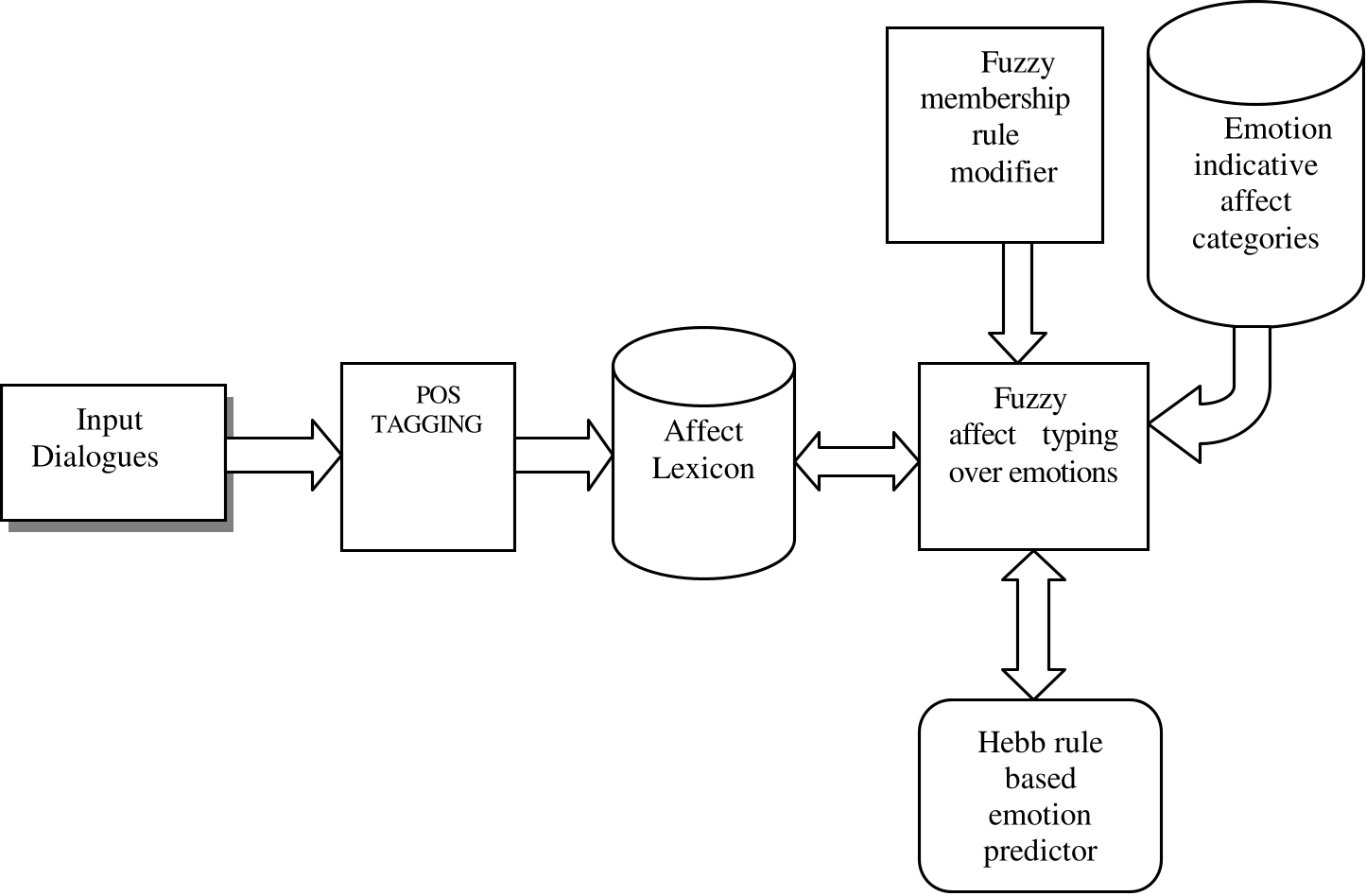 Figure 1: The flow from POS tagging to the Hebbian prediction model.
3. Hebbian Learning for Dynamic Prediction
Unlike static models, this system uses a Hebbian Learning Rule. As the system processes a dialogue, it updates its "internal weight" for each emotion. If a speaker starts happy but ends angry, the Hebbian update ensures the final prediction reflects the current state rather than being "diluted" by the earlier happy words.
This formula shows how the model vector moves toward the "goal value" (new input) with every word processed, allowing for an "affective memory."
Experiments: Tracking the "Mood Swing"
The researchers tested their model against a text containing a sharp emotional transition—from feeling "ecstatic" about a festive season to feeling "guilty" and eventually "outraged."
Quantitative Comparison:
| Method | Happy (%) | Sad (%) | Anger (%) |
|---|---|---|---|
| Mean Method | 31.06 | 17.18 | 13.20 |
| Hebbian Prediction | 5.58 | 21.75 | 41.09 |
While the Mean method incorrectly identifies the text as primarily "Happy" (due to the positive words at the start), the Hebbian Prediction correctly identifies that the speaker ends in a state of Anger (41.09%).
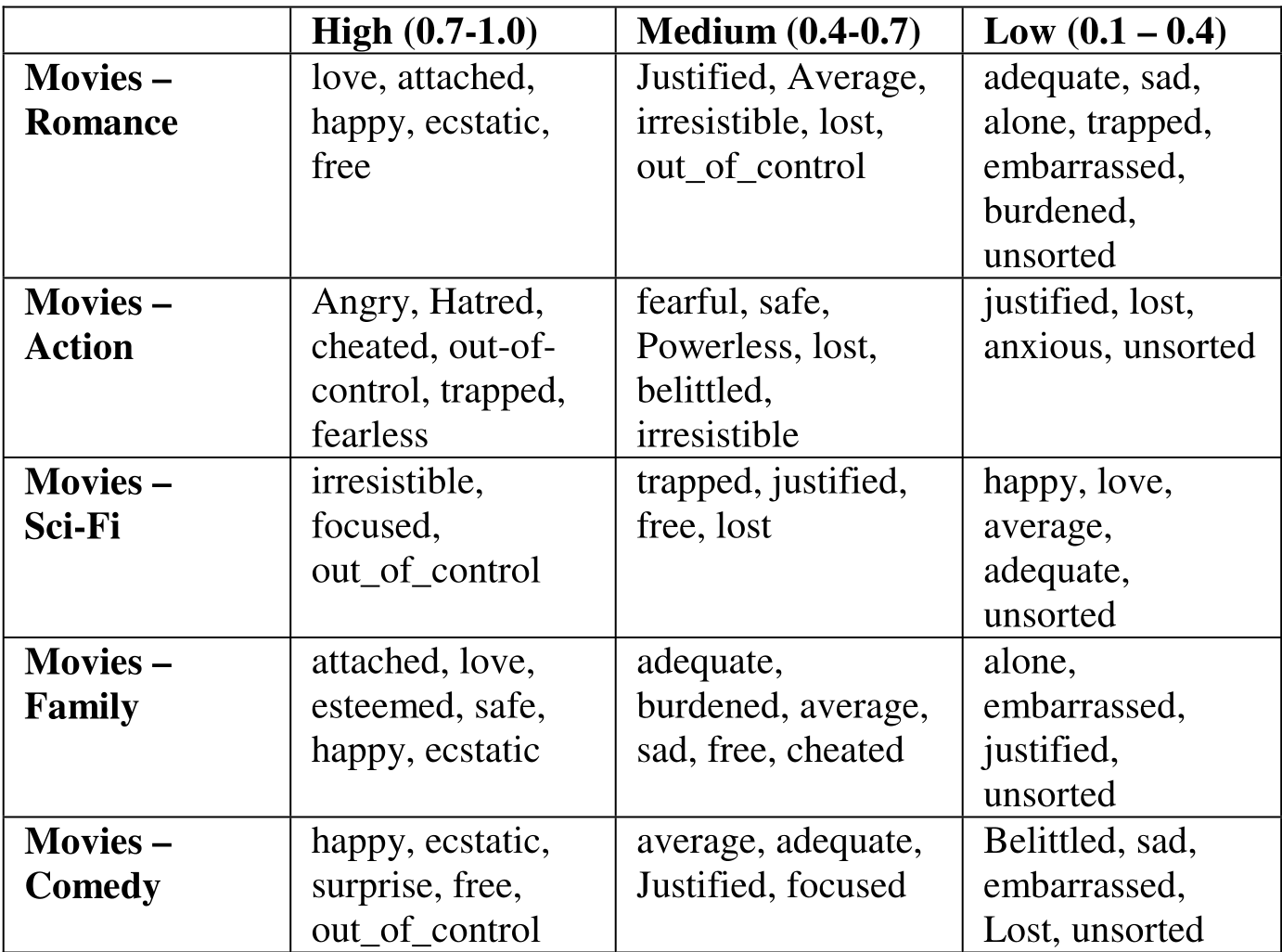 Figure 2: Validation of the model across different movie genres, showing high alignment with expected emotional profiles (e.g., Romance favoring 'Love' and 'Ecstatic').
Critical Insight: Beyond Static Sentiments
The primary value of this work lies in its temporal awareness. By recognizing that emotions are a flow rather than a fixed state, and by using fuzzy sets to handle the "messiness" of human language, the authors provide a blueprint for more empathetic AI.
Limitations: The membership values were assigned by a single linguist, which introduces subjective bias. Future iterations would benefit from crowd-sourced or data-driven membership assignments.
Conclusion
This paper serves as a vital reminder that in the quest for AI understanding, Context is King. By integrating fuzzy linguistic rules with adaptive learning, we move one step closer to machines that don't just "read" our words, but "feel" our intent.