
Analysis of Emotion in Socioenactive Systems: Bridging Social Interaction and Affective Computing
Analysis of Emotion in Socioenactive Systems
This paper introduces an automated framework for Facial Expression Recognition (FER) "in the wild" specifically designed for Socioenactive Systems. By combining Support Vector Machines (SVM) with spatio-temporal facial landmark tracking, the authors evaluate emotional shifts in children during robot-mediated educational workshops, demonstrating that such systems successfully foster positive emotional engagement.
TL;DR
This research investigates how child-robot interactions within "Socioenactive Systems" impact emotional states. By deploying an optimized facial expression recognition (FER) method using SVMs and spatio-temporal features, the researchers successfully tracked the emotional journeys of children in a workshop, proving that these technology-mediated environments foster significant positive engagement like joy and surprise.
Context: What are Socioenactive Systems?
Traditional enactive systems focus on the feedback cycle between a human and a computer. However, Socioenactive Systems add a critical "social" layer, emphasizing intersubjective aspects—how people perceive intentions and emotions through gestures, postures, and expressions while interacting with each other and embedded technology. In educational contexts, understanding this emotional resonance is key to designing better learning experiences.
The Challenge: Emotion Recognition "In the Wild"
Analyzing emotions in a classroom or workshop is drastically different from a controlled lab setting. The authors identify two main pain points:
- Computational Cost: Standard Deep Learning (CNN) models are often too heavy for processing long-duration, multi-face videos in real-time.
- Environmental Noise: Children move constantly, leading to occlusions, extreme head poses, and lighting changes that break traditional recognition models.
Methodology: A Lightweight Spatio-Temporal Approach
To address these challenges, the authors adapted a method that prioritizes Spatio-Temporal Features. Instead of raw pixel-depth analysis, the system identifies facial landmarks and uses a Support Vector Machine (SVM) to classify emotions based on the geometric distances between these points.
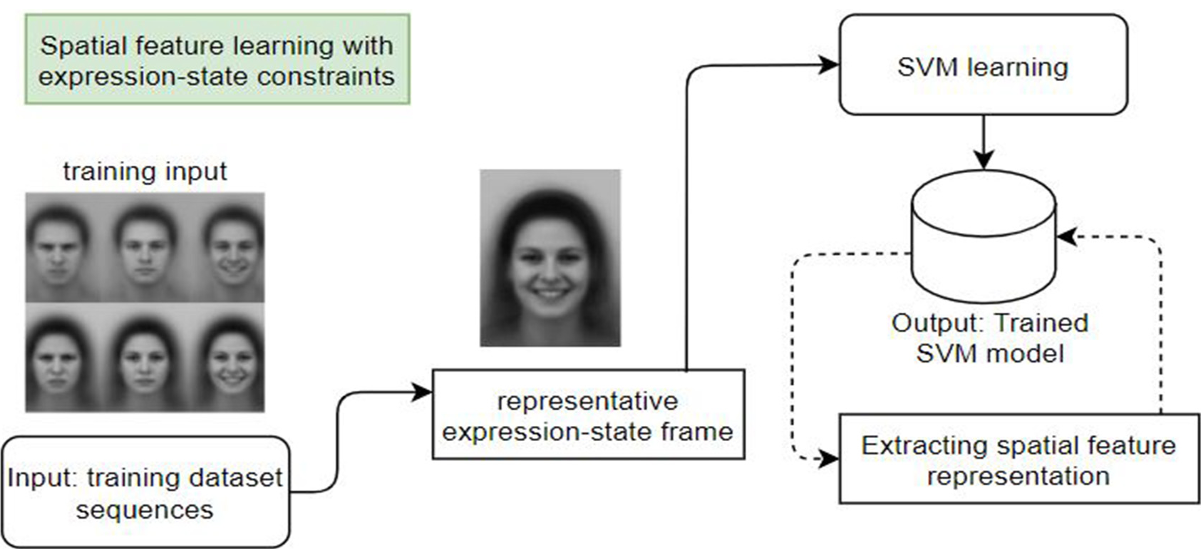 Fig 1: The training and classification pipeline utilizing spatio-temporal landmarks and SVM.
The model was trained on the CASME II and AKDEF datasets, allowing it to recognize the six basic emotions while maintaining a low enough computational footprint to handle multiple children in a single frame simultaneously.
Experimental Insights: The "Telepathic Box" Workshop
The method was tested on a workshop involving eleven children and an mBot robot. The robot was programmed to "telepathically" express emotions that a child inside a box was performing.
Key Findings:
- Emotional Triggers: Robot actions (movements and display changes) directly correlated with shifts to "Happy" and "Surprise" states among the children.
- Social Amplification: In segments where children argued or collaborated to interpret the robot's behavior, emotional intensity and frequency of "Happy" labels increased, suggesting that the social dynamic is as important as the technology itself.
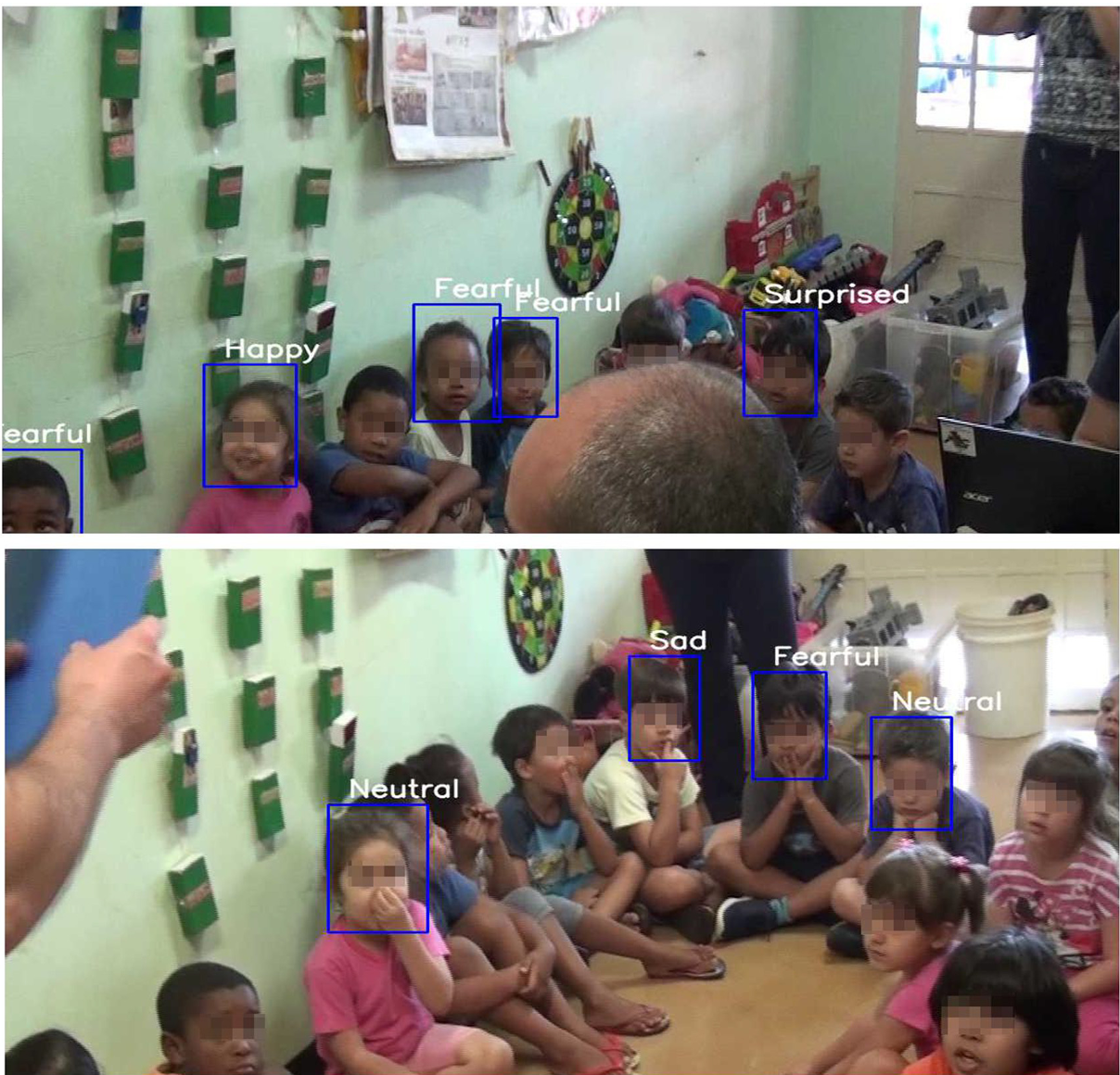 Fig 2: Real-time labeling of multiple children's emotions during the workshop.
Quantitative Snapshot
The team analyzed specific video excerpts (e.g., the robot moving forward at 09:21). The data shows a clear pattern: interaction periods significantly reduce "Neutral" or "Sad" states in favor of "Happy" and "Fear" (interpreted here as excitement/anticipation).
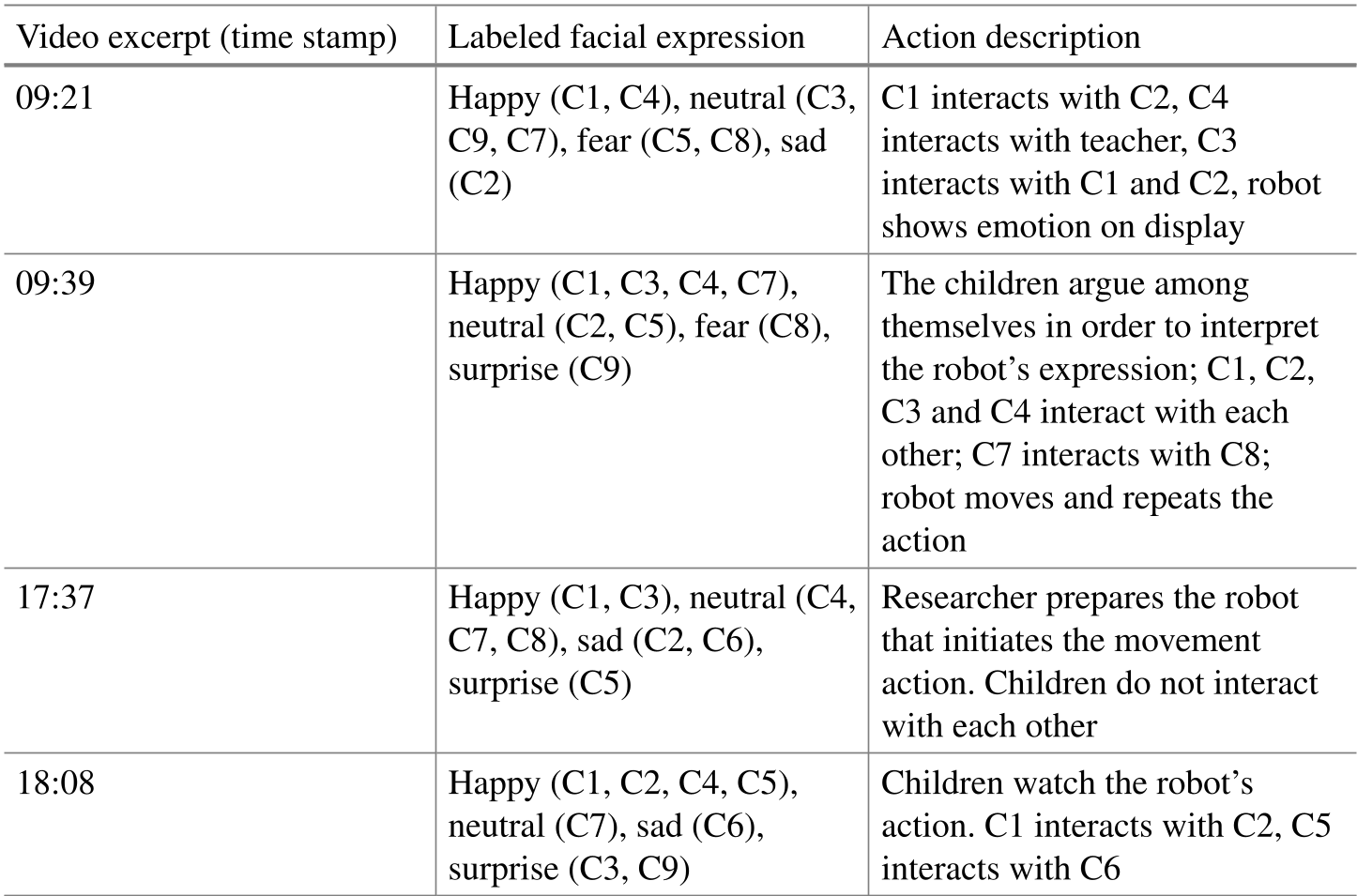 Table 1: Labeled facial expressions synchronized with specific robot actions.
Critical Perspective & Limitations
While the SVM-based approach offers high efficiency, the authors admit that occlusions remain a hurdle. Currently, they use a temporal "smoothing" technique (comparing frames before and after loss of track) to fill gaps. Furthermore, the "In the Wild" nature means that lighting in a typical classroom can still affect landmark detection accuracy.
Conclusion
This work highlights the potential of Socioenactive Systems to transform education into a fun, emotionally engaging experience. By providing a low-cost, automated way to monitor these emotions, the researchers offer a new toolkit for educators and designers to evaluate the social impact of ubiquitous technology. Future research will likely integrate Grounded Theory (qualitative analysis) with these quantitative AI metrics to provide a 360-degree view of the human-technology social cycle.