
Beyond Sentiment: A Deep Dive into the Evolution of Textual Emotion Analysis
A Survey of Emotion Analysis in Text Based on Deep Learning
This paper provides a comprehensive survey of text-based emotion analysis using deep learning, categorizing modern methodologies from basic neural architectures like CNNs and RNNs to advanced Attention mechanisms. It evaluates state-of-the-art models in both monolingual and multi-lingual contexts, highlighting major achievements in fine-grained sentiment classification.
TL;DR
While standard sentiment analysis tells us if a text is "positive" or "negative," Emotion Analysis dives into the human psyche to identify specific states like "fear," "trust," or "anticipation." This survey by Cao et al. maps the transition from basic bag-of-words models to sophisticated deep learning architectures like Bi-LSTM and Multi-Head Attention, addressing the challenges of social media's short, noisy, and highly subjective data.
The "Why": Moving Past Binary Polarity
The industry has long relied on binary sentiment (Positive vs. Negative). However, the "Introduction" of this paper points out a critical social reality: negative emotions spread faster and more virally than positive ones.
In social networks, 80% of controversial topics involve negative events. To manage public opinion or improve customer service, simply knowing a user is "unhappy" isn't enough; we need to know if they are angry (requiring immediate action), sad (requiring empathy), or fearful (requiring clarification). The fundamental shift here is from Coarse-Grained Sentiment to Fine-Grained Emotion Analysis.
Methodology: The Deep Learning Arsenal
The paper demystifies the "How" behind the technology, breaking down several core architectures that have defined the field:
1. Sequential Modeling: RNN, LSTM, and GRU
Because text is inherently sequential, RNNs and their variants (LSTM/GRU) dominated the early deep learning era. The paper highlights Bi-LSTM as a crucial improvement, as it processes text both forward and backward, allowing the model to understand a word's meaning based on both its past and future context.
2. The Power of Focus: Attention Mechanisms
The survey emphasizes the Attention Mechanism as a mimicry of human vision. Instead of treating every word equally, these models assign weights () to specific tokens.
 The Softmax normalization ensures that the most "emotionally charged" words receive the most computational focus.
3. Structural Innovation: DialogueGCN
One of the more modern methods cited is DialogueGCN, which uses Graph Convolutional Networks to model conversations. By treating speakers and utterances as nodes in a graph, it captures the "emotional flow" of a dialogue better than linear models.
Experimental Landscape: Monolingual vs. Multi-Lingual Performance
The survey provides a rigorous comparison of SOTA (State Change) results.
- Monolingual Highlights: Models like ConvLexLSTM show that combining lexicon-based features (human-curated emotion words) with CNN-extracted features leads to superior results in specialized fields like health communities (93% accuracy for "Joy").
- The Cross-Lingual Challenge: The paper features ADAN (Adversarial Deep Averaging Network), which uses a "language discriminator" to ensure the features learned for sentiment are consistent across, say, English and Chinese, even when training data is scarce for one language.
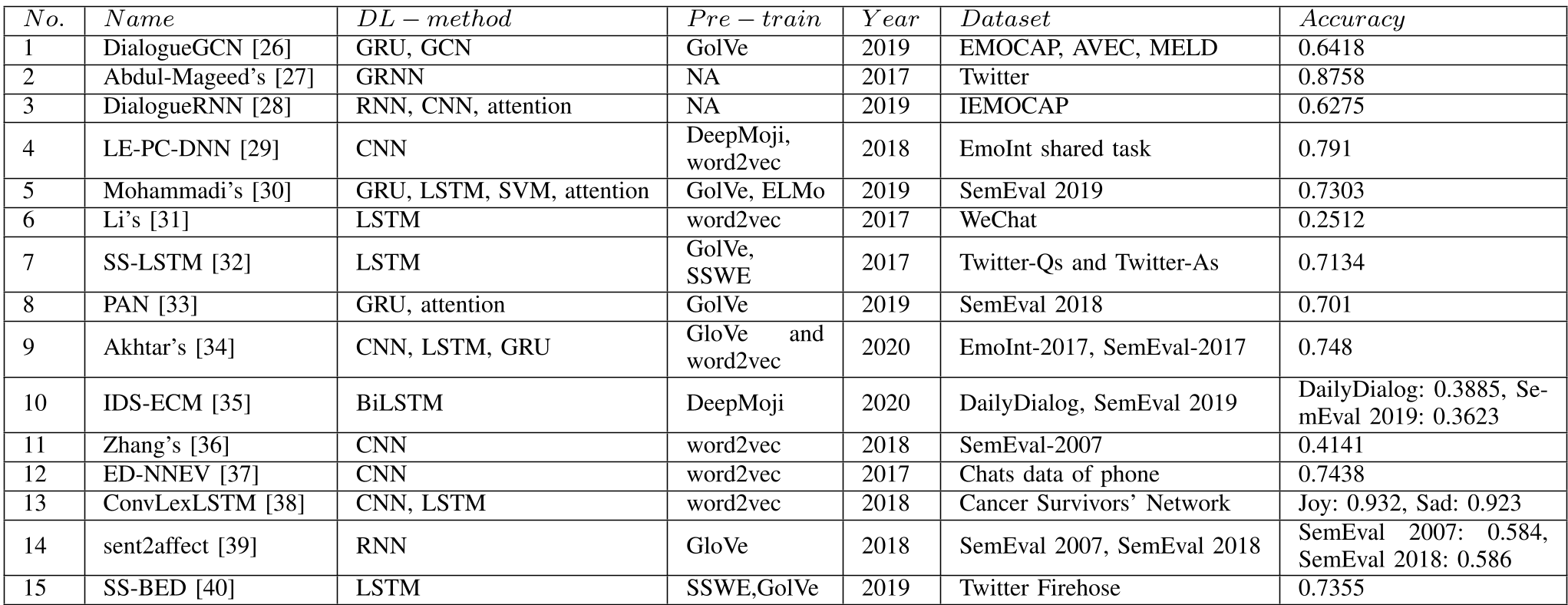 Table 1: A comparative look at accuracy and architectures across major datasets.
Critical Insight: The "Domain Relevance" Wall
One of the most profound observations in this survey is the domain dependency of emotional language. The phrase "a long time" is:
- Negative in a restaurant review (waiting for food).
- Positive in a smartphone review (battery life).
This suggests that the future of emotion analysis isn't just "bigger models," but "smarter context." Models must understand the entity being discussed before they can assign an emotion to the attribute.
Future Outlook and Challenges
The study concludes that the field is still in its infancy. Four key frontiers remain:
- Language Balance: Moving away from English-centric models.
- Multi-Media Integration: Combining text with images/emojis (where a single picture is worth 1,000 words).
- Short-Text Sparsity: Solving the "polysemy" problem in tweets where context is minimal.
- Evolutionary Analysis: Tracking how an emotion transitions from a single post into a "fission-like" public opinion crisis.
Summary Takeaway
For technical leaders development AI-driven social listening or customer experience tools, this paper serves as a reminder that context is king. While deep learning provides the engine, the ability to handle domain-specific nuances and multi-lingual flows is what determines the real-world utility of an emotion analysis system.