
Beyond the Joypad: Decoding Player Emotion through Brushstrokes and Performance
Towards Emotion-based Adaptive Games: Emotion Recognition Via Input and Performance Features
The paper presents a novel approach for unobtrusive emotion recognition in games using pen-based input parameters (from graphics tablets) and in-game performance features. By employing Random Forest classifiers, the authors achieved F1 scores of ~0.57 and AUC values of ~0.74 in a 7-class prediction problem for Valence, Arousal, and Dominance.
TL;DR
Researchers from Ulm University have developed a way to "read" a player's emotional state—specifically their Valence, Arousal, and Dominance—without using a single heart-rate monitor or brain-wave sensor. By analyzing how a player uses a stylus on a graphics tablet and how they perform in the game, a Random Forest model can predict their current mood with high diagnostic accuracy.
The Problem: The "Interruption Paradox"
In game design, we want to know if a player is frustrated, bored, or excited. However, the standard way to find out is to ask them ("How do you feel?"), which immediately destroys the "Flow" and presence the game worked so hard to create. While physiological sensors (like EEG) are an alternative, they are cumbersome and expensive.
The authors' insight was simple: Emotion is reflected in our motor behavior. When we are frustrated, we press harder; when we are bored, our movements might lack precision. By combining these "input signatures" with "performance data" (how well the player is actually doing), we can peek into the player's mind unobtrusively.
Methodology: The "Hiramon" Experiment
The researchers used a custom-built serious game called Hiramon, which teaches Japanese Hiragana characters. Players draw characters on a Wacom tablet.
1. The Setup
- Data Collection: 48 participants.
- The "Trick": To ensure they gathered data for negative emotions (like frustration), they created a "False Feedback" group where the game told players they were failing even when they drew perfectly.
- Feature Engineering: They extracted 46 features, including:
- Pressure: Mean, max, and peak counts of the stylus.
- Dynamics: Drawing speed and "Sample Entropy" (the complexity of the movement).
- Context: Whether the player won or lost the current round.
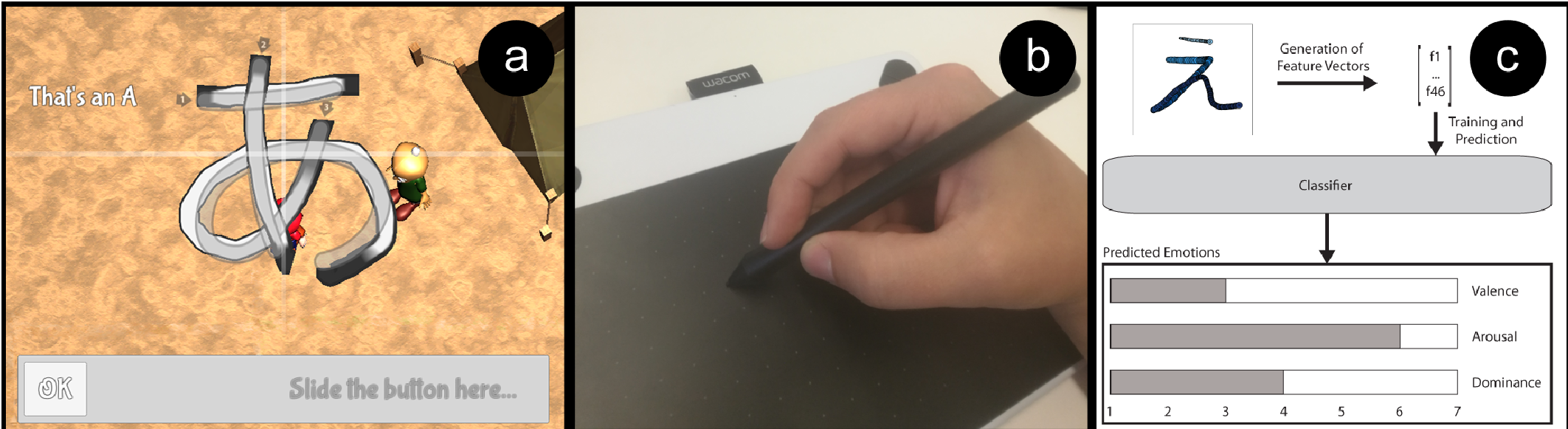 Figure 1: The experimental flow from the Hiramon game to feature extraction and ML prediction.
2. The Model
Instead of a simple "Happy/Sad" binary, the team aimed for a 7-class classification based on the PAD model (Valence, Arousal, Dominance). They compared Random Forests (RF) and Support Vector Machines (SVM).
Key Results: The Synergy of Modalities
The Random Forest model emerged as the clear winner. The most striking finding was the Ablation Study results:
- Using Input Features Only: F1 Score ~0.40
- Using Performance Only: F1 Score ~0.20
- Combined (Both): F1 Score ~0.57
This proves that knowing a player is losing isn't enough to know they are frustrated—you have to see how they are losing (e.g., through aggressive, high-pressure stylus movements).
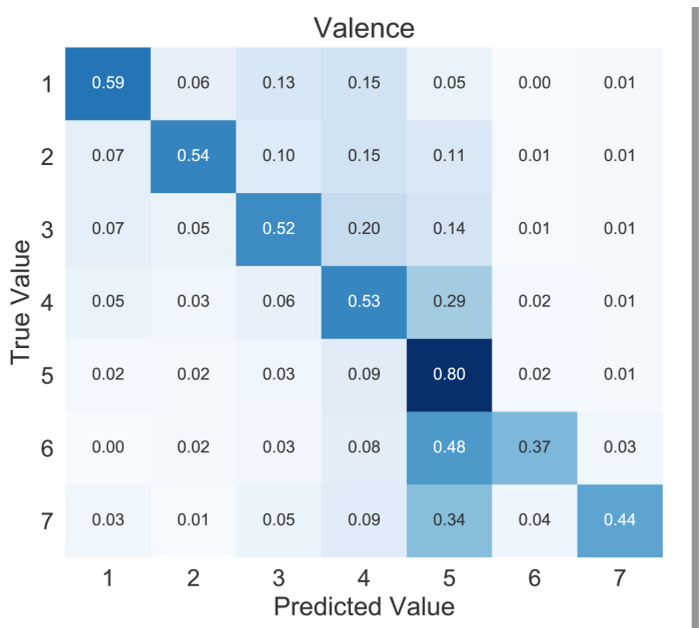 Figure 2: Confusion matrices showing the model's performance across 7 levels of Valence, Arousal, and Dominance.
The Vision: The Affective Loop
The ultimate goal of this research is not just observation, but Adaptivity. The authors propose an architecture where the "Emotion Recognition" layer feeds into an "Adaptive Content Generation" layer.
If the system detects a steady decline in Valence (happiness) and an increase in Arousal (stress), the game could:
- Lower the difficulty (Dynamic Difficulty Adjustment).
- Change the music to a calmer track.
- Trigger a helpful NPC intervention.
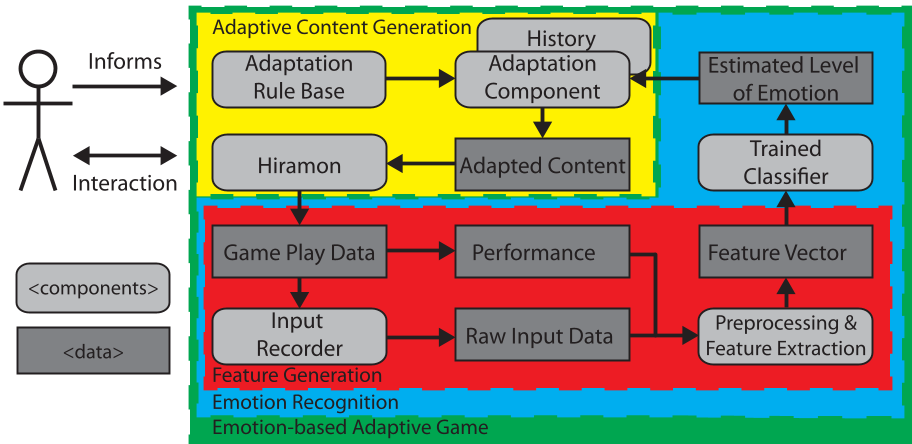 Figure 3: An emotion-based adaptive game architecture.
Conclusion and Limitations
While highly promising, the study is limited to stylus-based inputs. Whether these findings translate perfectly to standard controllers or keyboards remains to be seen. However, it sets a powerful precedent: The hardware we already own is enough to understand our emotions.
For game developers, this is a call to look beyond the leaderboard. The way a player clicks, moves, and reacts is a rich, untapped stream of data that can make games more empathetic and engaging.
Takeaway: Future SOTA game engines might not just render graphics; they will likely "render" the player's emotional journey in real-time.