
ESIS: Why "Happiness" Rules Social Media Diffusion
ESIS: Emotion-based spreader–ignorant–stifler model for information diffusion
This paper proposes the ESIS (Emotion-based Spreader–Ignorant–Stifler) model, a fine-grained information diffusion framework that incorporates emotional weights into classic epidemiological spreading models. By validating on Sina Weibo data, the ESIS model achieved a significant performance boost over standard SIS and Independent Cascade (IC) models, specifically showing 11.8% and 16.5% improvements in predicting cascade sizes.
TL;DR
The ESIS (Emotion-based Spreader-Ignorant-Stifler) model revolutionizes how we predict social media virality by proving that a tweet isn't just a piece of data—it's an emotional package. By assigning weights to social connections based on past emotional interactions, the model achieves up to a 16.5% accuracy improvement in predicting how far a message will travel.
Introduction
Why did Whitney Houston’s death break on Twitter before mainstream media? Why do some funny stories go viral in seconds while angry rants often stall? The secret lies in the Inductive Bias of human psychology: our willingness to retweet is inextricably linked to emotion. Current SOTA models like the Independent Cascade (IC) often fail because they treat every link as a static probability. The ESIS model changes this by making the network "pulse" with sentiment.
The Problem: The "Emotionless" Gap
Most epidemiological models (SIS/SIR) used for social networks assume that if you are exposed to a message (Infected), you have a fixed probability of passing it on. This ignores two major factors:
- Content Variance: A "Happy" tweet has a different spreading potential than a "Sad" one.
- Relationship Variance: Some users are more likely to share "Surprise" from a specific friend but ignore their "Anger."
Methodology: Mapping Emotions to Equations
The authors classify users into three states: Spreaders (active retweeters), Ignorants (unaware), and Stiflers (aware but disinterested). The core innovation is the weight —the ratio of emotional retweets between user and for a specific emotion .
The Model Architecture
The spreading mechanism is defined by a probability . If a tweet contains "Happiness," the model looks at the specific "happiness-weight" of the edge to decide the infection rate.
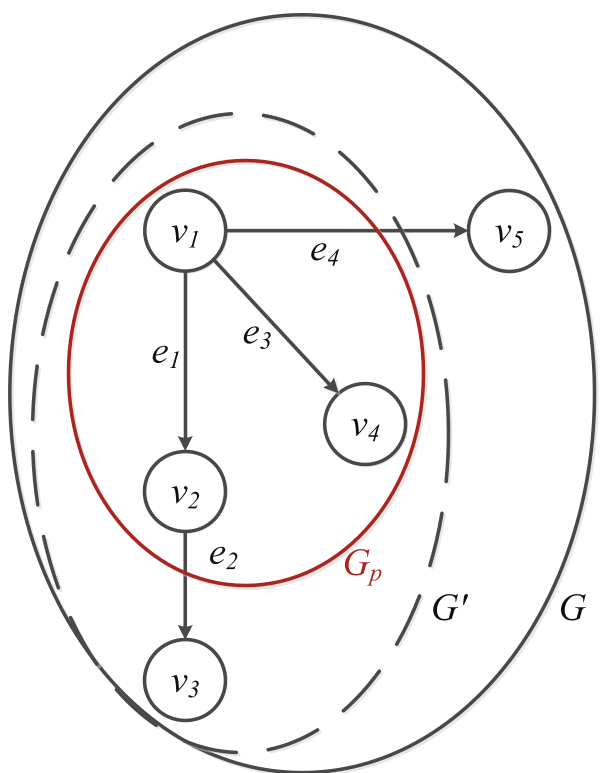 Fig 1: Illustration of the spreading probability between a Spreader and an Ignorant node.
The authors solve this using Mean-field Equations to find the threshold . If the spreading probability is below this threshold, the information dies out; above it, it achieves global cascade.
Experimental Insights: Happiness vs. Anger
Using data from Sina Weibo, the researchers categorized tweets into 7 classes: No emotion, Happiness, Anger, Sadness, Fear, Disgust, and Surprise.
Key Findings:
- Happiness is Viral: It has the lowest threshold () and spreads to the widest audience.
- Anger is Isolated: It has a massive threshold (), meaning it needs a huge initial push to spread, confirming that most users avoid retweeting "angry" content.
- The Weight Distribution: In happy tweets, weights are distributed smoothly, whereas in angry tweets, the probability density peaks at zero weight—meaning most connections have a 0% chance of passing anger along.
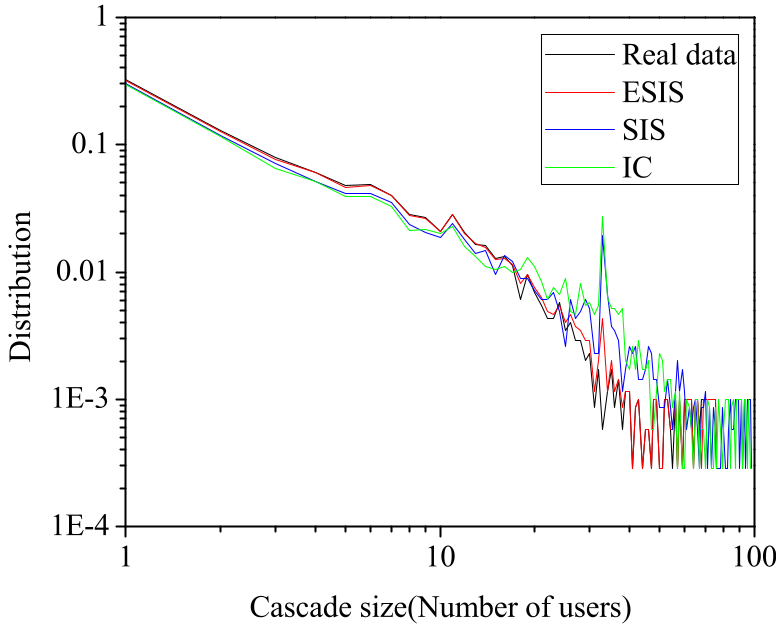 Fig 2: Comparison of True Data vs. ESIS, SIS, and IC Models. The ESIS model (Red) tracks the Ground Truth (Black) much more closely than the baselines.
Critical Analysis & Conclusion
Takeaway
The ESIS model proves that retweeting strength is not a universal constant but a variable localized to emotional categories. By integrating these nuances into a mean-field solution, we can predict cascade sizes with over 97% precision ().
Limitations
- Static Sentiment: The model assumes retweets maintain the same emotion as the original tweet (true in 90% of cases, but the 10% "emotional flip" is ignored).
- Lexicon Limits: The sentiment analysis relies on a dictionary. As noted by the authors, "Anger" is often expressed through punctuation or emphatic patterns (e.g., "!!!") rather than just words, leading to some classification errors.
Future Outlook
The next step for this research involves dynamic sentiment shifts—where a "Surprised" tweet might trigger a "Sad" response. In the age of AI, integrating these ESIS-style weights into Large Language Model (LLM) agents could allow for highly realistic simulations of public opinion and digital marketing outcomes.