
Decoding Digital Emotions: Breaking the Roman Urdu Barrier
Emotion detection in Roman Urdu text using machine learning
This paper introduces a novel approach for emotion detection in Roman Urdu, a widely used but resource-poor transliterated language. The authors developed a benchmark corpus of 18,000 annotated sentences across six emotion classes and evaluated several machine learning baselines, with SVM achieving a SOTA F1-score of 0.69.
TL;DR
While Roman Urdu—the Latin-script version of Urdu—is the "lingua franca" of social media in Pakistan and India, it remains a "dark matter" in NLP due to a lack of standards. This paper shines a light on it by introducing an 18k-sentence benchmark corpus and a machine learning pipeline that achieves 69.5% accuracy in detecting six specific emotions, moving far beyond simple "thumbs-up or thumbs-down" sentiment analysis.
Context: Why Roman Urdu Matters
In the global south, users often communicate in their native phonetic sounds using a standard English keyboard. This is "Roman Urdu." Despite its prevalence (accounting for over 37% of SMS traffic in some regions), it presents a nightmare for AI:
- No Standard Spelling: "Khush" (happy) can be written as khush, khsh, or ksh.
- Lexical Ambiguity: The word "Sona" can mean "Gold" or "Sleeping" depending entirely on context.
- Resource Poverty: Unlike English or Chinese, there were no ready-made "emotion lexicons" or pre-trained embeddings for this script—until now.
The Pipeline: From Raw Text to Affective Insight
The researchers built a robust pipeline to transform chaotic social media text into structured emotional data.
1. Data Collection & The Multi-Annotator Strategy
The team crawled 18,000 sentences from diverse sources: YouTube comments, Facebook posts, and news sites. To ensure high-quality labels, four expert annotators categorized each sentence into: Happy, Sad, Anger, Fear, Love, or Neutral.
2. Overcoming the Spelling Chaos
The methodology relies on custom-trained Word2Vec embeddings. By training on a massive auxiliary set of 2 million Roman Urdu sentences, the model learns that different spellings of the same word often appear in similar contexts, effectively "clustering" them into a unified semantic space.
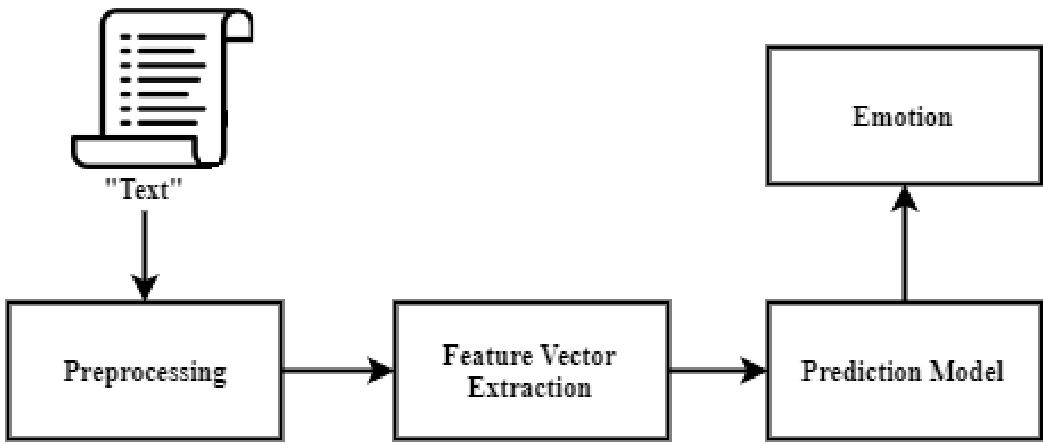 Figure 1: The proposed Emotion Classification Pipeline emphasizing the preprocessing and feature extraction stages.
Benchmarking Performance: SVM Reigns Supreme
The authors tested four classic machine learning architectures. The objective was to see if traditional statistical methods could handle the "noisy" nature of Roman Urdu.
| Model | Accuracy (%) | F1-Score |
|---|---|---|
| SVM (Support Vector Machine) | 69.54 | 0.69 |
| Random Forest | 56.53 | 0.55 |
| KNN | 55.12 | 0.54 |
| Decision Tree | 44.29 | 0.43 |
The SVM model emerged as the clear winner. This is likely because SVMs are highly effective in high-dimensional spaces where the boundary between classes (like "Sad" vs. "Neutral") might be subtle and non-linear.
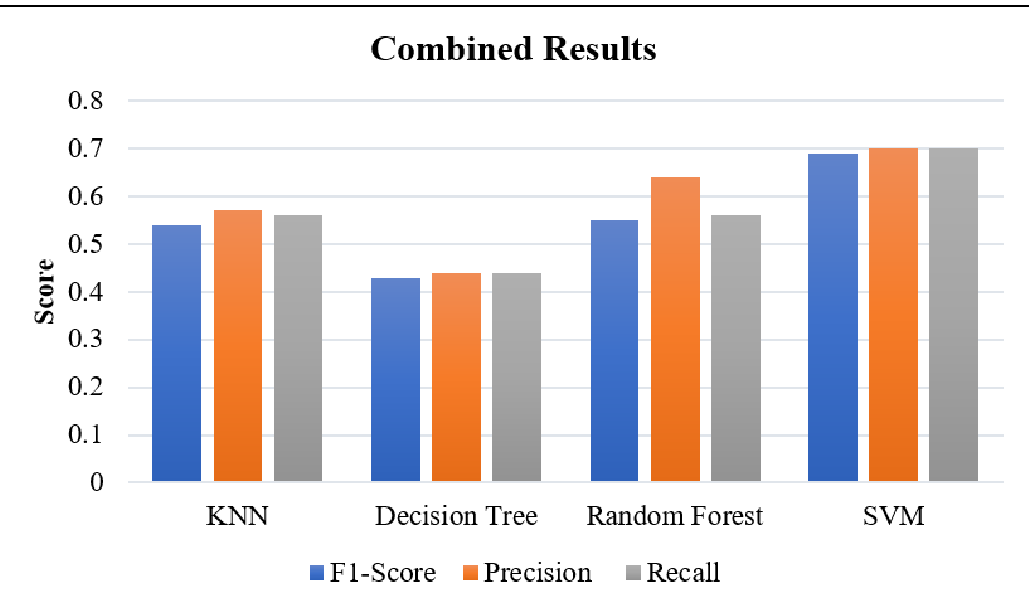 Figure 2: Performance metrics across different baseline algorithms.
Critical Insight: Why Context is King
A key contribution of this paper is the move from "Keyword Matching" to "Contextual Understanding." In Roman Urdu, a word like Kamyaab (Successful) usually implies "Happy." However, in a sarcastic or complex sentence, the emotion might shift. The study demonstrates that by using Word2Vec, the model captures the neighborhood of words, allowing it to predict emotions even when explicit emotion-words are absent.
Limitations and The Road to Transformers
While a 69% accuracy is a landmark for a zero-resource language, it also highlights the difficulty of the task. The authors acknowledge that:
- Sarcasm remains a significant hurdle.
- Tree-based models struggled, likely due to the lack of discrete, structured features in transliterated text.
The next logical step? Moving away from static Word2Vec to dynamic embeddings like BERT and Attention mechanisms, which can better handle the long-range dependencies and "context-flip" common in emotional speech.
Conclusion
This research is more than just a technical exercise; it’s a bridge to digital inclusion for millions of Roman Urdu speakers. By providing the first benchmark corpus and proving the efficacy of SVMs, the authors have provided the toolkit necessary for local businesses and mental health apps to finally "understand" their users in their own script.