
Beyond Logic: Architecting a Framework for Real-Time Speech Emotion Detection
Emotion Detection Throughout the Speech
The paper presents a comprehensive framework for non-intrusive emotion detection through speech analysis, integrating voice activity detection and feature extraction. It aims to bridge the gap in human-machine interaction by enabling systems to perceive and react to human emotional states using standard hardware like microphones.
TL;DR
This paper explores the transition of human-machine communication from rigid peripheral-based inputs to emotionally aware interactions. The authors propose a technical framework that leverages non-intrusive speech analysis to detect emotions like anger, joy, and sadness in real-time, aiming to integrate this into a broader "context-aware" sensing ecosystem.
Contextual Positioning
While most AI research focuses on the content of communication (Speech-to-Text), this work situates itself in the domain of Affective Computing. It argues that emotion is not a "noise" in the system but a vital variable for modeling human behavior and decision-making.
The Core Challenge: The "How" vs. The "What"
The primary friction in current HCI (Human-Computer Interaction) is that machines are "emotionally deaf." Even as we improve transcription accuracy, we lose the prosodic nuances—the quiver of fear, the sharpness of anger, or the flatness of depression. The authors identify three major hurdles:
- Defining Emotion: Navigating psychological theories (James-Lange vs. Cannon-Bard) to establish a computable model.
- Language Dependency: The "cultural component" of speech—some languages are inherently more "aggressive" in neutral states, leading to false positives.
- Data Authenticity: The discrepancy between "acted" emotions in studios and "induced" or "natural" emotions in the wild.
Methodology: The Detection Pipeline
The proposed framework operates as a digital pipeline that transforms raw audio into emotional labels through several distinct stages.
1. Feature Extraction
The system extracts "short-term parameters" from segmented windows of speech (usually in the range of tens of milliseconds). Key features include:
- Prosodic Features: Pitch (fundamental frequency) and Intensity.
- Spectral Features: Mel-frequency cepstral coefficients (MFCCs) and Linear Prediction Coefficients (LPC).
2. The Architectural Flow
The framework utilizes a Voice Activity Detector (VAD) to ensure only relevant segments are processed, followed by a dynamic classifier.
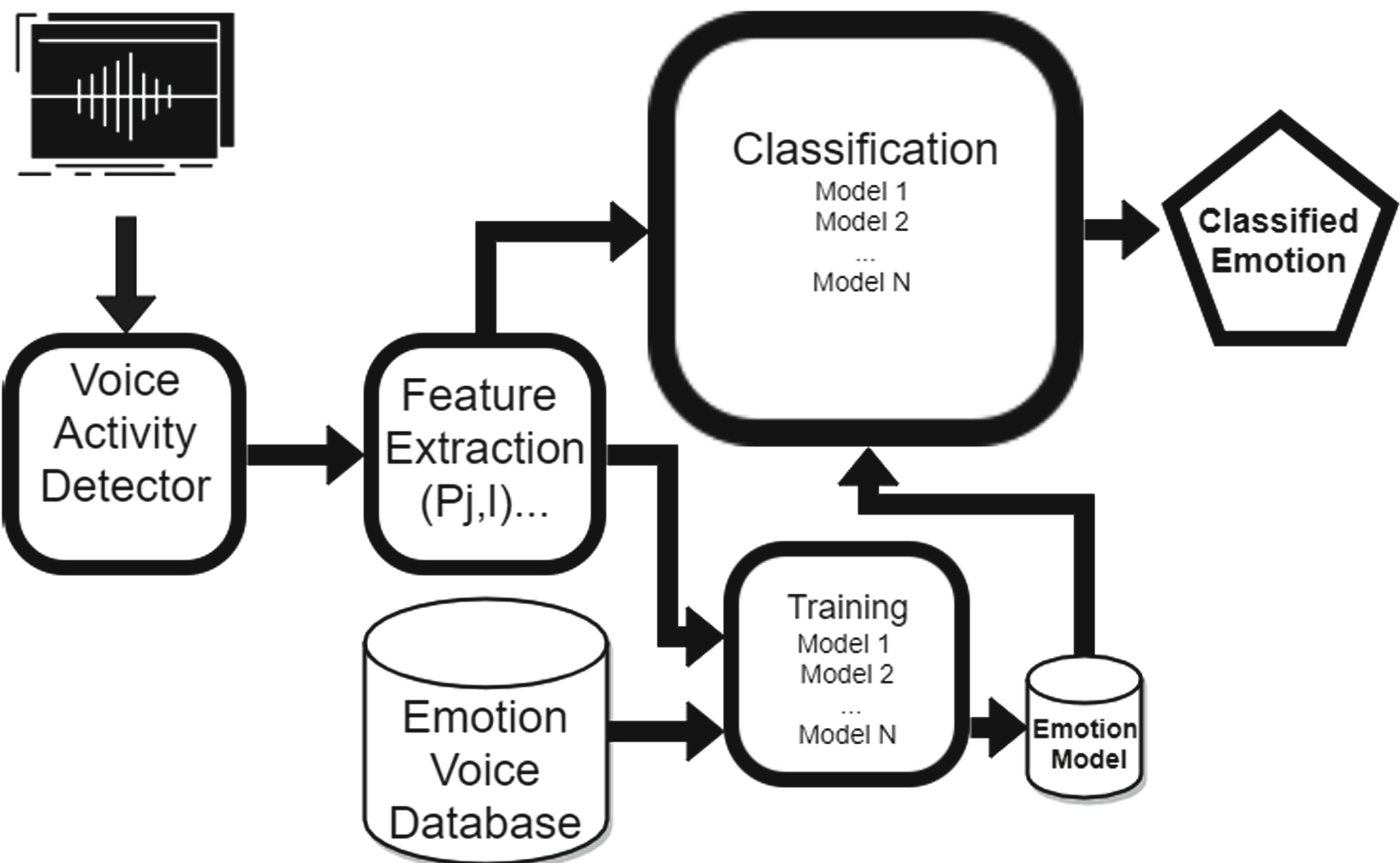 Fig 1: The proposed emotion detection framework, highlighting the path from VAD to Classification.
3. Emotion Mapping
The researchers utilize the Plutchik Wheel and research by Murray and Arnott to map acoustic changes to specific feelings.
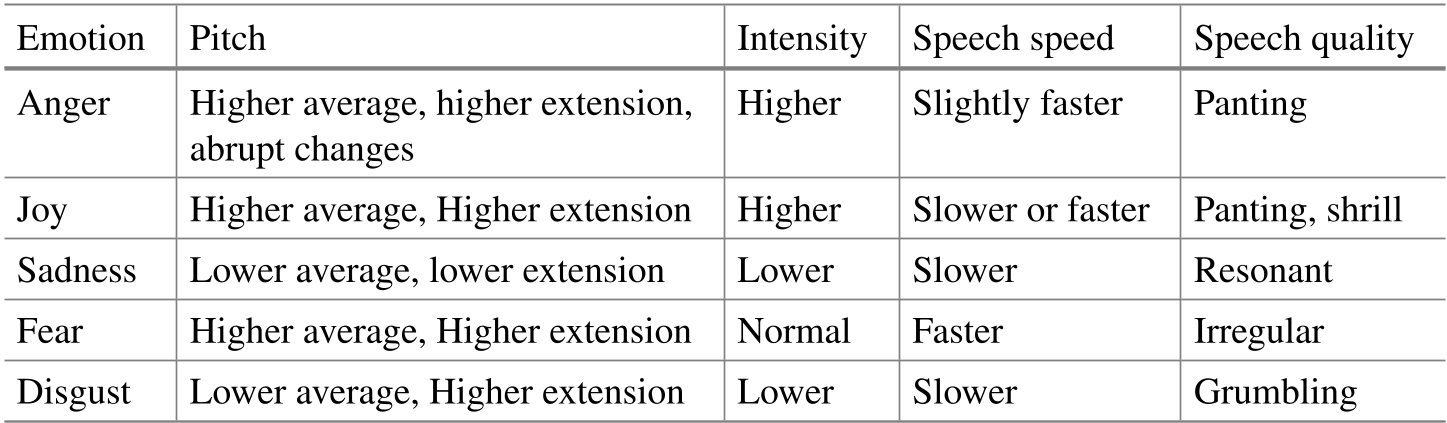 Table 1: How basic emotions manifest through changes in Pitch, Intensity, and Speed.
Experimental Insights
The study highlights that classification accuracy is highly dependent on the quality of the training database. While some cross-lingual models have reached 99.7% accuracy, the authors note that the absence of a native Portuguese database limits the framework's local efficacy. They argue that "induced" databases (where emotions are triggered by movies/text) offer a middle ground between the "purity" of acting and the "messiness" of real-world recordings.
Critical Analysis & Conclusion
Takeaway
The paper successfully demonstrates that emotion detection is no longer a "soft science" but a measurable engineering goal. By leveraging non-intrusive sensors (the microphone already built into every smartphone), we can create systems that adapt their UI/UX based on the user's stress or mood.
Limitations
- Computational Overhead: Moving from segment analysis to "near real-time" classification requires significant optimization, especially on edge devices.
- Privacy Ethics: The paper focuses on the technical feasibility of non-intrusive sensing, but the "non-intrusive" nature also raises significant privacy concerns regarding constant audio monitoring.
Future Work
The next frontier is Multimodal Fusion. The authors hint at combining this speech framework with their previous work on keyboard and mouse dynamics (detecting stress via typing rhythm) to create a holistic "digital twin" of a user's psychological state.