Immersive Emotion Induction: Beyond Static Images to Interactive Driving Simulators
Emotion induction in virtual environments: a novel paradigm using immersive scenarios in driving simulators
This paper introduces an immersive emotion induction paradigm using realistic driving simulator scenarios to evoke specific affective states like anger, boredom, and trust. Unlike static stimuli, this method leverages interactive virtual environments (VE) and multisensor data (HR, GSR, facial tracking) to achieve high emotional engagement.
TL;DR
Researchers from Hyundai Motor Group, Korea University, and Fraunhofer IAO have developed a novel paradigm for inducing specific human emotions—such as anger, boredom, and trust—using immersive driving scenarios. By replacing static images with interactive, high-stakes virtual environments, they have established a more effective framework for evaluating Human-Computer Interaction (HCI).
The Immersion Gap: Why Static Stimuli Fail
In the world of psychology and HCI, the International Affective Picture System (IAPS) has long been the gold standard. However, looking at a picture of a car crash is fundamentally different from a participant experiencing a near-miss in a simulator.
The core problem identified by the authors is the Lack of Immersion. Traditional methods provide a passive experience where the "subject" is decoupled from the stimulus. This paper argues that emotion is not just a reaction to an image, but a reaction to an interaction. In a driving context, emotions are high, stakes feel real, and the sensory input is continuous—making it the perfect laboratory for affective computing.
Methodology: Specificity through Scenarios
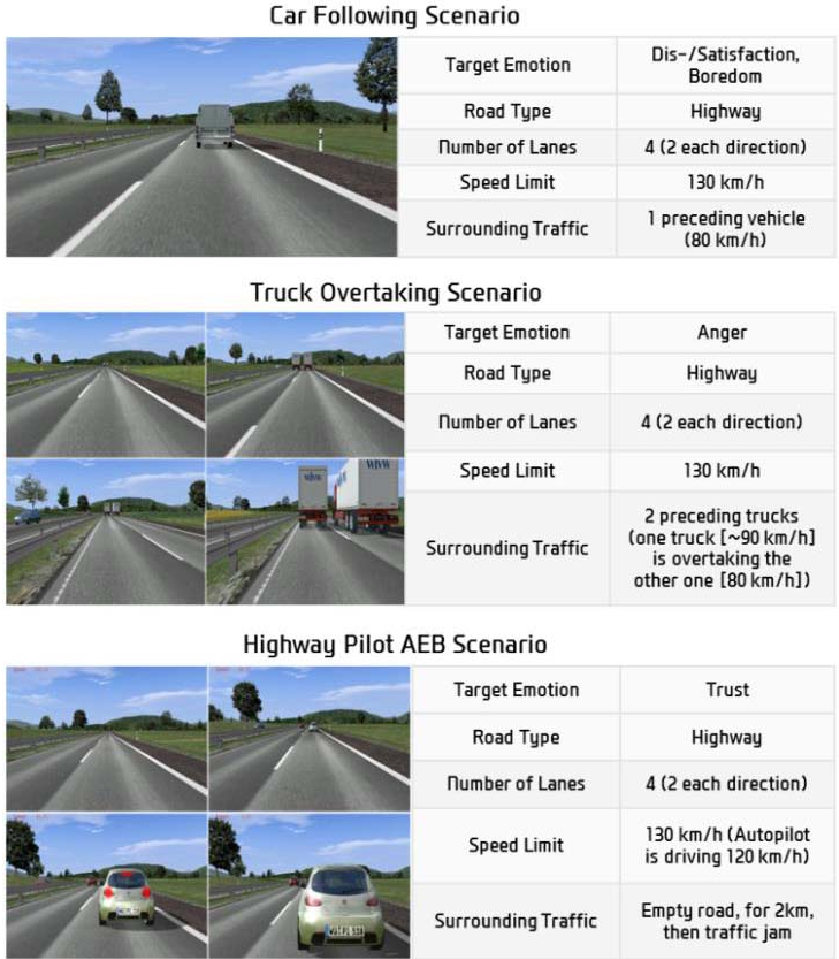
The researchers didn't just put people in a car; they designed "Scenario-Specific Induction." Instead of looking for broad happiness or sadness, they targeted emotions relevant to modern technology adoption:
- Anger/Frustration: Induced by a scenario where a truck consistently blocks a highway overtaking maneuver.
- Boredom: Triggered through long, monotonous driving without the ability to overtake.
- Satisfaction/Dissatisfaction: Manipulated through throttle response (acceleration speed) when following other vehicles.
- Trust in Technology: Measured specifically during an Automatic Emergency Braking (AEB) event.
System Architecture
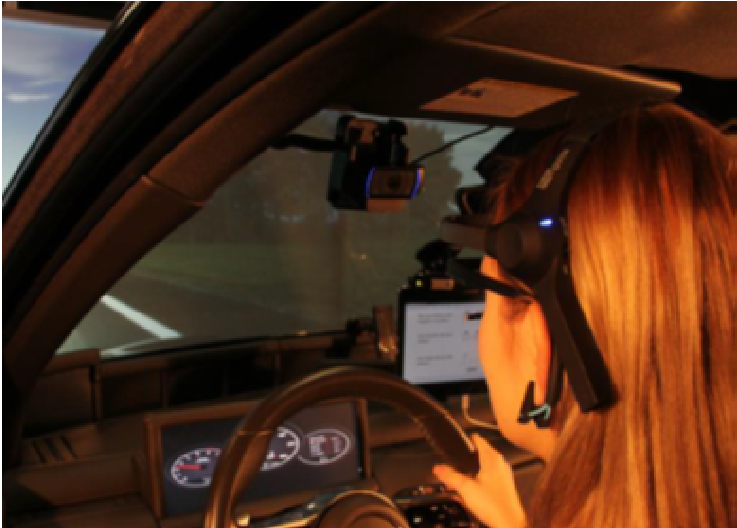
The hardware setup provides a 180-degree frontal view using three planar screens to simulate front and side mirrors, creating a high level of situational awareness.
Multi-Modal Verification
How do we know the participants actually felt these emotions? The study employed a triangulation of data:
- Physiological Sensors: Heart Rate (HR) and Galvanic Skin Response (GSR).
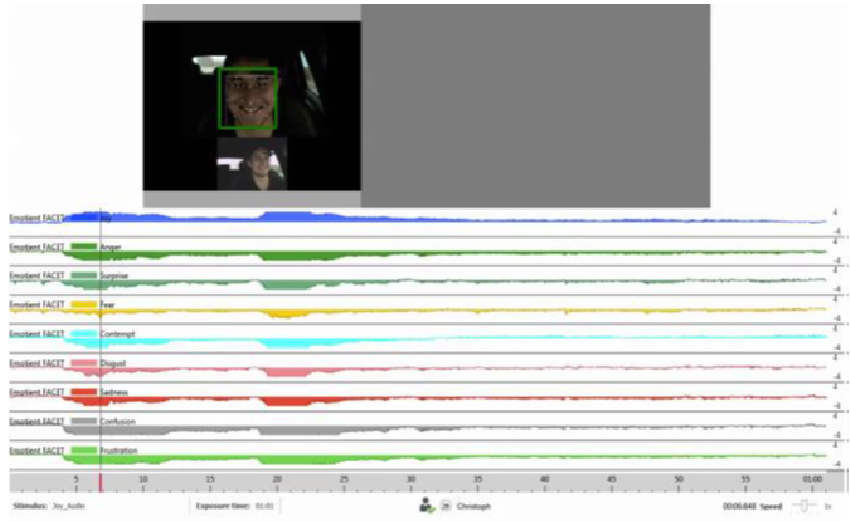
- Behavioral Data: Facial expression tracking using the Facet algorithm.
- Subjective Feedback: Likert scales and visual analogue questionnaires.
This multi-dimensional approach allows researchers to observe the mismatch or alignment between what a user says they feel and what their body actually does—a critical insight for developing safe and intuitive vehicle interfaces.
Results & Critical Insight
The study successfully demonstrated that interactive scenarios can consistently induce targeted emotions. The key takeaway for the industry is that Context is King.
While a static image of a snake might induce fear universally, the emotion of "distrust" in a self-driving car can only be measured when the user is placed in a scenario where the car must act autonomously under pressure. The results showed significant physiological shifts during the AEB and "hindered overtaking" segments, proving the paradigm's efficacy.
Limitations & Future Work
As a SIGGRAPH Asia poster, the depth of the longitudinal data is limited. Future research would benefit from:
- Cross-Platform Validation: Testing if these scenarios are as effective on HMDs (VR headsets) compared to large-scale simulators.
- Individual Heterogeneity: Analyzing why some "drivers" were more susceptible to anger than others under the same scenario conditions.
Conclusion
This work represents a vital shift towards Active Affective Computing. By moving the laboratory into a virtual, interactive world, we can better understand how human emotions will dictate the success of future technologies, from AR interfaces to fully autonomous vehicles.