
NEWFM: Bridging Voice and Affect via Neuro-Fuzzy Logic in 2-D Space
Emotion Recognition Algorithm Based on Neural Fuzzy Network and the Cloud Technology
This paper introduces a 2-D visual emotion recognition system for voice signals using a Neural Network with Weighted Fuzzy Membership (NEWFM). Evaluated on the Berlin Emotional-Speech Database, the model achieves a high overall accuracy of 85% in classifying four core emotional states via a cloud-based framework.
TL;DR
Recognizing human emotion from voice is notoriously difficult due to the subjective nature of speech. This paper proposes a robust solution by combining Neural Fuzzy Networks (NEWFM) with a 2-D Visual Model (Valence-Arousal). By extracting 26 specialized acoustic features and processing them through a fuzzy logic framework, the system achieves an impressive 85% overall accuracy, specifically excelling in identifying sadness with perfect precision.
Background & Positioning
Emotion recognition is no longer a niche topic; it is the cornerstone of advanced Human-Computer Interaction (HCI). While many models treat emotions as discrete buckets (Happy, Sad, Angry), this work positions itself within the "Dimension-based" school of thought. It leverages the Berlin Emotional-Speech Database and specifically targets cloud-based deployments, mapping complex vocal signals onto a 2-D plane that reflects both the "type" and "intensity" of the emotion.
Motivation: The Complexity of Vocal Affect
Prior work in affective computing often fails to capture the "blended" nature of human feelings. A person might be "a little bit sad" or "infuriated," levels of intensity that discrete classifiers miss. The authors identify two critical dimensions:
- Valence: The positivity or negativity of an emotion.
- Arousal: The intensity or excitation level.
The challenge lies in translating raw audio—jitter, shimmer, and pitch—into these two precise coordinates.
Methodology: The NEWFM Architecture
The core of this research is the Neural Network with Weighted Fuzzy Membership (NEWFM). This isn't a standard "black-box" neural network; it is a classification system that uses fuzzy membership functions with bounds (BSWFM) to handle uncertainty.
The 3-Step Workflow:
- Feature Extraction: 26 features (including Pitch, Jitter, Shimmer, and Harmonics) are extracted using PRAAT software.
- Fuzzy Processing: The NEWFM processes these features to calculate Takagi-Sugeno defuzzification values.
- 2-D Mapping: These values dictate the position of the speech sample on the 2-D Valence-Arousal plane.
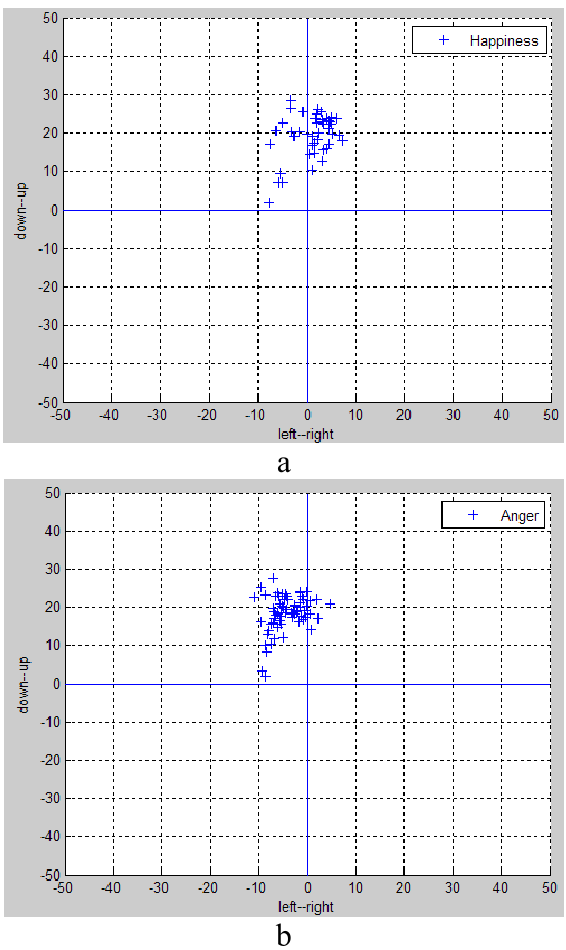 Fig 2. The Structure of Emotion Recognition by Employing NEWFM
Experimental Insights & SOTA Comparison
The model was trained on female utterance samples from the Berlin database. The results demonstrate a clear mastery over specific emotional signatures:
- Sadness: 100% Accuracy
- Anger: 91.0% Accuracy
- Neutral: 81.0% Accuracy
- Happiness: 70.5% Accuracy
The perfect score for sadness suggests that the acoustic features associated with "low valence and low arousal" (grief/sadness) are highly distinct within the NEWFM framework. Conversely, the lower score for happiness indicates a potential overlap in the high-arousal quadrant with anger or other intense states.
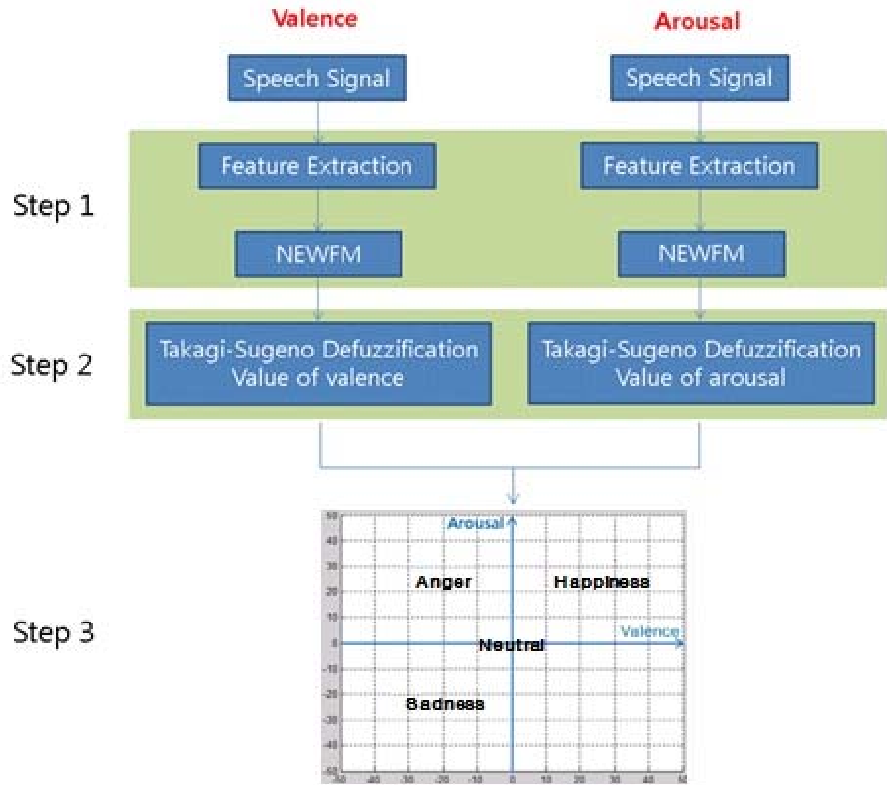 Fig 3. Visualization of emotion clusters in the 2-D plane: (a) Happiness, (b) Anger, (c) Sadness, (d) Neutral.
Critical Analysis & Future Outlook
The beauty of this approach is its interpretability. Unlike deep learning models that offer no "reasoning," the fuzzy logic components allow researchers to see how features like "Harmonics-to-Noise ratio" or "Jitter" contribute to the final emotional coordinate.
Limitations:
- The current study focuses only on female voices, which ignores gender-based acoustic variances.
- The use of simulated (acted) speech may not fully capture the complexity of spontaneous, real-world emotions.
Future Work: Integrating this model into a cloud server provides a scalable path for real-time mobile applications, where voice-activated assistants can finally "feel" the user's frustration or sorrow and respond with empathy.
Conclusion
By mapping the high-dimensional chaos of human speech into a structured 2-D fuzzy logic framework, Zhang and Lim have provided a powerful blueprint for cloud-based affective computing. Their 85% accuracy rate sets a solid baseline for future neuro-fuzzy hybrid systems.