
Beyond the Screen: How Your Physical Context Predicts Your Emotions
Towards emotion recognition from contextual information using machine learning
This paper presents a feasibility study on automatic emotion recognition using real-world context data (location, activity, companions, etc.) rather than physiological or digital signals. Using a custom mobile app and supervised machine learning (Random Forest, MLP, Naive Bayes, Logistic Regression), it classifies user states into positive and negative emotions with high accuracy in individual models.
TL;DR
Researchers have successfully demonstrated that machine learning can predict whether you are feeling "positive" or "negative" simply by looking at your surroundings—who you are with, what you are doing, and even your thermal comfort. By moving away from intrusive heart-rate monitors, this study proves that "Individualized Context Models" can achieve over 82% accuracy in real-world settings.
Context: The Missing Piece of the Emotional Puzzle
For decades, Affective Computing has been obsessed with signals: the curve of a smile, the pitch of a voice, or the electrical conductance of skin. While effective in lab settings, these methods often crumble in the "wild" due to environmental noise or the need for expensive, obtrusive hardware.
The authors of Towards emotion recognition from contextual information argue that we’ve been looking at the effect (the signal) while ignoring the cause (the context). According to the OCC model, emotions are valenced reactions to events, agents, or objects. If we know the event (activity) and the agents (companions), can we skip the sensors and predict the emotion directly?
Methodology: The "Applings" Study
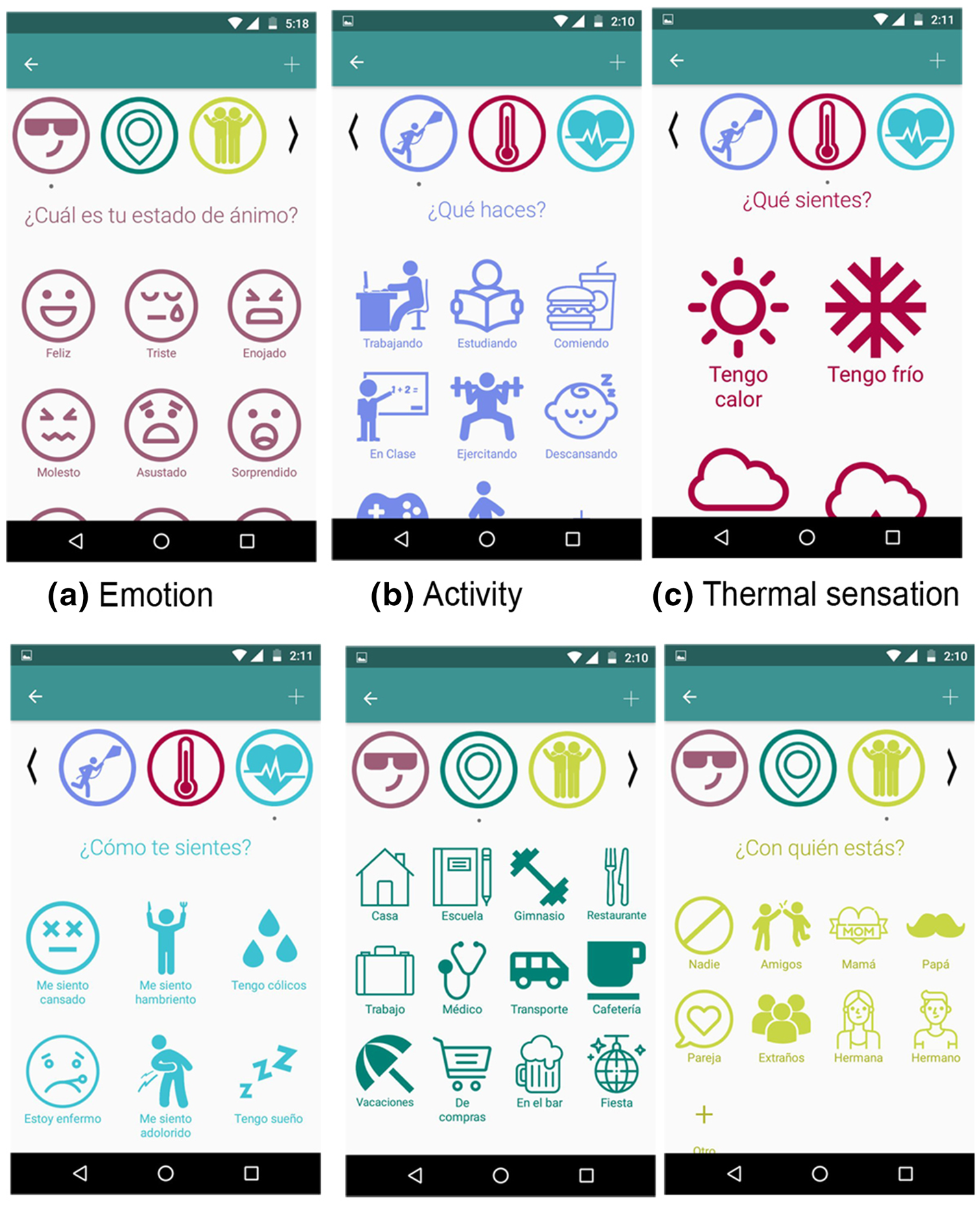
The researchers recruited 32 participants to use a custom-built Android app called Applings. Over 20 days, users logged their emotional state along with six key contextual dimensions:
- Activity: (e.g., studying, eating, leisure)
- Thermal Sensation: (How the user perceived the temperature)
- Physical Affliction: (e.g., tired, hungry, sick)
- Location: (e.g., home, university, cafeteria)
- Company: (e.g., friends, family, strangers)
- Time of Day: (Categorized into segments like morning/afternoon)
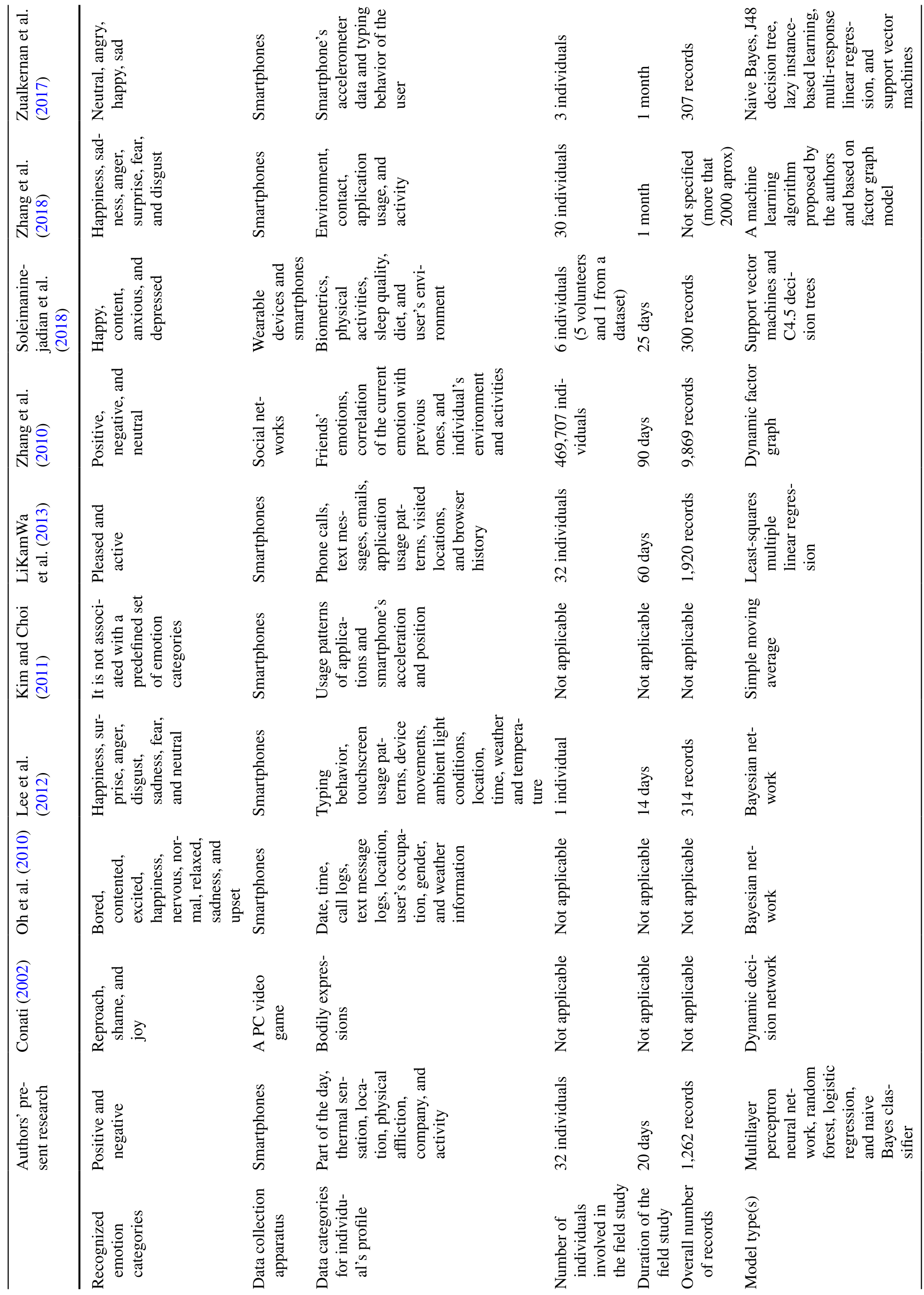
The team then built four types of classifiers (Multilayer Perceptron, Random Forest, Logistic Regression, and Naive Bayes) across three modeling scales: General (all users), Individual (per user), and Gender-specific.
Key Insights: Why "Personal" Matters
The most striking finding was the gap between General and Individual models.
- General models struggled with an average of 64.46% accuracy.
- Individual models soared to 82.42%.
This discrepancy highlights the multifactorial nature of emotion. For one person, being at home might signify relaxation (positive), while for another, it might be a source of stress (negative).
Feature Importance: The "Hungry/Tired" Factor
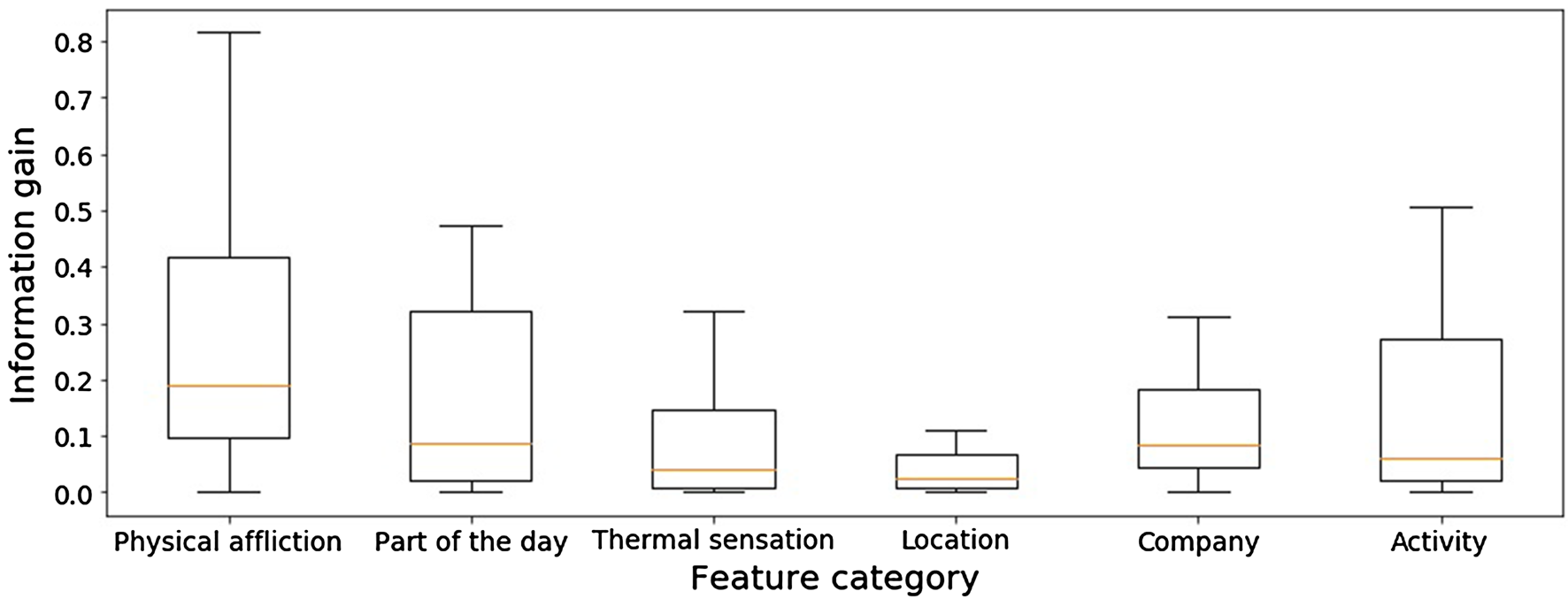
Using an Information Gain analysis, the researchers found that Physical Affliction was the strongest predictor of emotion across the board. This aligns with the psychological concept of "somatopsychic" effects—our physical state (being tired or hungry) significantly colors our emotional interpretation of external events.
Gender and Emotions
The study discovered that models for female participants generally performed better (0.743 AUC) than those for males (0.662 AUC). While the sample size for females was smaller, this suggests a potentially stronger or more consistent correlation between self-reported context and emotion in women—a finding that warrants deeper psychological investigation.
Critical Analysis & Future Outlook
The Strength: This work breaks the dependency on specialized hardware. By using data that can be partially automated (GPS for location, calendars for activity, Bluetooth for social company), we can build "invisible" emotion sensors.
The Limitation: The study relies on self-reported data, which introduces subjective bias. Furthermore, the "bipolarity" of certain contexts (e.g., "Home" being associated with both positive and negative states) suggests that these 6 features are still just a subset of the true human experience.
Conclusion: The takeaway for the industry is clear: Context is King. If you want to build an AI that truly understands how a user feels, stop just looking at their face—look at their world. The future of affective computing lies in "Context-Aware" systems that learn individual emotional triggers over time.