
Beyond Recognition: Controlling the Pulse of Emotion with Fuzzy Logic
18115_Emotion Recognition From Facial Expressions and Its Control Using Fuzzy Logic.
This paper presents a comprehensive fuzzy logic-based framework for recognizing and controlling human emotions through facial expressions. By utilizing Fuzzy C-Means (FCM) clustering and Mamdani-type relational models, the system maps facial features to a six-dimensional emotion space and introduces a closed-loop control scheme to transition a subject's emotional state using audiovisual stimuli.
TL;DR
Recognizing an emotion is only half the battle; controlling the transition between emotions is the next frontier of Human-Computer Interaction (HCI). This paper proposes a dual-purpose system that uses Fuzzy C-Means (FCM) for precise facial feature extraction and a Mamdani fuzzy relational model to bridge recognition and state-based control. With accuracies reaching 96%, it doesn't just watch how you feel—it knows how to change it using calibrated audiovisual stimuli.
Problem & Motivation: The Ambiguity of Feelings
Machine perception of human emotion is notoriously difficult due to:
- Image Quality: Blurred images make pixel-perfect identification impossible.
- Subjectivity: Unlike discrete objects, emotions exist on a spectrum with significant overlap (e.g., Surprise vs. Fear).
- Static Limitation: Previous works treat emotion as a static label. However, human emotions are dynamic states that evolve over time based on external stimuli.
The authors' insight was to treat emotion not as a classification problem, but as a control system problem. By using fuzzy logic, they mimic the "perceptual mapping" humans naturally possess.
Methodology: The Core Engine
The authors split their contribution into two main phases: Recognition and Control.
1. Robust Feature Extraction
Instead of analyzing the whole face, the system localizes three key regions of interest (ROI): Mouth, Eyes, and Eyebrows.
- Mouth Segmentation: Uses a color-sensitive Fuzzy C-Means (FCM) algorithm in the Lab* space, combining color and spatial data to separate lips from the face.
- Attribute Quantization: It measures Eye Opening (EO), Mouth Opening (MO), and Eyebrow Constriction (EBC).
 Fig 1: From raw image to FCM-based segmentation.
2. The Fuzzy Relational Model
The measured attributes are fuzzified into sets: {SMALL, MEDIUM, LARGE}. These are mapped to emotions (Anxious, Disgusted, Happy, etc.) using the Mamdani implication.
- Equation: This allows the machine to say: "If mouth opening is HIGH and eyebrow constriction is LOW, then the emotion is likely SURPRISE."
3. Emotion Dynamics and Control
The breakthrough is the Emotion Transition Model. The system treats human emotion as a state-space vector . By applying external stimuli (audiovisual clips), the system can "push" a user from a negative state (Disgusted) toward a positive one (Happy).
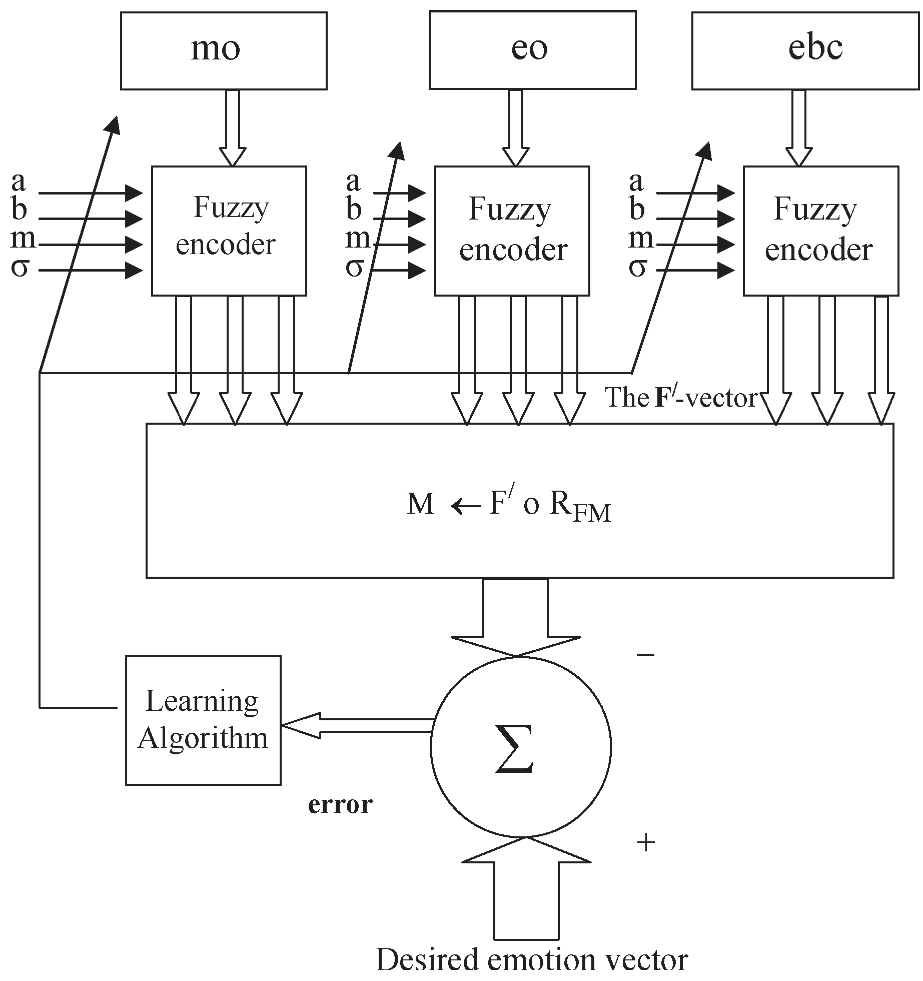 Fig 2: The state-transition graph for positive and negative influences.
Experiments & Results
The authors curated 60 specific movie clips to act as "actuators" for the emotional states.
- Accuracy: The system performed exceptionally well, particularly with children (96% accuracy), likely due to the more pronounced facial movements in younger subjects.
- SOTA Comparison: It consistently outperformed neural-network-based methods of the era (e.g., Kobayashi and Hara) by a margin of 2-5%.
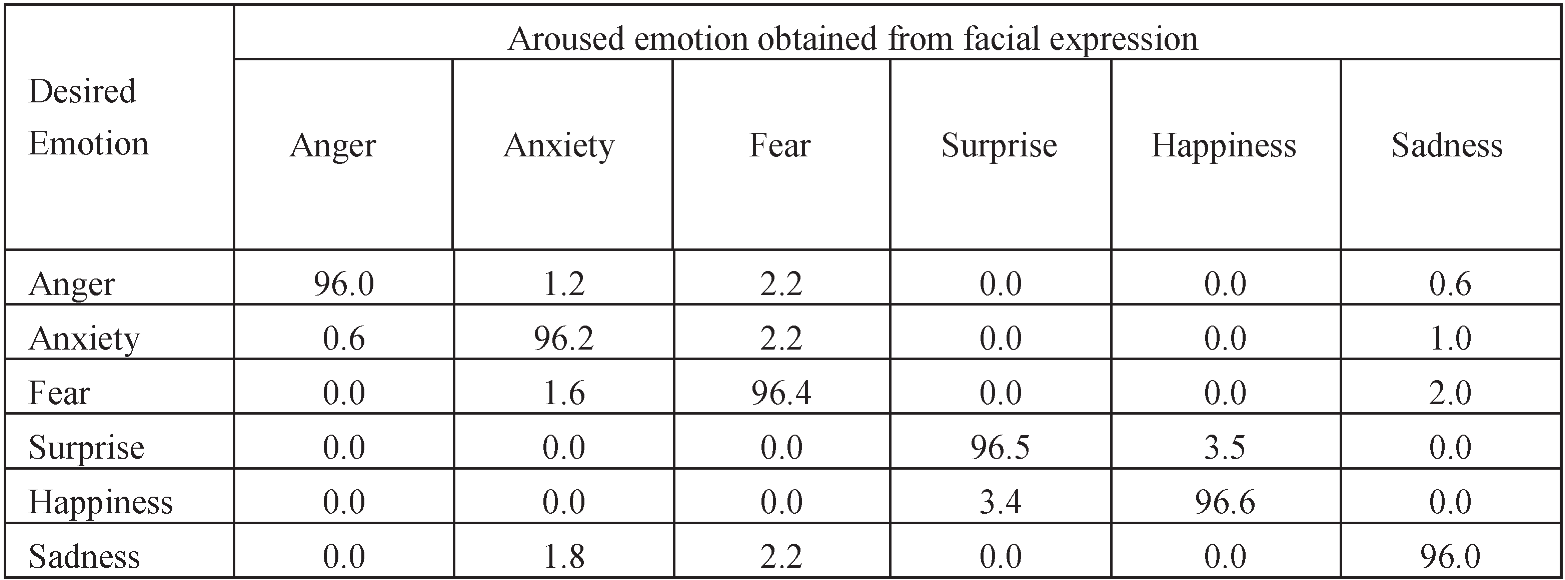 Table 1: Confusion matrix for children (8-12 years), showing near-perfect alignment between desired and aroused emotions.
Critical Analysis & Conclusion
Takeaway
The integration of FCM for segmentation and Mamdani fuzzy controllers creates a robust architecture that handles image noise and human subjectivity better than "crisp" logic models.
Limitations
- Calibration: The system requires "tuning" of membership functions (, , ) for different individuals to maintain peak performance.
- Stimulus Fatigue: The model assumes that a specific movie clip will always produce the same effect, ignoring the "habituation" effect common in human psychology.
Future Outlook
This paves the way for "Affective Copilots"—AI assistants that can detect when a user is frustrated and automatically adjust their tone, volume, or content recommendation to steer the user back to a productive, happy state.